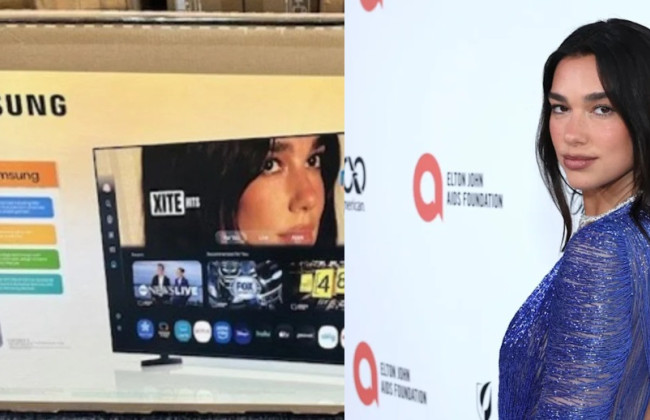
Singer claims company used her image in TV commercial without permission
British pop star Dua Lipa has filed a massive lawsuit against tech giant Samsung, accusing the company of illegally using her image in a TV advertising campaign.
The artist is demanding at least $15 million in compensation, as well as the profit the company could have made from using her image. This is reported by The Independent.
What are the claims
According to the lawsuit, Samsung allegedly began using the singer’s photo on TV packaging and promotional materials around the world in early 2025.
This is a photo taken backstage at the Austin City Limits music festival in 2024. The copyright to the photo belongs to the singer herself.
The lawsuit states that the company did not receive permission to use the photo and did not pay any compensation.
“Ms. Lipa’s face was actively used in a large-scale marketing campaign without her knowledge and without the ability to control this process,” the court documents say.
Samsung allegedly refused to remove the photo
According to the artist’s lawyers, after the singer learned about the advertising campaign, she demanded that her image be stopped from being used.
However, the lawsuit claims that Samsung ignored these demands and continued the campaign.
Fans bought TVs because of the singer’s photo
The case materials also include comments from social media users who directly stated that they drew attention to the TVs precisely because of the photo of Dua Lipa on the packaging.
One user wrote that he “wasn’t even planning to buy a TV,” but decided to do so after seeing the box with the singer.
What laws did the company allegedly violate
In the lawsuit, the artist accuses the company of:
copyright infringement;
unlawful use of a public image;
creating a false impression of brand endorsement.
The singer’s lawyers are citing California’s public image law, the federal Lanham Act and trademark protection laws.
This is not the singer’s first lawsuit
Last year, Dua Lipa won a high-profile case over her hit song “Levitating.”
At the time, two songwriters accused the artist of plagiarism, but the court concluded that the similar musical elements were not original enough to be protected by copyright.