
Farion Zinchenko, convicted of Iryna’s murder, was not surprised by the life sentence – human rights activist
/ 4 November 2026 11:47
4 min to read
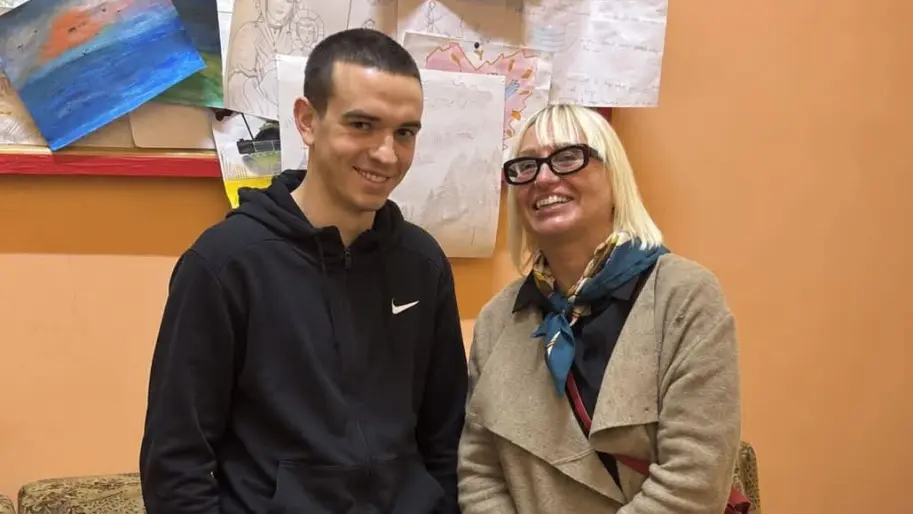
Vyacheslav Zinchenko, who was sentenced to life imprisonment by the court of first instance for the murder of linguist and public figure Iryna Farion, calmly accepted the court’s decision. According to human rights activist Yana Baranova, his lawyers warned him in advance about the possibility of such a sentence. The convict is currently in the Lviv pre-trial detention center and is preparing for a further court appeal.
Yana Baranova told this in an interview with the Ukrainian News Agency after a personal meeting with Zinchenko in the pre-trial detention center.
How Zinchenko reacted to the life sentence
According to the human rights activist, during the meeting she first of all wanted to assess the psychological state of the young man after the announcement of the harsh sentence.
Baranova noted that Zinchenko behaved calmly, was collected and open to communication.
As it turned out during the conversation, the decision of the first instance court did not come as a surprise to him.
According to the human rights activist, the lawyers explained to him in advance that the court could impose a life sentence.
At the same time, Zinchenko expects the case to be further reviewed by the appellate court and, if necessary, by the Supreme Court.
In what conditions is Zinchenko being held
Currently, Zinchenko is in the Lviv pre-trial detention center in a cell with five other prisoners.
According to Baranova, he is the youngest among his cellmates. The oldest of them is 37 years old.
The human rights activist reported that the convict follows a daily routine, goes in for sports, reads books and is considering continuing his studies.
At the same time, she noted that at the beginning of his stay in the pre-trial detention center, according to Zinchenko himself, conflict situations arose. He currently claims that the situation has stabilized.
After the sentence becomes legally binding and he is transferred to a penal institution, he may have additional opportunities for education.
Can Zinchenko avoid life imprisonment
The human rights activist paid special attention to the mechanism for replacing life imprisonment with a fixed-term sentence.
In Ukraine, legislation provides for the possibility of applying to the court with a corresponding petition after serving the established part of the sentence.
In particular, after 15 years of serving a life sentence, a convicted person may, under the conditions specified by law, apply for its replacement with imprisonment for a term of 15 to 20 years.
When considering such an issue, the person’s behavior, compliance with discipline, the presence of incentives and penalties, as well as other circumstances stipulated by law, are taken into account.
The final decision is made by the court.
At the same time, replacing a life sentence with a fixed-term sentence does not mean automatic release. In the future, the convict may be entitled to apply for parole.
How many lifers have already used the mechanism for reviewing sentences
According to Yana Baranova, as of July 2026, 117 lifers in Ukraine have achieved the replacement of their sentences with fixed-term sentences.
She noted that this mechanism is important for ensuring the right of convicts to review their sentences and the possibility of returning to society under the conditions specified by law.
According to her, there are currently about 1,570 people sentenced to life imprisonment in Ukraine.
The human rights activist also drew attention to the concept of the new Criminal Code of Ukraine, which provides for a separate approach to sentencing young people aged 18 to 21.
In particular, according to her, the proposed concept does not provide for the application of life imprisonment to this age category. At the same time, the relevant provisions have not yet entered into force.
What will happen next in the case of the murder of Iryna Farion
According to Baranova, Zinchenko’s lawyers are working on an appeal against the verdict.
The human rights activist emphasized that she has not studied the materials of the criminal proceedings and does not undertake to assess the validity of the court decision. Her activities are focused on the psychological state of the convicts, the conditions of their detention and observance of human rights.
Since the verdict of the first instance has not yet entered into legal force, the final decision in the case will depend on the results of further court proceedings.
Without an author