
Germany allowed the production of nuclear fuel using Russian technology: why this caused a scandal
/ 23 July 2026 12:34
3 min to read
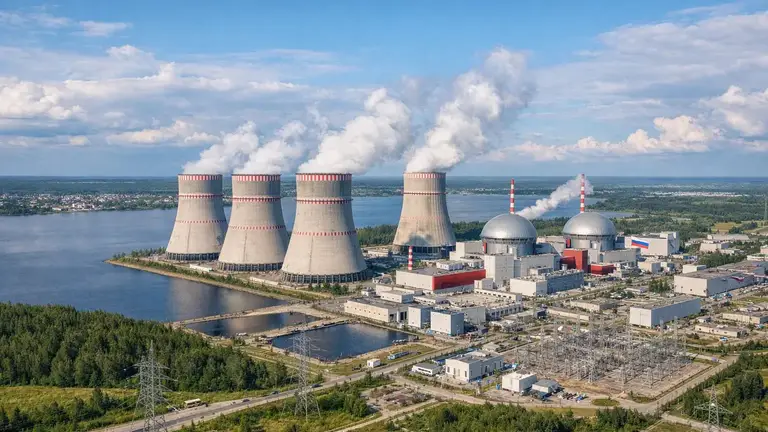
Germany has approved the production of fuel assemblies for nuclear power plants using Russian technology. The Advanced Nuclear Fuels (ANF) plant in Lingen, which plans to implement the project in cooperation with the Russian state corporation Rosatom, has received the appropriate permit. This decision has already attracted criticism from both politicians and environmental organizations.
What does the new project entail
According to Euronews, Advanced Nuclear Fuels (ANF), part of the French group Framatome, submitted an application for the production of hexagonal fuel assemblies of the Russian model back in 2022.
The Ministry of the Environment of the federal state of Lower Saxony officially approved the implementation of this project. This is fuel for Soviet-type VVER reactors, which are still operated at nuclear power plants in a number of Eastern European countries and Finland.
Why the decision caused a stir
Despite Russia’s full-scale war against Ukraine and numerous sanctions packages from the European Union, the Russian nuclear industry is still not under full sanctions.
The German Federal Ministry for the Environment stated that they were against any cooperation with Rosatom, but stressed that the issue of restrictions should be resolved at the level of the entire European Union, and not through national nuclear legislation.
At the same time, the German federal government has repeatedly accused Russia of carrying out hybrid attacks against Germany, including sabotage, espionage and disinformation campaigns. That is why the decision to cooperate with the Russian state corporation caused a significant public outcry.
Why the EU has not yet imposed sanctions against Rosatom
Experts explain the lack of sanctions by the fact that some European Union countries are still significantly dependent on Russian nuclear technologies and fuel supplies.
According to nuclear safety expert Olga Kosharna, the EU cannot make a single decision on sanctions against Rosatom primarily because of the position of individual states, in particular Hungary and Slovakia.
In addition, France continues to cooperate with the Russian nuclear industry and in recent years has even increased the import of certain nuclear materials.
Which countries are most dependent on Russian technology
The countries most dependent on Rosatom remain those on whose territory Soviet-type VVER reactors operate. For such nuclear power plants, Russian companies have been the main suppliers of nuclear fuel and services for decades.
These include, first of all:
Hungary;
Slovakia;
Czech Republic;
Bulgaria;
Finland.
This dependence is still one of the main factors that prevents the European Union from introducing full-scale sanctions against the Russian nuclear industry.
Permit may be reviewed
The Lower Saxony authorities noted that the issued permit is not final. If new risks arise, in particular related to national security issues, the decision may be reviewed.
The city of Lingen has been one of the key centers of the German nuclear industry for many decades. Since 1979, fuel assemblies for nuclear power plants have been produced here, the ANF plant has been operating, and a temporary storage facility for spent nuclear fuel is also located.
Without an author