Sandu said that blocking Moldova’s accession to the EU does not help Ukraine
/ 2 November 2026 11:55
3 min to read
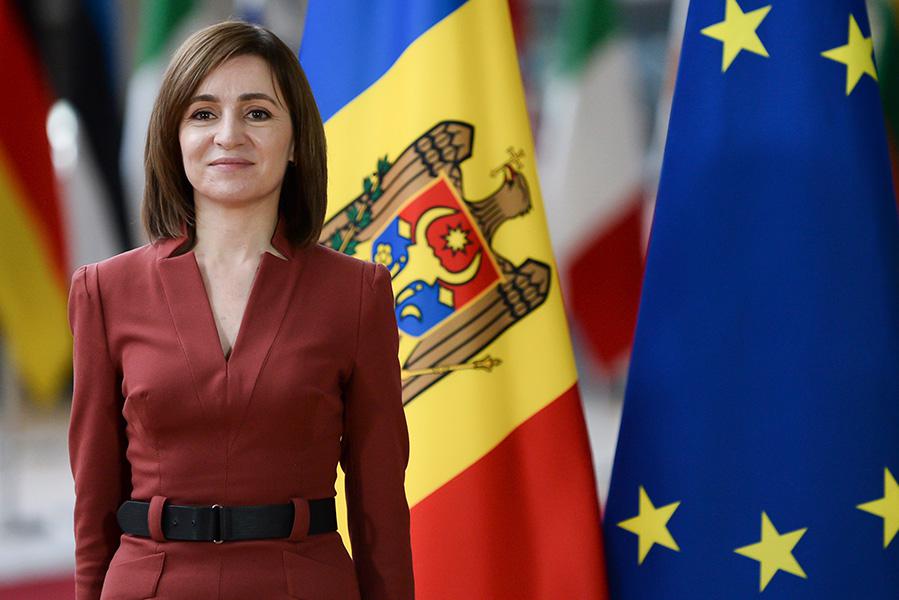
Moldovan President Maia Sandu said that the delay in her country’s European integration due to Ukraine’s blocking of the negotiation process does not serve Kyiv’s interests. She stressed that Moldova seeks to advance towards membership in the European Union while supporting Ukraine’s European aspirations.
According to Sandu, Moldova is interested in Ukraine’s accession to the EU, as Chisinau’s strategic goal is to be a neighbor to the EU states. At the same time, the president noted that her country cannot influence the resolution of Ukraine’s internal problems that hinder the advancement of the negotiation process.
“I am responsible for the progress of this country. And once again: by blocking Moldova, no one helps Ukraine,” Sandu stressed.
Moldova can advance towards the EU separately from Ukraine
Commenting on the possibility of separating the negotiation processes of the two states, the president did not directly state the need for such a decision. However, she emphasized that Moldova should not lose opportunities for European integration due to political disagreements between Ukraine and individual EU members.
Sandu reported that she discussed the issue of opening negotiation clusters with Hungarian Prime Minister Peter Magyar.
According to her, the European Commission has already confirmed the technical readiness of Ukraine and Moldova to open the next two clusters. At the same time, the approval of all EU member states is required for the adoption of the relevant decision.
The President expressed hope that a positive decision on both countries will be adopted by the end of 2026.
Why are EU accession negotiations blocked
Earlier, Hungary refused to agree on the results of the screening of negotiation clusters 4 and 5 on Ukraine’s accession to the European Union. This became an obstacle to further advancing the negotiation process.
Since Ukraine and Moldova have been moving towards EU membership in parallel for a long time, the delay in Ukrainian negotiations also affects the pace of Chisinau’s European integration.
At the same time, Moldova plans to complete the technical part of the negotiations on accession to the European Union by the beginning of 2028. The country’s strategic goal is to be ready for full membership in the EU in 2030.
Thus, the issue of further joint or separate advancement of Ukraine and Moldova remains one of the key ones in the process of enlargement of the European Union.
Without an author