The Netherlands is changing the rules for Ukrainian refugees: who will be able to stay after 2028
/ 20 November 2026 17:06
4 min to read
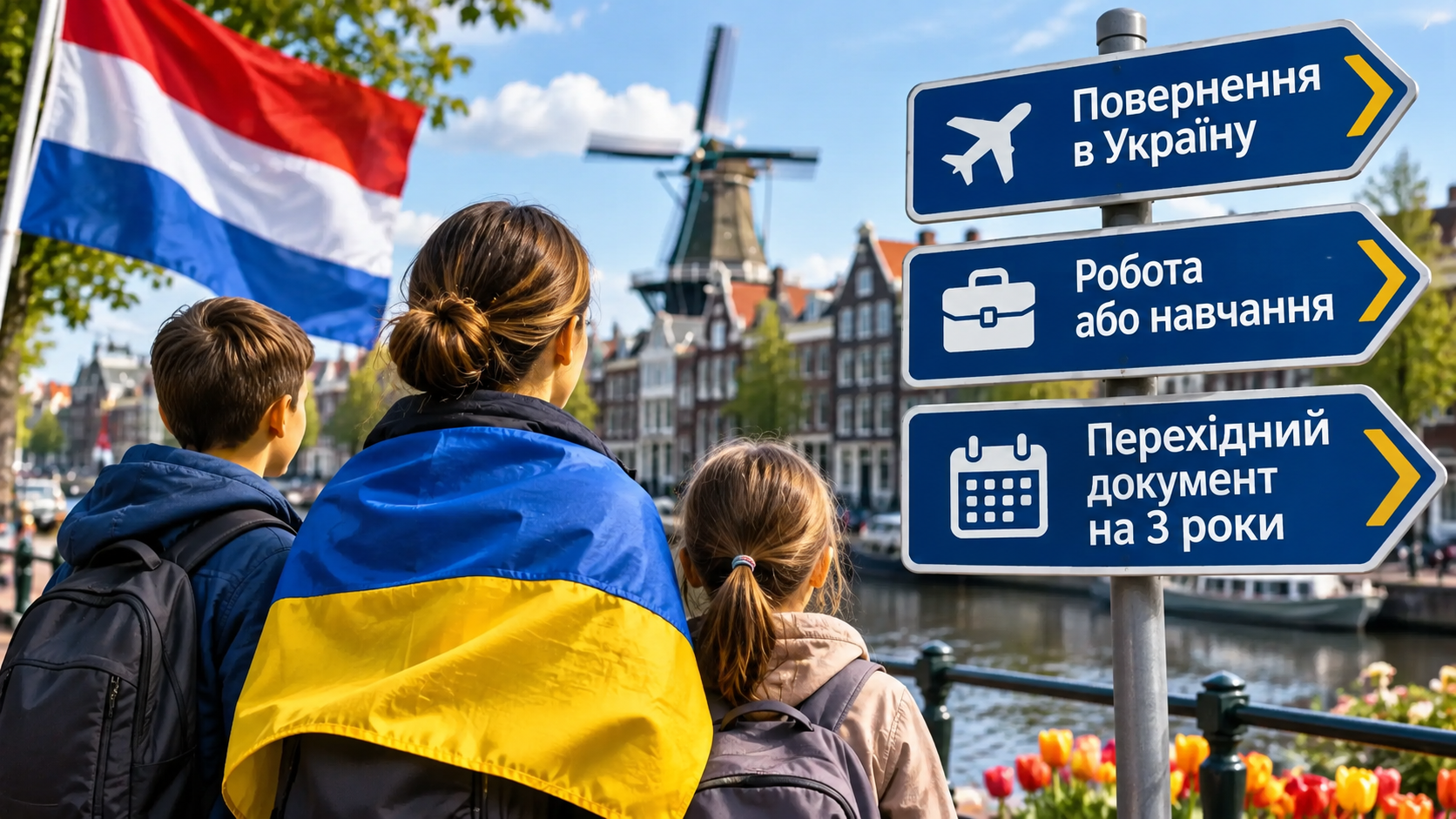
The Dutch government is developing new rules for the stay of Ukrainian refugees after the end of temporary protection on March 4, 2028. Ukrainians are offered three options for further action: returning to their homeland, applying for a residence permit through work or study, or obtaining a special transitional document for a period of three years.
Three options for Ukrainians after the end of temporary protection
According to the government plan, after March 4, 2028, Ukrainians will have the opportunity to choose one of three ways to legally stay or leave the country.
The first option is voluntary return to Ukraine. For those who make such a decision, assistance is provided with organizing the trip. In particular, the Dutch Return and Exit Service can provide air tickets to Poland, from where citizens will continue their journey home on their own.
The second option is to apply for a residence permit based on employment or study.
The third is a special transitional document that will allow them to stay in the Netherlands for another three years after the end of temporary protection.
Who will be able to obtain a residence permit for another three years
One of the key provisions of the government initiative is the introduction of a transitional document — transitiedocument.
It is assumed that it will be issued by the Dutch Immigration and Naturalization Service (IND).
Two main conditions have been set for obtaining the document:
Withdrawal of the asylum application, if it has been submitted.
Absence of a threat to public order on the part of the applicant.
Such a document should provide Ukrainians with additional time to adapt, find work and obtain another legal status.
After the three-year period, citizens will have to either switch to another type of residence permit or return to Ukraine.
Employment conditions may change for Ukrainians
The Dutch government pays special attention to Ukrainians who are already working in the country.
The problem is that the standard requirements for work permits for citizens of countries outside the European Union can be difficult to fulfill.
In particular, certain categories of permits require a high level of income and appropriate qualifications.
Therefore, the Dutch authorities are considering the possibility of adapting the conditions for obtaining work permits for Ukrainian citizens.
There is no final decision on such changes yet.
What will happen to payments and free housing
After the end of temporary protection, the government plans to gradually change the system of social support for Ukrainians.
In particular, it is planned to discontinue special living allowances (leefgeld), which are currently received by certain categories of Ukrainian refugees.
Instead, persons who meet the established criteria will be able to apply for general social assistance (bijstand).
The procedure for health insurance will also change: Ukrainians with transitional status will have to switch to the general health care system of the Netherlands.
One of the biggest challenges will be the housing issue.
The Dutch authorities plan to gradually reduce the number of refugee accommodation centers. At the same time, Ukrainians will not have automatic priority for receiving social housing.
This means that many families will have to look for housing on their own in the rental market.
Have the new rules come into force?
The proposed changes are currently in the preparation and discussion stage.
Before entering into force, the relevant legislative initiatives must undergo public consultations, examination by the State Council and parliamentary procedures.
Therefore, Ukrainians do not need to urgently change their status or apply for a transitional document solely on the basis of the published plan.
Temporary protection for Ukrainians in the European Union is currently provided until March 4, 2028.
At the same time, citizens of Ukraine who plan to stay in the Netherlands for a long time should follow the official announcements of the IND migration service and the country’s government.
The final conditions for the transition to new residence permits will become known after the adoption of relevant decisions.
Without an author