Building, Not Litigating: How Mediation Pulls Infrastructure Projects Out of a Dead End
/ 27 November 2026 16:23
12 min to read
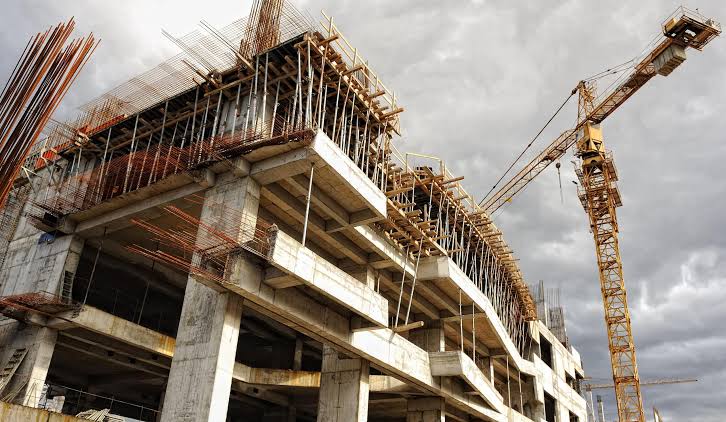
In the construction and real estate development business, time is measured not by pages on a calendar schedule, but by the daily rental cost of tower cranes, accruing interest on bank loans, and the physical deterioration of unfinished structures. Imagine a typical scenario for a large-scale infrastructure or reconstruction project: a developer and a general contractor begin building a modern residential quarter, a transport interchange, or an energy complex in the wake of a devastating natural disaster or man-made crisis. At the outset, the budget is approved, the financing schedule is agreed upon with banks, and heavy machinery moves onto the site. Yet within just a few months, the project collides with harsh reality: excavation uncovers underground utilities omitted from old maps or treacherous waterlogged soils, the cost of steel structures and transformer equipment surges due to global logistics disruptions, and the client demands urgent design modifications to comply with updated safety codes.
From there, the conflict unfolds along a destructive trajectory familiar to every participant in the construction market. The general contractor halts work on the disputed section, demands payment for additional costs along with an extension of completion deadlines, and warns that operating under the original rates is impossible. The client refuses to sign certificates of completed work, accuses the builders of falling behind schedule and acting negligently, freezes the next financial tranche, and withholds the retention deposit. At this moment, communication on the site degenerates into a so-called paper war: instead of managing construction, engineers spend their days writing hundreds of formal claim letters, assembling an evidentiary record for future lawsuits.
Without regular payments from the general contractor, dozens of specialized subcontractors, design engineers, and suppliers of concrete or utility networks pull their crews off the site and file counterclaims. Seeing the work stoppage, breached project financial covenants, and court orders freezing accounts, the lending bank immediately suspends the credit line, while insurance companies pause construction all-risk policies for an unguarded site. While lawyers draft multi-volume statements of claim, the poured foundation and exposed steel framing degrade under rain and frost, turning a promising investment asset into a hopeless, stalled ruin.
The defining feature of construction and development disputes lies in their unprecedented technical complexity, multi-party structure, and domino effect. A single site simultaneously intertwines the interests of an investor, an architectural firm, a design supervision team, a general contractor, dozens of installation companies, equipment suppliers, insurers, and municipal regulators. Any localized delay at an early stage instantly disrupts the schedule of all subsequent works, triggering a chain reaction of mutual penalties. That is precisely why the global construction industry concluded that taking such conflicts into a traditional courtroom is tantamount to destroying the project itself, prompting the creation of specialized construction mediation.
The Anatomy of a Construction Conflict: Why Forensic Examinations Turn Projects into Ruins
To understand why traditional justice proves powerless in development and construction cases, one need only examine the internal technical and legal mechanics of these disputes. Most frequently, conflicts erupt over concealed works, errors in working documentation, unpredictable spikes in building material prices, delays in handing over a prepared site, or disputes regarding installation quality right before a building is commissioned. In projects restoring damaged infrastructure, the situation grows even more complicated, as builders must work with aging structures whose true degree of metal fatigue or hidden internal cracking cannot be fully assessed until demolition begins. Moreover, amid the urgency of rapid recovery, many technical decisions on site are made verbally between the parties’ engineers to save time, leaving those agreements legally unprotected if a financial dispute later arises.
State commercial courts are poorly equipped to resolve such disagreements. Judges possess legal rather than engineering backgrounds, leaving them unable to independently evaluate whether substituting a grade of concrete or altering a waterproofing technique genuinely compromised a structure’s load-bearing capacity or was technologically justified. Even harder for a court is critical path analysis—determining whose delay, whether a client late in delivering blueprints or a contractor short on installers, actually pushed back the final completion date. As a result, virtually every construction dispute in court inevitably hits the wall of ordering a comprehensive forensic construction, engineering, and cost-estimate examination.
Conducting such examinations at state or independent forensic institutions takes anywhere from one to two years. Overburdened experts must make repeated site visits, run laboratory tests on materials, and manually cross-check thousands of pages of as-built documentation, design supervision logs, and concealed work certificates. Meanwhile, each side commissions its own alternative specialist reports, turning the trial into an endless “battle of experts” in which a judge struggles to draw a definitive line.
Throughout this entire period, the construction site remains in a state of complete legal freeze: the parties fear continuing work or even mothballing the structure lest they disturb the evidentiary record for forensic experts. Over those months and years, exposed rebar rusts, foundation pits flood with groundwater, and the cost of eventually resuming construction multiplies severalfold. Even when a court finally hands down a verdict two or three years later, it typically amounts to a formal monetary award against a company that has already gone bankrupt or stripped its assets during the prolonged litigation. The client is left with a half-ruined shell, the investor loses committed capital, and the community waits years for promised infrastructure.
London, New York, and FIDIC Rules: How the World Learned to Resolve Disputes Right on the Construction Site
Recognizing the catastrophic price of multi-year courtroom wars, leading global construction markets and international engineering associations fundamentally rewrote the rules of the game. They embedded mediation and early expert resolution directly into standard construction contracts and national legislation, turning structured negotiation into a mandatory tool of project management.
A telling example is the United Kingdom, where the construction sector became a true laboratory for alternative dispute resolution. Following the enactment of dedicated construction legislation and the introduction of strict pre-action protocols, the British system obligated parties in construction disputes to pursue compromise before turning to the courts under threat of severe financial cost sanctions. A pivotal role here is played by the Royal Institution of Chartered Surveyors in London and the London-based center CEDR, which built a unique corps of construction mediators. Neutrals in these cases are not merely lawyers, but seasoned architects, structural engineers, and quantity surveyors capable of reading technical blueprints at a glance. A vivid demonstration of this system’s effectiveness was the construction of London’s new Crossrail line and the venues for the London Olympic Park. Across these massive urban regeneration projects, hundreds of technical and financial disputes arose between general contractors and suppliers, yet thanks to a multi-tiered system of rapid mediation and early neutral evaluation, not a single conflict halted work or derailed strict deadlines.
At the global level of major infrastructure construction, standards for conflict resolution are set by the International Federation of Consulting Engineers, known worldwide as FIDIC. Its standard contract forms underpin the majority of large-scale construction and reconstruction projects across the globe. FIDIC engineers pioneered the revolutionary mechanism of standing Dispute Avoidance and Adjudication Boards. Independent engineering experts are appointed before construction even begins, regularly visit the site, observe real-time progress, and act as informal mediators the moment a disagreement between client and contractor starts brewing. This exact approach enabled the successful completion of extraordinarily complex megaprojects such as the Channel Tunnel beneath the English Channel and the massive expansion of the Panama Canal. When tunneling encountered unforeseen geological faults that threatened multi-million-dollar lawsuits and the stoppage of tunnel boring machines, standing expert boards and mediators helped the parties redistribute technical risks and adjust financing within days without halting excavation.
Construction mediation achieved equally impressive results during massive post-crisis recovery programs in the United States. Following devastating Hurricane Katrina, which flooded New Orleans and the Gulf Coast, as well as Superstorm Sandy in New York and New Jersey, the market was hit by tens of thousands of conflicts among developers, property owners, building contractors, and insurance companies. Disputes centered on assessing foundation damage, the cost of bringing rebuilt structures up to updated seismic and flood-resilience codes, and delays in insurance payouts. The American Arbitration Association and JAMS, partnering with state authorities, launched specialized rapid mediation programs for reconstruction claims. Pairing mediators with independent building inspectors made it possible to amicably resolve over eighty percent of cases within a matter of weeks, unlocking billions of dollars for the actual rebuilding of homes, bridges, and hospitals rather than decade-long court battles.
Another textbook illustration of mediation’s success in large-scale reconstruction comes from New Zealand following the series of devastating earthquakes in Christchurch in 2010 and 2011. The disasters destroyed or severely damaged most of the city’s housing stock and central business district, generating thousands of exceptionally complex engineering and cost-estimating disputes among developers, engineers, property owners, and insurers. The New Zealand government established a dedicated Earthquake Recovery Mediation Service, where each negotiating session was supported by a certified mediator, a structural engineer, and a quantity surveyor. This model enabled parties right at the negotiating table to agree on repair method statements, split ground-strengthening costs, and swiftly return construction crews to sites, transforming Christchurch into a benchmark of modern urban reconstruction.
Comparative Analysis: Courtroom Litigation vs. Engineering Mediation
Contrasting a traditional lawsuit with professional construction mediation clearly demonstrates why, in real estate development and infrastructure projects, the negotiating table is the only rational choice for businesses, banks, and investors.
The first decisive advantage lies in preserving the physical asset and maintaining uninterrupted cash flows. A lawsuit instantly freezes the site, drains corporate working capital on legal fees and expert reports, and leaves an unfinished structure exposed to the elements. Construction mediation—which typically fits into one or several intensive working sessions over two to three weeks—allows parties to swiftly unblock disputed payments, open dedicated escrow accounts for targeted financing of critical work stages, partially release retention monies, and keep cranes moving even while final financial reconciliations are being negotiated.
The second critical dimension involves prioritizing engineering common sense over procedural formalism. A judge in a courtroom is forced to act retrospectively and hunt for blame, scrutinizing whether a contractor submitted timely formal written notice of a concrete delivery delay or changing soil conditions. A mediator with construction expertise looks not into the past, but at the project documentation and the completion schedule. The neutral helps the parties engineer a practical way out of the dead end: resequencing work on other unblocked sections of the site, applying value engineering to optimize designs, approving the substitution of scarce imported materials with certified equivalents, or fairly reallocating the risks of latent defects.
A third major advantage stems from mediation’s ability to bring every link of a multi-party construction chain to a single table. In state courts, a dispute between an investor and a general contractor, a claim regarding design errors, and subcontractor demands are heard in separate lawsuits, before different judges, and at different times, producing conflicting rulings. In mediation, all key players—the developer, general contractor, chief architect, insurer, and major equipment suppliers—can sit in one conference room and untie the entire knot of mutual claims in two days through a single comprehensive settlement.
The fourth factor concerns confidentiality and protecting the investment appeal of a development project. News of litigation between a developer and a contractor immediately enters public registries and business media, sparking panic among property buyers, prompting tenants to cancel pre-lease agreements, and driving up the cost of bank financing. A confidential mediation session takes place behind closed doors, allowing partners to resolve even the sharpest disagreements without losing market confidence.
Finally, the fifth fundamental difference lies in preserving the professional workforce and technological capacity of the construction market. In major construction and infrastructure recovery, the pool of qualified engineering firms, bridge builders, and specialized installers is finite. If a developer or client destroys a general contractor in court through punitive penalties, there may simply be no other company on the market capable of quickly taking over a complex project mid-build, as a replacement contractor will demand a full revaluation of prior work and price massive risk premiums into its bid. Mediation allows obligations to be restructured, keeps experienced engineering teams on site, and carries the project across the finish line with minimal reputational damage to any participant.
A New Architecture of Trust: Why Mediation Is Becoming the Standard for Global Development and Crisis Recovery
The modern global construction industry has entered an era of constant turbulence, where classic rigid contracts built around fixed prices and unyielding schedules increasingly prove unviable. Climate disasters, cross-border supply chain ruptures, the rapid rollout of strict environmental energy-efficiency standards, construction decarbonization mandates, and the shift to complex Building Information Modeling have radically complicated the process of building and restoring modern infrastructure. Under such conditions, coordination errors, unforeseen technical challenges, and resource price fluctuations are no longer exceptions, but a natural part of any major project’s lifecycle.
In this new reality, leading global developers, institutional infrastructure funds, sovereign investment vehicles, and international lenders are rethinking their entire approach to contractual risk. Before approving financing for a large-scale residential complex, an industrial park, or an energy hub, insurance underwriters and bank risk managers increasingly scrutinize not only architectural blueprints, but also the dispute resolution mechanisms embedded in contract documentation. Including a mandatory multi-tiered mediation clause in a construction contract is no longer viewed as a sign of client weakness or readiness to concede. On the contrary, for major investors, a built-in mechanism for rapid engineering mediation has become an essential standard of sound corporate governance that directly lowers the cost of capital and insures investments against catastrophic litigation downtime.
Shifting from a confrontational litigation model to collaborative engineering mediation shapes a new culture of global development and crisis recovery. When clients, architects, contractors, and financiers possess a proven tool for rapid, confidential, and technically sound dispute resolution, their focus shifts away from hunting for someone to blame and back toward the true purpose of construction—creating reliable, safe, and modern cities, transport arteries, and energy systems that will serve people for decades.