
Can you be fined for playing Russian music in a car or in a story: what the law actually provides?
/ 6 July 2026 14:44
5 min to read
After the start of the full-scale war, the issue of using Russian cultural products in Ukraine became not only a social one, but also a legal one. The state introduced a number of restrictions to protect the information space from the content of the aggressor country, but many myths still circulate around this topic.
In particular, messages regularly appear on social networks about alleged fines for listening to Russian songs in one’s own car or for using such compositions in Instagram or TikTok stories. However, the current legislation does not provide for automatic liability only for the fact of private listening to Russian music.
What Law No. 2310-IX prohibits
The main regulatory act in this area is the Law of Ukraine No. 2310-IX of June 19, 2022, which amends the Law of Ukraine “On Culture”.
According to Article 15-1 of the Law “On Culture”, public performance, demonstration, showing, public announcement and other public use of phonograms, videograms, music videos and works of performers who are or were citizens of an aggressor state after 1991 is prohibited in Ukraine.
At the same time, the law does not prohibit citizens from listening to such music for personal needs. The key is the distinction between private listening and public use of a work.
Is it possible to listen to Russian music in your own car
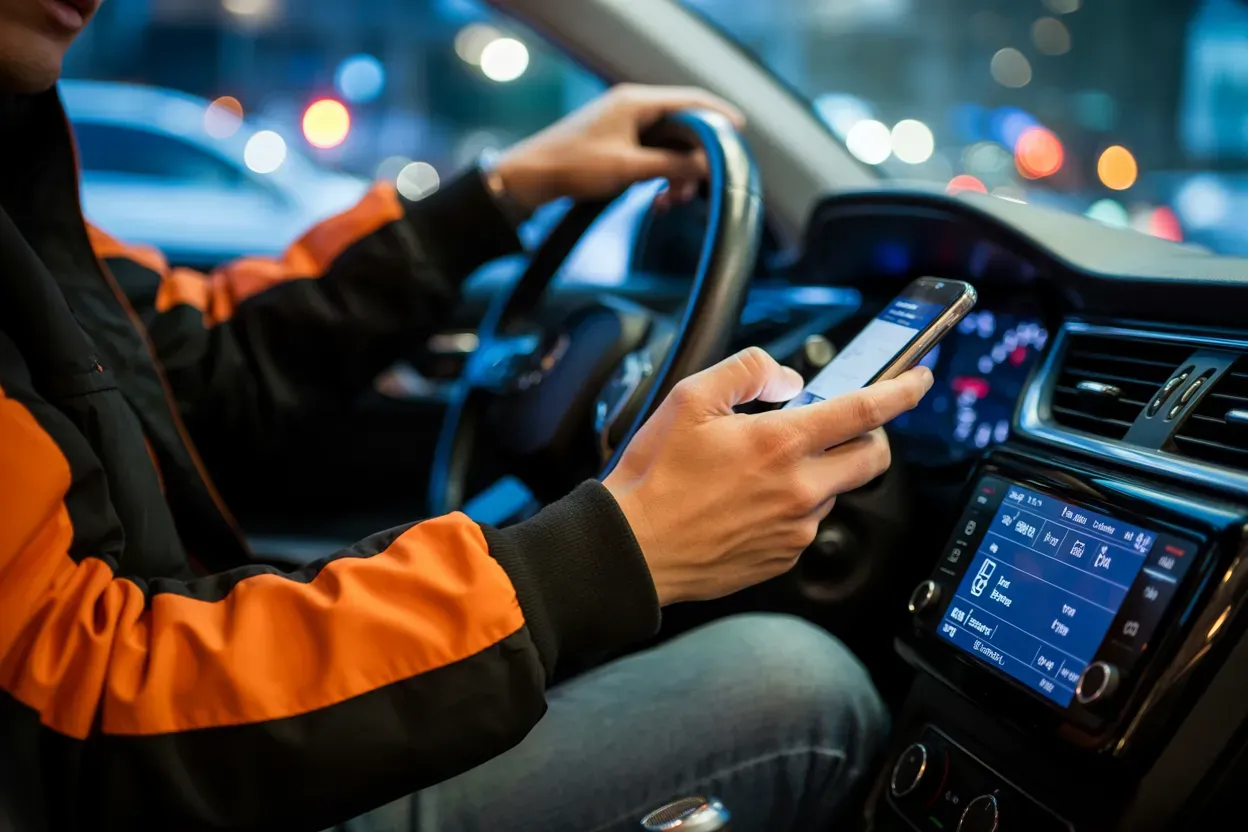
Current legislation does not contain a direct ban on listening to Russian songs in a private car. If the music is played only for the driver and passengers, such use is considered private.
Another situation may arise if the music is played so loudly that it is heard by random passers-by or an indefinite circle of people. For example, if a car is parked in a parking lot with open windows, a powerful speaker system is used, and the sound is actually broadcast outside.
In this case, law enforcement officers can assess the circumstances individually: whether it was private use or actual public playback of music.
Is there a fine of 25 thousand hryvnias
The information about an automatic fine of 25 thousand hryvnias for Russian music in a car does not correspond to current legislation.
In Ukraine, legislative initiatives have indeed been discussed to increase liability for violating restrictions on Russian cultural products, but currently there is no norm that would provide for a fine only for listening to Russian music in one’s own car.
At the same time, liability may arise under other articles if a person’s behavior violates public order or the rules of silence. For example, under Article 182 of the Code of Administrative Offenses, liability is possible precisely for violating the requirements for observing silence, and not because of the language or origin of the musical work.
And what about stories on Instagram or TikTok
The most questions arise regarding the use of Russian music on social networks.
On the one hand, an Instagram story or a TikTok video is a publication accessible to other users. If it is accompanied by a composition by a Russian artist who falls under legislative restrictions, this can be considered as the distribution of the work among an unspecified circle of persons.
On the other hand, Ukrainian legislation currently does not contain a separate norm that would directly establish liability specifically for posting such content in a personal account. That is, there is no special fine for stories with Russian music today.
A different assessment may be made if such content is used by a business: a restaurant, cafe, shop, beauty salon, nightclub or other business entity. In this case, the publication can be considered as part of commercial activity and as one of the ways of public use of a musical work.
What does case law show
Case law currently does not indicate mass fines specifically for stories with Russian music.
At the same time, social networks have already become the subject of legal proceedings. For example, in 2025 in Lviv region in case No. 446/2970/25 the court brought the mother of a minor to administrative liability after her daughter published a video with Russian music and obscene language on TikTok. However, the liability was not for the fact of using the music itself, but for improper performance of parental duties under Article 184 of the Code of Administrative Offenses. The fine was UAH 850, and a court fee was also collected.
However, there are examples of liability of institutions and event organizers for public performance of Russian compositions. In particular, Boryspil City District Court in case No. 359/7565/25 fined the director of an entertainment complex after a concert during which Russian-language songs were performed.
Also in Kyiv, a woman was prosecuted for petty hooliganism after listening to Russian music and dancing on her balcony on the Day of Mourning. In this case, the report was drawn up under Article 173 of the Code of Administrative Offenses, and not under a special provision banning Russian music.
Ukrainian legislation does not prohibit private listening to Russian music at home or in one’s own car. The restrictions apply specifically to the public use of works by performers who are or were citizens of an aggressor state after 1991.
Regarding stories on social media
Without an author