Mediation with the Tax Collector: How Europe and the US Taught Tax Authorities and Businesses to Settle Without Courts
/ 6 November 2026 12:44

16 min to read
In most legal systems, administrative and tax relations are traditionally considered the most rigid, almost impenetrable terrain for compromises. Unlike commercial or civil law, where the parties act as equal subjects free to dispose of their rights, an entirely different logic operates in relations with the state. This is a world of public authority and imperative norms, where tax or regulatory bodies act strictly within the limits of clearly defined statutory powers, and the taxpayer is obliged to fulfill legal demands and pay established levies.
A typical tax conflict scenario in large or medium-sized businesses unfolds along a familiar trajectory. During a routine or extraordinary audit, regulatory authorities uncover discrepancies in the interpretation of complex financial transactions, preferential tax regimes, pricing methodologies, or the structuring of international deals. As a result, an audit act is drawn up, a tax assessment notice is issued imposing additional tax liabilities and financial penalties, and the company’s assets or bank accounts face the threat of freezing orders.
For a business, such a turn of events automatically means the withdrawal of significant working capital, severe financial risks, and a prolonged procedural war. For the state, it almost always means freezing actual budget receipts for years, as the taxpayer embarks on the exhausting path of administrative and judicial appeals.
The paradox of an administrative dispute lies in its deep procedural asymmetry. On one side stands the state apparatus, possessing a monopoly on public enforcement and often constrained by rigid internal instructions. On the other side stands the taxpayer, for whom every month of litigation drains liquidity and ruins investment attractiveness.
At this juncture, a fundamental legal question inevitably arises: is mediation and out-of-court settlement even possible in a domain dominated by public order? After all, a tax inspector de jure has no right to “forgive” a legally assessed tax or grant a subjective discount, nor should a taxpayer agree to unfounded claims merely for the sake of peace. Nevertheless, global practice tasked financial and legal thought with finding an answer to this challenge, giving rise to the concept of tax and administrative mediation.
Boundaries of Public Order: What Is Actually Negotiated in Tax Mediation
Before analyzing the internal mechanism of tax compromise, it is necessary to answer a fundamental question: where, how, and on the basis of which legal norms can mediation be conducted in the realm of public law, where every step of a state inspector is strictly regulated?
Tax mediation does not exist in an institutional vacuum, nor is it the result of informal, behind-the-scenes arrangements. It is conducted on clearly defined statutory platforms, according to pre-established procedures, and based on specific provisions of domestic and international law.
In the United States of America, the statutory framework for engaging independent neutrals in tax disputes is Section 7123(b) of the Internal Revenue Code, enacted by the Internal Revenue Service Restructuring and Reform Act of 1998. In implementation of this provision, official IRS regulations were developed, notably Revenue Procedure 2014-63, which clearly define the procedure for conducting mediation both within the Fast Track Settlement framework during audits and during pre-trial administrative appeals (Post-Appeals Mediation). Mediation takes place in the official premises of the IRS Independent Office of Appeals, involving certified appeals officers or external neutral specialists.
In the United Kingdom, the operation of Alternative Dispute Resolution (ADR) relies on the discretionary powers of Her Majesty’s Revenue and Customs (HMRC) to ensure the collection and management of revenue, codified under the Taxes Management Act 1970, alongside specialized departmental procedural guidance. Applications are submitted via a dedicated electronic portal, after which a specialized HMRC unit assesses the eligibility of the case within thirty days and appoints a mediation session, typically presided over by an accredited mediator who took no part in the original audit.
In the Netherlands, the statutory foundation for tax mediation rests upon the General Administrative Law Act (Algemene wet bestuursrecht) and fundamental unwritten principles of proper administration. Within the “Horizontal Monitoring” framework, the taxpayer and the tax authority sign a formal covenant of cooperation, which mandates transitioning to mediation whenever evaluative or methodological discrepancies arise prior to submitting the annual tax return.
Procedurally, tax mediation is initiated upon the written consent of both parties—the taxpayer and the tax authority. Either party may act as the initiator the moment it becomes apparent that traditional negotiations have reached a deadlock. Acceptance of a case into mediation officially suspends the running of statutory limitation periods for filing court appeals or issuing final tax assessment notices, creating a safe temporal corridor for finding a compromise.
The primary misconception that arises when first encountering tax mediation is the assumption that it constitutes an arbitrary distribution of off-the-record discounts or a compromise over the tax principal itself. In public law, mediation operates under fundamentally different rules. It never touches imperative statutory norms, does not violate the constitutional principle of universal taxation, and does not reduce to simple financial bargaining over sovereign debt forgiveness. The objective is not to “write off half the debt,” but to accurately establish the factual circumstances of the case, correctly qualify transactions, and eliminate discrepancies in the evidentiary base.
Tax mediation operates within a strictly defined corridor of compromise, where only those elements subject to objective uncertainty become open to negotiation. First and foremost, this concerns establishing the factual reality of business operations and interpreting complex primary evidence. When an audit authority faces the absence of a formal document or a differing view on the economic substance of a transaction, litigation devolves into a game of procedural traps. Mediation enables parties to look beyond formalistic proof and verify the genuine economic substance of an operation under the substance-over-form principle, dispelling unfounded suspicions of fictitious activity.
This corridor of uncertainty manifests most acutely in disputes concerning transfer pricing, valuation of intangible assets, royalties, and international tax planning. In these areas, no single, mathematically absolute tax figure exists. Key factors include choosing the proper calculation methodology, defining comparable market price ranges, and applying the arm’s length principle. Litigation in such cases typically turns into an exhausting battle of party-retained experts lasting for years. Tax mediation makes it possible to bring independent technical and financial expertise directly into the negotiation process, analyze the economic models of both sides, and identify a justified equilibrium point within the market range that both parties recognize as lawful and equitable.
Another crucial domain for agreements is the qualification of non-standard or novel transactions for which national legislation lacks explicit regulation and judicial practice has yet to establish a unified approach. This includes operations involving digital assets, complex cross-border licensing deals, international corporate restructurings, or cloud IT services. The mediation process allows parties to align on the legal nature of income, establish the appropriate tax treatment, and mitigate double taxation risks before the audit authority issues a legally toxic decision.
Beyond evaluating factual merits, the mediation process effectively refines purely procedural matters. If a taxpayer acknowledges a technical error or an underpayment of the tax principal, the mediation agreement focuses on designing a realistic, economically sound installment schedule for settling the liability. In exchange for good-faith correction of errors and payment of the tax principal, the tax authority receives lawful grounds to waive or significantly abate accrued interest and financial penalties. This prevents business bankruptcy or account freezes while guaranteeing real cash inflows for the state budget.
The status and persona of the mediator play a pivotal role in ensuring the legal integrity of this process. In tax and administrative disputes, the mediator cannot be a generic process facilitator or negotiator. We speak of a neutral expert possessing the highest level of industry expertise in financial law, auditing, or tax consulting. Often this role is assumed by former administrative court judges, retired senior auditors, or prominent tax law experts who are equally fluent in legal statutory language and accounting ledgers.
The primary institutional function of a mediator in a public law dispute is to construct a procedural and legal shield for tax officials themselves. In traditional systems, a tax inspector is frequently compelled to reject any compromise out of fear of being accused of official negligence, abuse of power, or corrupt collusion with the taxpayer. The mediator creates a transparent, fully documented, and legally grounded platform where every step toward compromise is backed by expert analysis and a joint protocol. As a result, the tax authority obtains lawful, audit-proof grounds for making a balanced decision, while the taxpayer secures a real opportunity to protect economic assets without engaging in years of draining litigation.
Models of Light: From British HMRC ADR to the Dutch “Gradient of Trust”
Global experience proves that effective and legally robust out-of-court resolution of tax disputes requires a specially constructed institutional framework capable of winning the trust of two fundamentally different and inherently cautious camps: private business and fiscal authorities. Rather than attempting to adapt general civil procedures to public law realities, the world’s leading economies have developed specialized tax mediation models, each reflecting its national legal culture and financial control structure.
The British Model: HMRC Alternative Dispute Resolution (ADR)
In the United Kingdom, Her Majesty’s Revenue and Customs (HMRC) established a flexible, multi-layered Alternative Dispute Resolution mechanism. This tool is not a separate quasi-judicial tribunal, but acts as a procedural bridge at any stage of a conflict—from the initial phases of a field or desk audit to the point when a case has already been appealed to the First-tier Tribunal (Tax Chamber).
The procedure is equally accessible to individual taxpayers and small businesses in disputes concerning income tax assessments or VAT, as well as to multinational enterprises involved in high-stakes disputes over transfer pricing, thin capitalization, or aggressive tax planning.
The distinctiveness of the British ADR lies in its refined approach to the status of the neutral party. The mediator can be a specially trained and accredited HMRC officer who belongs to a dedicated mediation unit and, under procedural rules, has had no prior involvement in the specific audit or the audit team concerned. In more complex or reputationally sensitive disputes, parties may engage an external independent mediator from specialized registers.
The primary task of a mediator in the British system is not to issue a binding determination, but to remove communication bottlenecks, encourage transparent evidence exchange, pin down specific methodological disagreements, and verify whether the audit position rests on a distorted interpretation of facts. Official statistics from the British tax authority consistently show impressive results: approximately eighty percent of cases accepted into ADR are resolved fully or partially through a written agreement without requiring a determination by the Tax Tribunal. This saves taxpayers millions of pounds in litigation costs and legal fees, while sparing the Treasury substantial resources required to maintain judicial infrastructure.
The Dutch Model: Horizontal Monitoring and the “Gradient of Trust”
The Netherlands went even further in reforming fiscal philosophy, developing a concept unique in continental Europe: Horizontal Monitoring (Horizontaal Toezicht) combined with integrated tax mediation. Moving away from traditional vertical control centered on authoritarian pressure, unannounced audits, and punitive measures, the Dutch model relies on a gradient of trust, transparency, and preliminary alignment.
Large and medium-sized enterprises enter into formal cooperation covenants with the Dutch Tax and Customs Administration. Under these agreements, businesses voluntarily commit to proactively disclosing all potentially contentious or ambiguous tax risks, novel financial models, or transaction structures prior to filing their annual tax returns. In return, the tax authority guarantees prompt legal feedback without imposing automatic penalties.
Should an acute methodological dispute or asset classification disagreement arise within the Horizontal Monitoring framework, the parties do not escalate into formal litigation. Instead, they immediately engage a tax mediator. In the Dutch system, the mediator operates with a clear mandate: preserve the taxpayer’s operational and economic viability, prevent a drawn-out liquidity crisis, and simultaneously ensure the full and lawful collection of budget revenues. Tax mediation in the Netherlands is viewed not as a means of tax avoidance, but as a highly civilized tool for preventive tax risk management, where penalties and interest cease to be the primary metrics of tax administration success.
The American Model: IRS Fast Track Settlement and the Office of Appeals
In the United States of America, the Internal Revenue Service (IRS) built an exceptionally pragmatic, multi-tiered out-of-court dispute resolution system, key elements of which include Fast Track Settlement (FTS) procedures and the operation of the IRS Independent Office of Appeals. The American approach prioritizes maximum speed and financial pragmatism.
The Fast Track Settlement procedure allows parties to enlist an experienced Appeals Officer as a neutral mediator directly during an audit or examination, before a final audit report is issued or formal statutory notices of deficiency are served.
During Fast Track Settlement sessions, the Appeals Officer works alongside the examination team and company representatives. Armed with deep expertise in U.S. Tax Court case law and evaluating each party’s real probability of prevailing in litigation, the mediator offers an objective analysis of the dispute based on the concept of hazards of litigation.
If the examination team recognizes that its legal position carries only a fifty percent probability of success in court, it acquires the legal authority to reach a procedural compromise, accepting partial deductions or adjusting the tax base. This flexible mechanism enables American businesses to conclude complex corporate audits in thirty to sixty days instead of litigating for years in the U.S. Tax Court, while allowing the IRS to secure swift, uninterrupted revenue streams for the federal budget without accumulating uncollectible tax debt.
Comparative Analytical Overview: Judicial Litigation vs. Tax Mediation
Contrasting classic judicial proceedings in tax matters with a mediation-based approach clearly highlights the advantages of the latter for both private capital and the public interest.
The first fundamental distinction is the level of publicity and reputational risk. A court dispute with an administrative or tax body immediately enters public state registers. For public companies, international investors, or businesses seeking bank financing, the presence of open litigation involving major tax assessments or allegations of tax avoidance serves as an automatic red flag. This leads to credit rating downgrades, frozen credit lines, and counterparty attrition. In contrast, tax mediation takes place under strict confidentiality, safeguarding the taxpayer’s commercial reputation.
The second factor is time and liquidity dynamics. Administrative litigation across three court instances typically spans two to five years. Throughout this period, the taxpayer’s funds remain tied up, statutory interest continues to accrue, and the business operates under ongoing legal uncertainty. Tax mediation allows even the most intricate disputes over transaction classification or transfer pricing to be resolved in a few intensive sessions within weeks or months.
The most significant procedural difference lies in the psychological posture of the parties. In court, a tax inspector is compelled to defend any position taken by the agency out of fear of internal audits, allegations of exceeding authority, or corruption risks if a claim is dropped. The courtroom becomes an arena of rigid confrontation. Mediation, by contrast, establishes a legitimate, institutional framework where an executed agreement protects the tax official from accusations of wrongdoing, as the compromise relies on approved procedural guidelines and the mediator’s expert evaluation.
What This Means for Ukraine
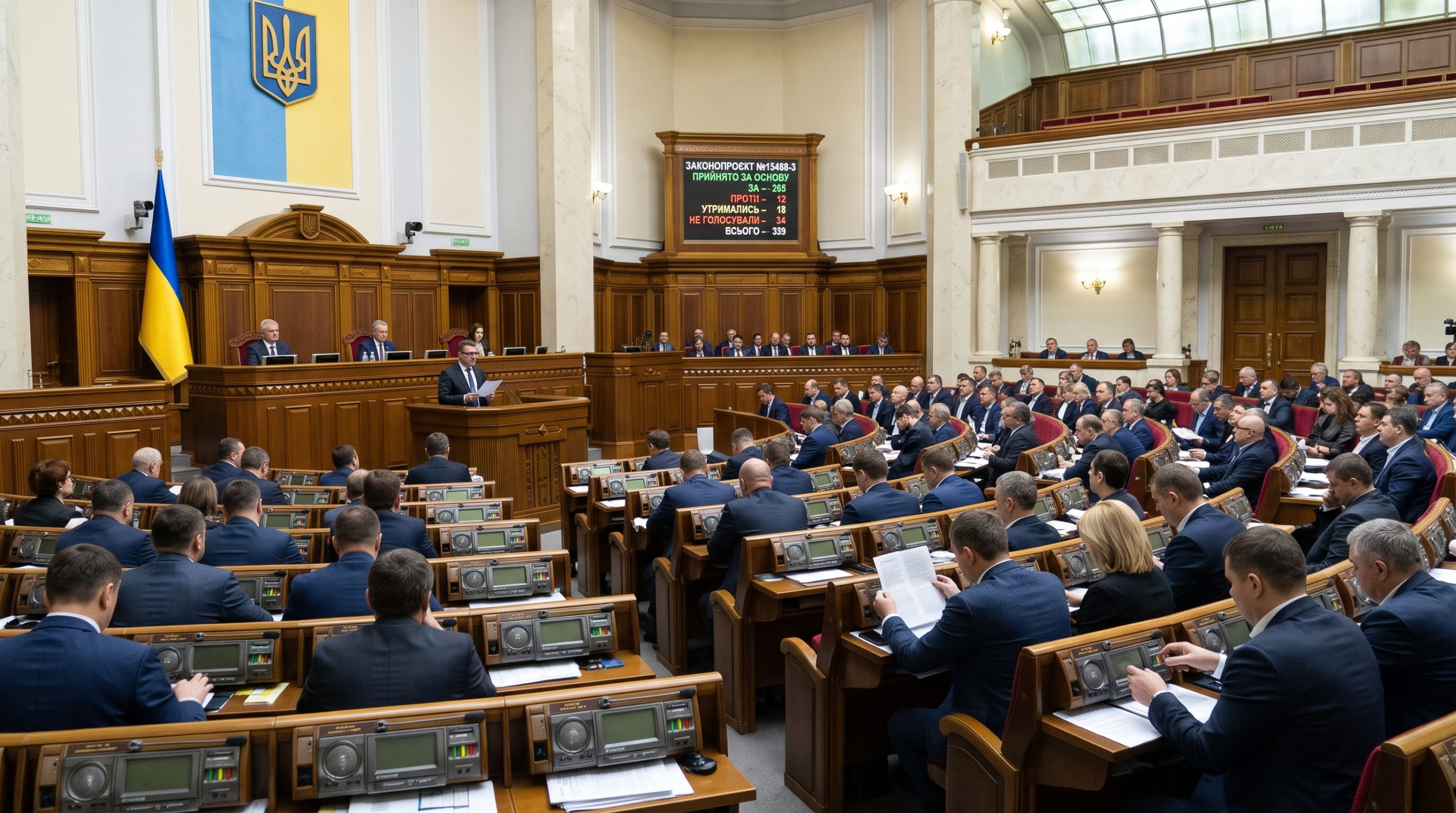
For Ukraine, where relations between the State Tax Service (STS) and business have historically been characterized by high levels of mutual distrust and systemic tension, introducing tax and administrative mediation is not merely a legal innovation, but a strategic imperative for the entire economy. The scale of the problem is underscored by stark figures: approximately sixty-five thousand tax disputes are currently pending in Ukrainian courts, while the State Tax Service itself processes between ten and thirteen thousand administrative appeals annually. This overwhelming caseload reflects a systemic procedural crisis: the judiciary is inundated with claims seeking to invalidate tax assessment notices and unblock tax invoices, the state expends substantial resources on court representation, and businesses are forced to lock up capital in reserves for years.
For a long time, the statutory framework remained narrow. The enacted Law of Ukraine “On Mediation” and corresponding amendments to the Labor Code effectively applied only to civil, family, corporate, and individual labor relations, leaving the Tax Code of Ukraine outside the scope of mediation reform. Tax inspectors lacked a transparent, legally protected mechanism to enter into settlement agreements or conduct pre-trial alignment of positions without facing risks of criminal prosecution for allegedly causing loss to the state budget.
However, the situation has advanced to a qualitatively new level of institutional momentum. The State Tax Service of Ukraine has officially drafted a specialized bill on tax mediation. Developed with advisory support from the Ukrainian Academy of Mediation, the draft law has been prepared for submission to the Ministry of Finance of Ukraine.
The catalyst for drafting this legislation was a successful pilot project conducted by the Tax Service in collaboration with the Business Ombudsman Council. Within this experiment, several complex and reputationally sensitive disputes involving large taxpayers were settled out of court. Practice proved that resolving such conflicts with the participation of an independent neutral allows parties to reach compromise without filing court lawsuits, saving time and financial resources for both the state and entrepreneurs.
According to the conceptual framework of the draft law, tax mediation will not replace existing administrative or judicial appeal routes, but will serve as an additional, flexible, and voluntary instrument for business. The procedure rests on the principles of voluntariness for both sides, strict confidentiality of negotiations, and the involvement of an independent mediator. Upon reaching a compromise, the parties execute a binding agreement. If an agreement cannot be reached, the taxpayer retains the full constitutional right to apply to court or continue administrative appeals.
Enacting this law and introducing corresponding amendments to the Tax Code of Ukraine will establish a legal shield for tax officials, granting them statutory grounds to render balanced compromise decisions without fear of allegations of unlawful gain. By pairing an adequate statutory framework with the training of a qualified pool of tax mediators under the auspices of the Business Ombudsman Council and professional associations, Ukraine will gain the opportunity to transition from exhausting courtroom battles to a civilized, predictable, and transparent dialogue between the state and business.