NABU detectives cannot conduct independent examinations if they are dependent on the prosecution — judge of the Appellate Chamber of the Supreme Judicial Court
/ 11 November 2026 14:17
4 min to read
Employees of the NABU Digital Forensic Laboratory cannot act as independent forensic experts in criminal proceedings if their official or other dependence on the prosecution is established. At the same time, working in the NABU itself does not mean that an expert opinion is automatically inadmissible.
Why the independence of NABU experts raises questions
According to the judge, the NABU Digital Forensic Laboratory functions as a structural unit of detectives, and not as a separate forensic institution.
Its employees participate in investigative actions, examine electronic evidence, advise detectives and prosecutors of the Specialized Anti-Corruption Prosecutor’s Office, and also conduct computer-technical examinations.
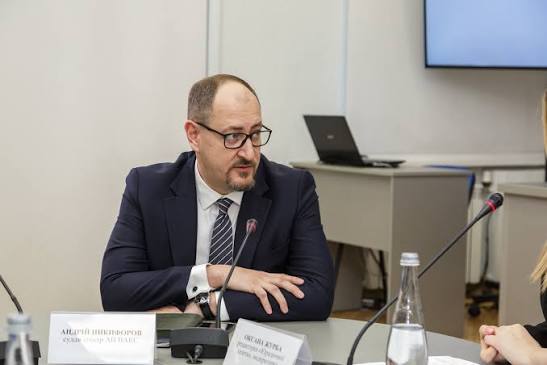
According to Nikiforov, such an organizational model creates grounds for checking the independence of experts.
“A detective whose official or other dependence on the prosecution is established cannot conduct an independent forensic examination for it,” the judge noted.
At the same time, he emphasized that the appointment of a person as an expert by a relevant resolution does not in itself confirm his independence or proper qualifications.
Can a detective be both a specialist and an expert
The judge paid special attention to the provisions of the Criminal Procedure Code of Ukraine.
According to Article 79 of the CPC, a person’s previous participation in criminal proceedings as a specialist is not in itself grounds for his disqualification as an expert.
However, according to Nikiforov, this norm does not allow combining the functions of the prosecution and an independent forensic expert.
If a laboratory employee actually performed the functions of an investigator or operational officer, his further involvement in conducting an examination may raise reasonable doubts about impartiality.
At the same time, ordinary technical assistance during investigative actions is not an automatic basis for disqualification.
By what criteria should expert opinions be checked
The judge proposed five criteria for evaluating expert opinions of NABU employees:
Legality of engagement. On what legal basis was the person appointed as an expert.
Professional qualifications. Does he have the necessary education, training, experience and special knowledge.
Independence. Is there any official or other dependence on the prosecution.
Justification of engagement. Why was the expertise assigned to this specialist, in particular if there are certified experts in the relevant specialty.
Proof of admissibility. Did the party submitting the opinion confirm the proper legal grounds for its use.
Nikiforov drew attention to the fact that the defense should not independently prove the lack of qualifications or independence of the expert using internal NABU documents to which it does not have access.
At the same time, the defense’s objections must be specific and substantiated.
What does the practice of the ECHR say
In his analysis, the judge also turned to the practice of the European Court of Human Rights.
In particular, in the cases of Bönisch v. Austria, Stoimenov v. the former Yugoslav Republic of Macedonia and Brandstetter v. Austria, the ECtHR considered the issues of the independence of experts, their procedural role and compliance with the principle of a fair trial.
The practice of the ECtHR shows that the formal affiliation of an expert to a particular institution is not always a sufficient basis for concluding that he is biased.
The specific circumstances of the case and the presence of objectively justified doubts about the independence of the expert are of decisive importance.
What consequences this may have for NABU cases
The position expressed by the judge may become an additional argument for lawyers when challenging the admissibility of the conclusions of computer-technical examinations in NABU criminal proceedings.
However, this does not mean that all examinations conducted by laboratory employees will automatically be recognized as inadmissible evidence.
The issues of the independence, competence and procedural role of the expert must be assessed individually in each proceeding.
The discussion also becomes relevant against the backdrop of draft law No. 15569, which provides for the creation of NABU’s own forensic examination center.
Without an author