
Over 225,000 war crimes: The Supreme Court is shaping a new practice of justice in wartime
/ 28 April 2026 11:23
2 min to read
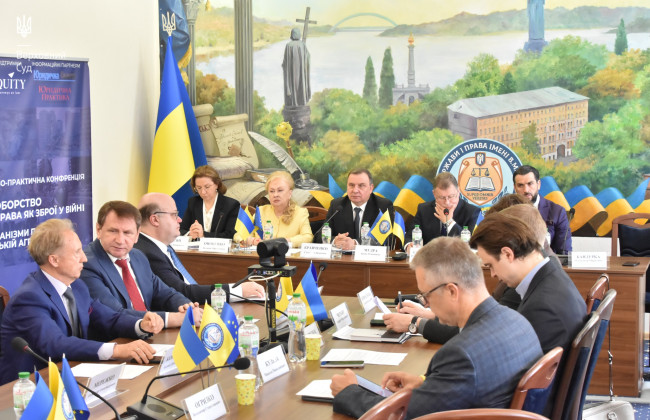
As of today, more than 225 thousand war crimes have been registered in Ukraine, and a significant part of them are already under consideration by the courts. This was stated by the Chairman of the Supreme Court Stanislav Kravchenko during an international conference dedicated to legal mechanisms during wartime.
According to him, the full-scale aggression of the Russian Federation has become an unprecedented challenge for the entire legal system of Ukraine, while at the same time stimulating the development of new approaches to law enforcement. In particular, Ukrainian courts are actively integrating the norms of international humanitarian law, including the provisions of the Geneva Conventions, into national practice.
Currently, more than 3 thousand criminal proceedings on war crimes have already been submitted to the courts of first instance, of which more than 2 thousand have been considered. More than 200 cases have been reviewed on appeal, and more than 40 — directly by the Supreme Court.
The court pays special attention to the formation of legal positions on new categories of cases. In particular, the Grand Chamber defined the approach to the subjects of the crime of aggression under Article 437 of the Criminal Code of Ukraine, clearly distinguishing them from combatants and emphasizing the responsibility of the political and military leadership of the aggressor state.
In addition, national courts are already applying the mechanism of in absentia justice: in particular, more than fifty deputies of the State Duma of the Russian Federation have been convicted of encroaching on the territorial integrity of Ukraine. Cases against judges of the Constitutional Court of the Russian Federation involved in legitimizing the occupation of Ukrainian territories are also being considered.
In parallel, Ukraine continues to adapt its legislation to the standards of international criminal law, in particular through the ratification of the Rome Statute and the development of mechanisms of responsibility for war crimes and collaboration activities.
As Stanislav Kravchenko emphasized, modern justice in wartime is not only about fixing crimes, but also about forming a systemic mechanism of inevitability of responsibility, which is based on consistent judicial practice and international cooperation.
Without an author