
Switzerland will allocate about $11 million to support the Ukrainian agricultural sector
/ 24 September 2026 11:20
2 min to read
Switzerland will allocate 9 million Swiss francs — about $11 million — to support the agricultural sector of Ukraine. The funds are planned to be used for temporary storage of grain and the development of organic production.
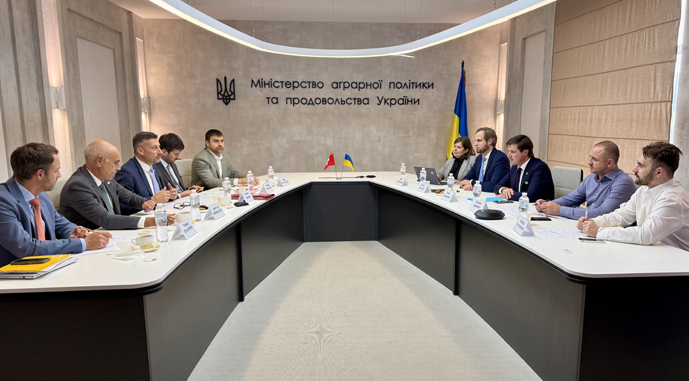
The new support programs were discussed during a meeting of the leadership of the Ministry of Agrarian Policy and Food of Ukraine with the Delegate of the Swiss Federal Council for Ukraine, Ambassador Jacques Gerber.
More than $3.6 million will be allocated for grain storage
Of the total amount, 3 million Swiss francs, or about $3.64 million, are planned to be allocated for temporary storage of Ukrainian grain.
The financing will be provided within the framework of a project of the Food and Agriculture Organization of the United Nations (FAO).
Another 6 million francs — about $7.28 million — are planned to be allocated for the development of the organic sector of Ukraine over the next three years.
Minister of Agrarian Policy and Food Taras Vysotsky stressed that one of the key tasks now is to preserve the already grown harvest and ensure that agricultural producers can continue their work.
At the same time, according to him, Ukraine needs to develop areas with higher added value – organic production, dairy and meat sectors, and processing. This is especially important given the limited opportunities for exports.
Another 30 million francs to support Ukrainian business
Switzerland has separately presented a much larger program to support Ukrainian business with a total volume of 30 million Swiss francs.
It will cover, in particular, agribusiness, food and woodworking industries.
The program provides for grant support for authorities, business associations, as well as small and medium-sized enterprises. Its launch is scheduled for early November 2026.
Another pilot project may be launched
Ukraine has also suggested that the Swiss side consider the possibility of creating infrastructure for the safe disposal of animal by-products.
The potential pilot project is expected to help meet European veterinary and environmental requirements, as well as expand access to the relevant infrastructure for small producers.
Without an author