
Taiwan is studying Ukraine’s experience: the island plans to produce up to 100 thousand drones per month
/ 10 August 2026 09:16
4 min to read
Taiwan plans to significantly increase the production of drones and use Ukraine’s experience in using drones to build its own deterrent system against China. By 2030, the island expects to produce up to 100,000 UAVs per month.
This is reported by The New York Times.
One of the key elements of Taiwan’s new defense concept should be the creation of a dense network of drones, artillery and mobile missile systems capable of striking enemy forces before they even approach the island.
Ukrainian experience has become one of the benchmarks
Taiwanese military and representatives of the defense industry are carefully analyzing the experience of the Russian-Ukrainian war, in particular, the use of relatively cheap unmanned systems by Ukraine to destroy expensive military facilities at a considerable distance.
Taipei pays special attention to operations using strike drones, which have demonstrated the ability to inflict significant losses on the enemy without the use of traditional expensive weapons systems.
In the event of a potential conflict, Taiwan wants to use maneuverable drones to attack Chinese naval ships while they are still leaving ports and forming landing groups.
Production is planned to be increased to 100,000 UAVs per month
In the first quarter of 2026, foreign sales of Taiwanese drones reached about $115 million. This is already more than Taiwan exported in all of 2025.
One of the largest buyers of Taiwanese UAVs was the Czech Republic. At the same time, according to specialized research, some of these drones may eventually end up in Ukraine.
By 2030, Taiwan plans to produce about 100,000 drones per month. Approximately half of the production should remain for its own defense needs, and the other half is planned to be exported.
For Taiwan, this is not only a matter of defense, but also an opportunity to form a powerful domestic unmanned systems industry against the backdrop of rapidly growing global demand.
The “Hellscape” Strategy
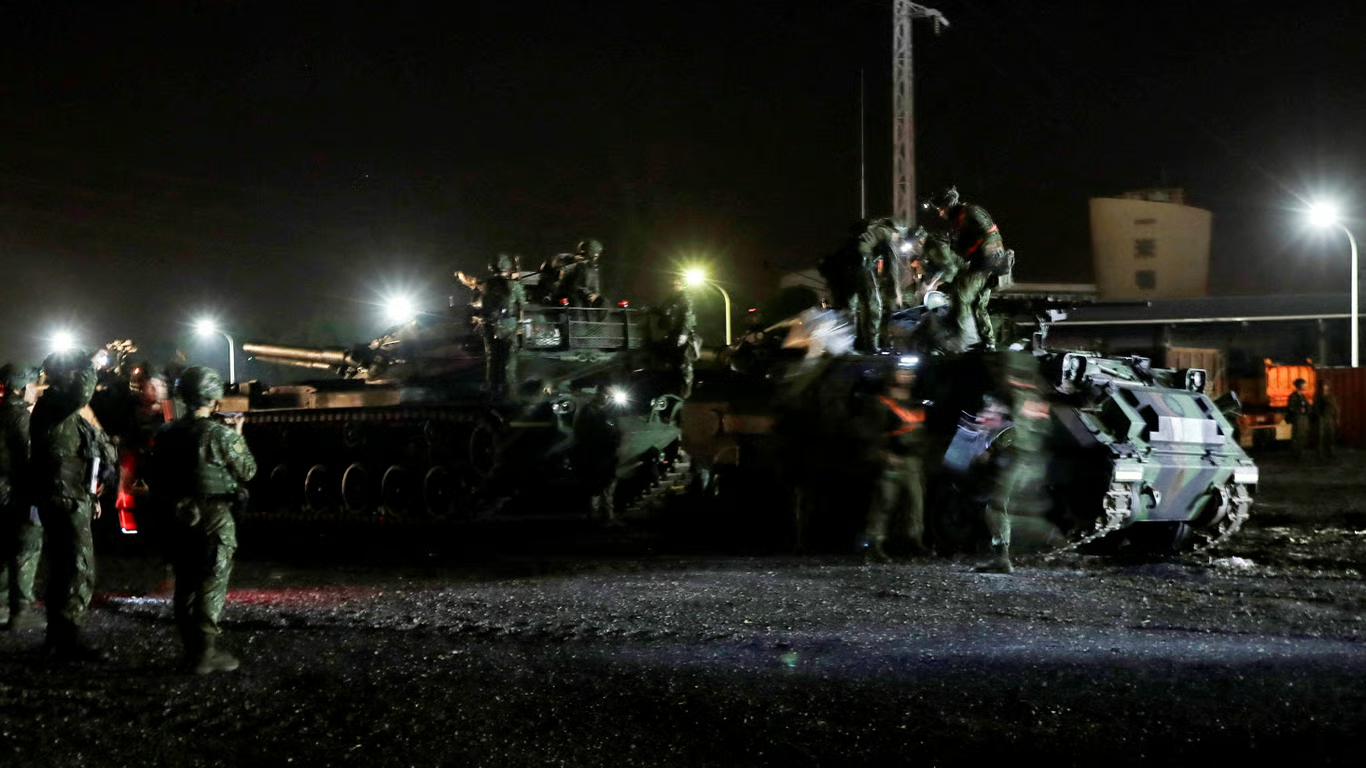
Taiwan has also created the Littoral Combat Command, designed to combine the work of artillery, mobile missile systems and drones.
The new defense model is associated with the Hellscape concept, a “hellscape” promoted by the US military.
Its essence is to create an area around Taiwan so saturated with drones, missiles and other means of destruction that a potential Chinese landing operation would be extremely difficult and expensive even before the troops land on shore.
It is assumed that Chinese ships and landing forces could come under massive drone strikes even at the stage of leaving ports and moving through the Taiwan Strait.
Drones alone are not enough
At the same time, military experts warn that increasing the number of drones in itself will not guarantee Taiwan effective deterrence against China.
One of the main challenges will be managing a large number of UAVs at the same time, especially in conditions of active use of electronic warfare by the enemy.
Taiwan also needs to change its military doctrine, personnel training system, unit management, and mechanisms for coordinating various types of weapons.
It is the Ukrainian experience that demonstrates that the effectiveness of drones depends not only on their number, but also on the speed of technology implementation, operator training, intelligence, and the ability to adapt to enemy countermeasures.
Parliament is arguing over funding
The implementation of a large-scale defense program has already become the subject of political discussions in Taiwan.
The government has proposed to allocate about $6.5 billion for the corresponding defense order over five years.
The opposition Nationalist Party opposed the proposed model and is promoting an alternative option. It provides for funding of about $7.4 billion over six years, but with stricter requirements for increasing the share of locally produced weapons.
The discussion comes against the backdrop of China’s continued military pressure around Taiwan and growing concerns about a possible force scenario in the Taiwan Strait.
In these circumstances, the experience of Ukraine is increasingly being viewed by Taipei as a practical example of how technologically adaptive defense and the mass use of relatively inexpensive unmanned systems can counteract a much larger adversary.
Without an author