
The Supreme Court of Justice announced a break in the consideration of the appointment of Judge Tetyana Kartasheva to the Mykolaiv Court of Appeal: what was the reason?
/ 21 July 2026 13:00
4 min to read
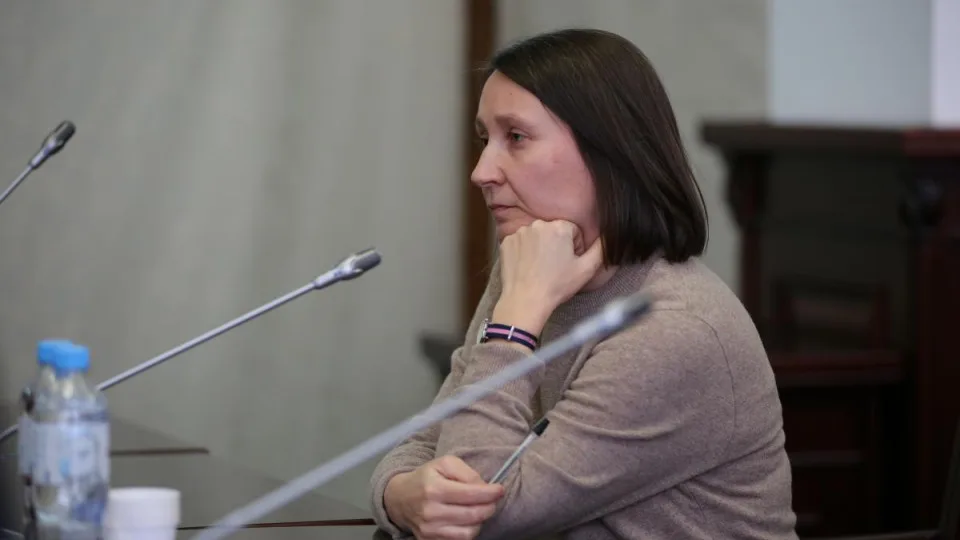
The High Council of Justice has announced a break in the consideration of the issue of submitting a proposal to the President of Ukraine to appoint Tetyana Kartasheva to the position of judge of the Mykolaiv Court of Appeal.
The decision was made after discussing the materials of the judge’s dossier and the opinion of the Public Integrity Council (PIC), which had previously expressed reservations about the candidate’s compliance with the criteria of integrity and professional ethics.
The candidate’s professional path
Tetyana Kartasheva is a graduate of the Yaroslav the Wise National Law Academy. In 2004, she received the qualification of a lawyer, and in 2010, a master’s degree in law.
In 2012, by Decree of the President of Ukraine, she was appointed a judge of the Stanychno-Luhansk District Court of the Luhansk region for a term of five years.
In 2015, the judge was transferred to the Zavodsky District Court of the city of Mykolaiv, and in 2018 she was appointed to this position for an indefinite period.
What comments did the Public Integrity Council make
The CIC concluded that the candidate did not fully meet the criteria of integrity and professional ethics.
Among the main arguments is a trip in 2015 through the territory of the Russian Federation to the temporarily occupied territory. According to the information cited by the CIC, Tetyana Kartasheva and her young son left through the Gukovo checkpoint.
The candidate herself explained that the trip took place during her annual vacation and was due solely to family circumstances. She noted that she visited her mother, brother, and grandmother’s grave, who were in the temporarily occupied territory, and also ensured the child’s ability to communicate with his father. According to her, the return through the territory of the Russian Federation was associated with the unstable operation of entry-exit checkpoints.
In addition, the GDR drew attention to the fact that the judge’s relatives live in the temporarily occupied territory, which, in the opinion of the council, may create potential risks of external influence.
Another observation was the inaccuracies in the declarations of family ties. In particular, the judge indicated information for the period that exceeded the period established by the declaration rules. At the same time, the High Qualification Commission of Judges regarded this as a formal technical error that did not affect the reliability of the submitted information.
The candidate’s dossier also contains information about violations of the terms of consideration of individual court cases in different years. At the same time, it is noted that the workload of Tatyana Kartasheva exceeded the average indicators among judges of the relevant court.
Judge’s position and the HQCJ conclusion
During the qualification assessment, Tetyana Kartasheva emphasized that she did not hide her status as a judge, and after the start of the Russian aggression, she filed an application for transfer to the territory controlled by Ukraine and continued to administer justice.
She also called the allegations of possible pressure due to the residence of her relatives in the temporarily occupied territory unfounded.
The High Qualification Commission of Judges noted that visiting the territory of the aggressor state may be permissible only in exceptional circumstances. The commission took into account the short-term nature of the trip in 2015, family reasons, and the absence of evidence of violation of the rules for crossing the contact line.
According to the results of the qualification assessment, Tetyana Kartasheva scored 720.2 points and confirmed her suitability for the position and ability to administer justice in the appellate court.
What the High Council of Justice decided
Based on the results of the review of the materials, the High Council of Justice did not make a final decision on submitting a proposal to the President of Ukraine to appoint Tetyana Kartasheva as a judge of the Mykolaiv Court of Appeal and announced a break in the consideration of this issue.
Without an author