
There will be no shortage of products, but prices may rise: economist Ivan Us assessed the consequences of strikes on warehouses
/ 14 August 2026 13:18
4 min to read
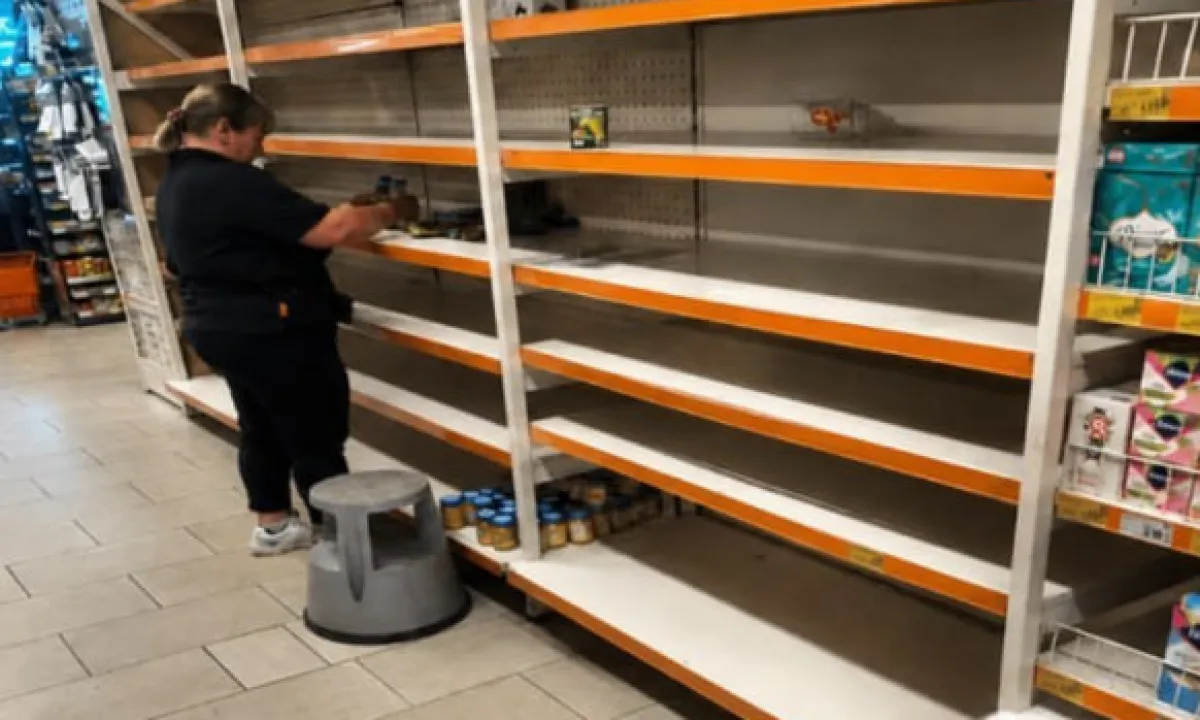
After Russian strikes on food warehouses, some Ukrainians noticed half-empty shelves in stores, particularly in the Kyiv region. This naturally raises the question: could Ukraine face a food shortage and should we expect a new price spike?
Economist Ivan Us explained in a comment for Femida.ua that the current situation could indeed temporarily affect the supply and cost of individual goods. At the same time, there is currently no reason to compare it with the food problems of the first weeks of a full-scale invasion.
Is Ukraine threatened by a food shortage?
According to Ivan Us, Ukrainians already experienced a similar situation in late February – early March 2022. Then, serious problems arose in Kyiv and other cities with food supplies.
One of the key reasons was the fact that logistics were destroyed or blocked: Russian troops were located directly near the capital, some territories were occupied, and the normal transportation of goods was significantly complicated.
Despite this, according to the economist, the logistics chains were rebuilt in about one or two weeks.
Today, the situation is fundamentally different.
Russia is indeed striking food warehouses near Kyiv, and some of the products and infrastructure are being destroyed. However, the territories remain under Ukrainian control, which means that retail chains have the opportunity to change logistics and look for alternative places to store goods.
Warehouses will have to be dispersed
Ivan Us calls the decentralization of the warehouse system one of the possible solutions.
Instead of concentrating a large amount of products in one logistics center, chains can disperse stocks between different facilities. This reduces the risk that a single Russian strike will immediately destroy a significant part of the goods.
However, such a restructuring has its price.
“Yes, this may lead to an increase in prices, but, nevertheless, it will restore the supply of Kyiv and, I think, other cities,” Ivan Us noted.
That is, the main consequence of the strikes may not be a long-term deficit, but an increase in storage and logistics costs, which may ultimately be included in the final cost of goods.
According to the economist, the supply problem may be resolved by autumn, and under favorable conditions, even earlier.
Which products are at risk
The most vulnerable may be goods, significant volumes of which were stored centrally at the damaged facilities.
Ivan Us gives the example of potatoes, carrots, and tomatoes. If large batches of such products were concentrated in one place and the warehouse was hit, this may cause temporary problems with the corresponding goods.
If the stocks are distributed between different facilities, the loss of one warehouse will have a much smaller impact on the market.
That is why the issue of food security today increasingly depends not only on how much products Ukraine produces, but also on where and how they are stored and how quickly the business is able to restructure logistics.
Prices may become the main risk
Thus, the current strikes on food infrastructure do not automatically mean the emergence of large-scale shortages.
However, the restructuring of the warehouse system, additional logistics costs and the loss of part of the stocks may affect the final cost of individual products.
And if in 2022 the main challenge was the physical impossibility of delivering goods normally due to the presence of Russian troops near Kyiv, now retail chains have much more room for maneuver and dispersing stocks.
So in the coming months, the key issue for consumers may not be so much the availability of products on the shelves, but the price that will have to be paid for a new, more complex and secure system of their storage and delivery.
Without an author