
Unitree shares soar 629% on first day of trading: investors bet on humanoid robots
/ 19 August 2026 13:34
4 min to read
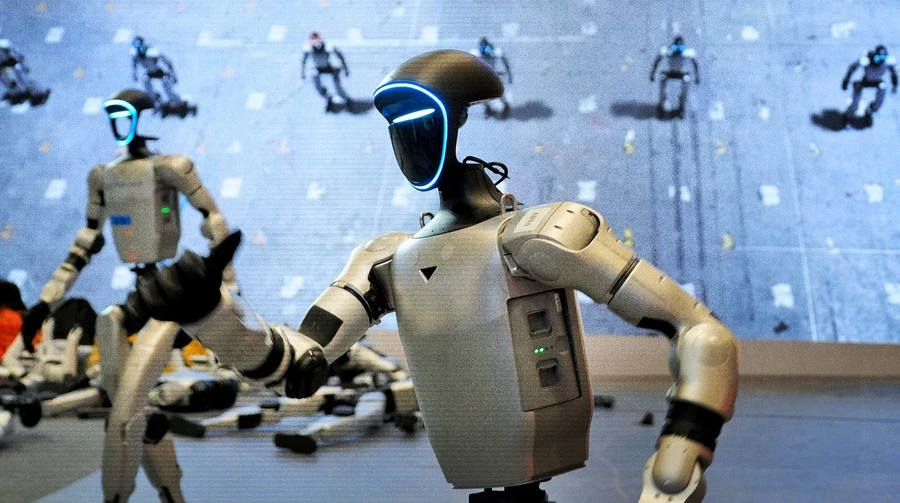
Chinese humanoid robot maker Unitree Robotics has made one of the most high-profile stock market debuts of the year. On the first day of trading on the Shanghai Stock Exchange, the company’s shares rose by 629%, and investor demand reached trillions of yuan. At the same time, analysts are already warning that the rapid growth may be due not only to faith in the future of robotics, but also to significant market excitement.
Unitree, whose official name is Yushu Technology Co., became the first humanoid robot manufacturer in mainland China to go public.
During the IPO, the company managed to attract 6.1 billion yuan, or about $904 million.
From 150 to 1,100 yuan per share
Unitree’s starting price was 150.8 yuan. However, within the first day of trading, the quotations rose to 1,100 yuan per share, showing an increase of about 629%.
At the time of opening of trading, the company’s market capitalization reached 445 billion yuan.
Interest in the IPO turned out to be extraordinary. Applications from retail investors exceeded 7.07 trillion yuan.
This result exceeded even the demand during the recent IPO of the Chinese memory chip manufacturer CXMT.
Why investors are investing massively in robots
Unitree’s stock market debut comes against the backdrop of the rapid development of so-called embodied artificial intelligence – technologies that allow AI to interact with the physical world through robotic systems.
China considers robotics as one of the strategic technological directions along with semiconductors and artificial intelligence.
Against this backdrop, investors are increasingly looking for companies that can translate AI developments into tangible physical products.
Bloomberg Intelligence analyst Yang Ma believes that Unitree’s successful IPO demonstrates the high level of interest in the Chinese market in the embodied AI sector. The company’s valuation could also serve as a benchmark for other robot manufacturers planning IPOs.
Unitree has already sold thousands of humanoids
The Hangzhou-based company already has significant real-world shipments.
According to its IPO prospectus, Unitree will have shipped more than 5,500 humanoid robots by 2025, making it the world’s largest supplier of humanoid robots.
The company’s cumulative sales of four-legged robots have exceeded 33,000 units.
Financials are also booming. Unitree’s annual revenue increased from 393 million yuan to 1.7 billion yuan, and net profit reached 278 million yuan.
Almost $600 million to be invested in new technologies
The company plans to actively invest the money raised during the IPO in further development.
About 4.2 billion yuan is planned to be spent on developing models of embodied artificial intelligence, researching humanoid robots, creating new products and expanding production capacities.
Thus, Unitree is trying to consolidate its position in the market even before the start of the predicted mass distribution of humanoid robots.
Analysts warn of an overheated valuation
Despite the impressive results of the IPO, Unitree’s valuation raises questions.
The ratio of the company’s market capitalization to its annual revenue reached 35.89. For comparison, this figure is about 20 for competitors UBTech Robotics and Shenzhen Dobot.
Union Bancaire Privée analyst Wei-Sern Ling suggests that such a sharp jump in quotes is largely due to the excitement among retail investors.
This means that after the euphoria of the first trades, the market has yet to determine how well Unitree’s current valuation matches the real prospects of its business.
The humanoid robot market could grow dozens of times
Investors’ main bet is on the future of the entire sector.
According to JPMorgan’s forecast, global shipments of humanoid robots could grow from 18,000 units in 2025 to 60,000 in 2026.
And by 2030, the global market could reach 1.75 million robots delivered per year.
At the same time, more than half of global demand, according to the bank’s forecast, will be provided by China.
If these expectations come true, the current stock market excitement around Unitree may be just the beginning of a much larger investor struggle for companies that claim leadership in the new global robotics market.
Without an author