
Why the EU still cannot impose sanctions against Patriarch Kirill: who is blocking the decision and what is behind it
/ 3 August 2026 10:45
3 min to read
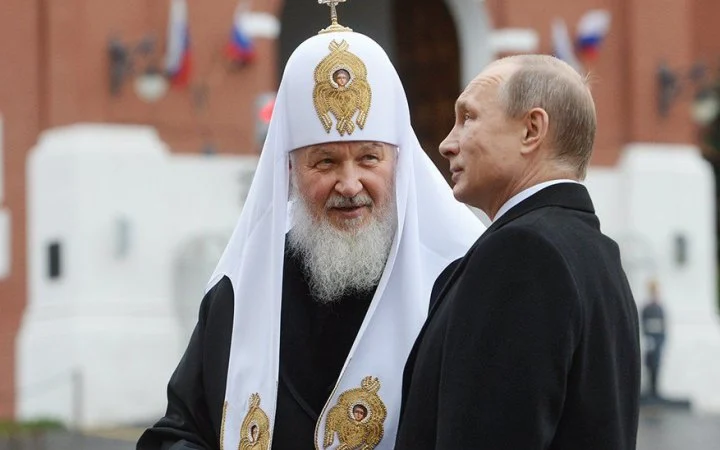
Despite the 21st package of sanctions by the European Union against Russia, the head of the Russian Orthodox Church, Patriarch Kirill (Vladimir Gundyaev), who openly supports the Kremlin’s military aggression against Ukraine, has still not been included in the pan-European sanctions list.
Although the European Parliament condemned Kirill in 2022 for justifying the Russian invasion and giving it a religious justification, EU member states have not been able to reach a consensus on personal restrictions.
Who is blocking the sanctions
During the approval of the 21st package of sanctions against Russia, the proposal to include Patriarch Kirill was again withdrawn. This time the initiator was Bulgaria.
The Bulgarian Ministry of Foreign Affairs explained its position by saying that the sanctions would be only symbolic and could be used by Russia for anti-European propaganda, in particular by accusing the EU of interfering in church affairs.
However, experts point out that such a position may be due to the close historical ties of the Bulgarian Orthodox Church with the Moscow Patriarchate. The Bulgarian Church has not yet recognized the Orthodox Church of Ukraine, and its current primate has previously been critical of the granting of the Tomos to the OCU.
Hungary has also repeatedly blocked sanctions against Kirill.
Where sanctions are already in effect
Despite the lack of a unified EU position, personal sanctions against Patriarch Kirill have already been introduced by:
Great Britain;
Canada;
Australia.
In addition, individual European Union countries — Estonia, Lithuania, and the Czech Republic — have introduced their own restrictions on the head of the ROC.
Ukraine imposed sanctions against Kirill back in August 2022 for a period of ten years. He is also wanted by Ukrainian law enforcement agencies and is a subject of criminal proceedings for encroaching on the territorial integrity and inviolability of Ukraine.
Why the issue remains political
According to a number of experts, the main reason for the lack of sanctions is not legal or religious arguments, but political compromises within the European Union.
Some countries fear that the introduction of restrictions on the head of the Russian Orthodox Church could negatively affect interfaith dialogue and relations with the Vatican.
At the same time, critics of this position emphasize that Kirill has long ceased to be an exclusively religious figure. He has repeatedly publicly supported Russian aggression, justified the war against Ukraine, and spread Kremlin narratives.
In particular, recently the patriarch called the creation of Soviet nuclear weapons “God’s grace,” and, according to the Ukrainian Center for Countering Disinformation, the Russian Orthodox Church has created special prayers that are used to justify Russia’s war against Ukraine.
Can Ukraine influence the situation
Ukraine continues diplomatic work with partners, calling for personal sanctions against the head of the ROC.
Experts believe that an important step could be the completion of the Ukrainian criminal proceedings against Kirill and the adoption of a court decision, which could become an additional argument for European partners when discussing sanctions.
For now, Patriarch Kirill remains one of the few key Russian figures who, despite many years of support for the war against Ukraine, has not been subject to pan-European sanctions.
Without an author