
China has put negotiations with the Russian Federation on hold regarding the Power of Siberia-2: Moscow has “hit a wall”
/ 15 July 2026 08:19
4 min to read
Negotiations between Russia and China regarding the construction of the Power of Siberia-2 gas pipeline, which have been going on for more than ten years, have actually reached a dead end. The Kremlin hoped to partially compensate for the loss of the European market with the help of the new gas route, but Beijing does not agree to the conditions proposed by Moscow.
This was reported by The Wall Street Journal with reference to sources familiar with the progress of the negotiations.
Beijing asked Moscow not to raise the issue of the gas pipeline any more
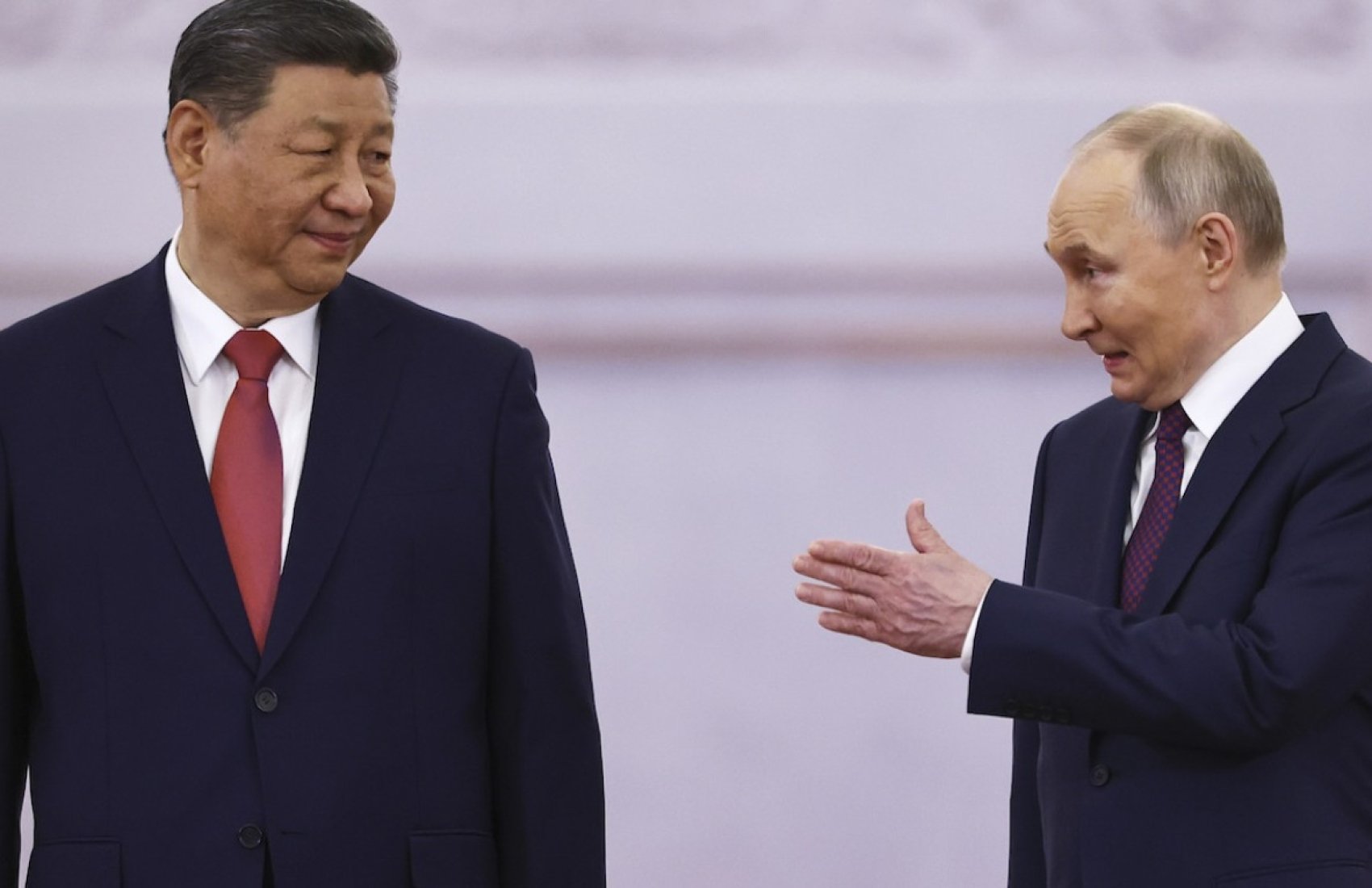
During Putin’s visit to Beijing in May, the Russian side hoped to reach an agreement on the implementation of a large-scale gas project. However, according to the publication’s sources, Chinese officials urged the Russian delegation not to return to the issue of “Forces of Siberia-2” until the terms of the agreement change.
Thus, Putin failed to convince the leader of the People’s Republic of China, Xi Jinping, to support the construction of a new gas pipeline, which the Kremlin considers to be critically important after a sharp reduction in Russian gas exports to Europe.
According to WSJ interlocutors, during the negotiations, the Russian delegation actually “leaned against the wall.”
China demands gas at domestic Russian prices
One of the main reasons for the failure of the negotiations was Beijing’s position on the price of gas. China is ready to consider a long-term contract only if the price is significantly reduced – in fact to the level of the domestic Russian market.
It is about $50 per thousand cubic meters of gas.
For comparison, in 2026, China pays Russia’s Gazprom about $258.8 per thousand cubic meters. This is about 39% cheaper than other foreign clients of the Russian company pay.
It is expected that next year the price of Russian gas for China may drop to $223.9 per thousand cubic meters.
At the same time, Beijing’s demands for the “Force of Siberia-2” include an even more radical discount. In fact, China wants to receive gas five times cheaper than the current price and about eight times cheaper than other Gazprom customers.
According to WSJ sources, Beijing de facto demands that Moscow itself subsidizes the future gas pipeline.
China may refuse the Russian gas pipeline altogether
Experts do not rule out that the contract for “Power of Siberia-2” may never be signed.
Jörg Wuttke, a partner at DGA Group in Washington, notes that there is currently enough gas on the world market, and China’s need for imported fuel may peak as early as the mid-2030s.
Under such conditions, it makes no sense for Beijing to tie itself to a large-scale pipeline project, the construction of which may last about six years, and at the same time increase its energy dependence on Russia.
Oleksandr Gabuev, director of the Carnegie Russia Eurasia Center, believes that Chinese leader Xi Jinping may be deliberately delaying negotiations, expecting further deterioration of the economic situation in the Russian Federation.
In his opinion, Beijing expects to wait for the moment when Moscow will be forced to agree to the most favorable conditions for China.
Russia has lost a key gas market in Europe
Until the start of the full-scale war against Ukraine, Europe remained the main foreign market for Russian gas. However, supplies subsequently declined to their lowest levels since the early 1970s.
Power of Siberia-2 was to become one of the key tools for the Kremlin to reorient gas exports to the Asian market.
The design of the main gas pipeline to China through the territory of Mongolia began in September 2020. Initially, it was assumed that the facility would be commissioned by 2027.
At the same time, even the Russian Ministry of Economy predicted that the sale of gas to China would be much less profitable than previous supplies to Europe and Turkey.
The situation surrounding the “Power of Siberia-2” demonstrates Moscow’s growing economic dependence on Beijing. Having lost a significant part of the European market, the Kremlin has fewer and fewer opportunities to dictate its own terms to new buyers of Russian energy resources.
Without an author