
DOCDEX and CMAP: How Mediation and Financial Expertise Are Changing the Rules of Dispute Resolution in the Banking Sector
/ 16 October 2026 16:16

10 min to read
Sometimes the cost of a major financial dispute comes down to a single digit. In 2013, writing in the ICC journal DC Insight, a lawyer for a Korean bank described a case his institution had handled a year earlier. He characterized the amount in dispute as substantial, while the ground for refusing payment sounded almost comical: a single digit had been mistyped in a ten-digit letter of credit number. The case went through the court of first instance, the court of appeal, and reached the Supreme Court, which ruled that the error in the number constituted a valid discrepancy. The author noted that had the dispute been submitted to a DOCDEX expert panel, the outcome might well have been different.
This episode is worth remembering because it highlights the defining characteristic of financial disputes. They rarely involve people who simply need to “reach an understanding” in an everyday sense. More often, two professionals face off, reading the exact same rules differently while millions of dollars hang in the balance. For such disputes, the world has developed two distinct institutional answers. The first is DOCDEX, a specialized expertise mechanism introduced by the International Chamber of Commerce (ICC) in 1997 for trade finance. The second is CMAP, a universal mediation and arbitration center founded in Paris in 1995 by the Paris Chamber of Commerce and Industry. Both structures are rooted in Paris, but they operate on different logics, and comparing these logics offers the clearest picture of how mediation and related procedures function in banking and finance.
A World Where a Discrepancy Costs Millions
To understand why financiers needed a dedicated procedure, one must recall how a documentary credit works. A bank pays an exporter not because the goods are genuinely good, but because the set of documents “on their face” complies with the terms of the credit. This is the principle of strict compliance, and it creates a constant risk of rejection over formal discrepancies. When the ICC thoroughly revised the Uniform Customs and Practice for Documentary Credits (UCP) in the late 2000s, global surveys showed that approximately seventy percent of documents were rejected on first presentation due to discrepancies. The introduction to UCP 600 noted that the DOCDEX system had already successfully handled more than sixty complex disputes by that time.
Litigation is poorly suited for such disputes. Judges rarely grasp the nuances of international banking practice, proceedings drag on for years, and decisions become public, which entails major reputational costs for a bank. Arbitration is faster and confidential, but it requires a prior agreement between the parties embedded in the contract and remains an expensive procedure. It was precisely from this gap that the concept of rapid expert assessment and flexible mediation emerged.
The Birth of DOCDEX and the Evolution of Rules
In 1997, the ICC Banking Commission established a working group to determine whether a system based on expert panels could be introduced for documentary credit disputes. After several months of analysis, DOCDEX was created. Initially, it handled only letters of credit governed by UCP and inter-bank reimbursement rules (URR). In 2002, its scope was expanded to collections (URC rules) and demand guarantees (URDG rules).
The current edition of the rules took effect on May 1, 2015, and significantly expanded the scope of application. Today, it covers disputes involving documentary credits, standby letters of credit including ISP98, inter-bank reimbursements, collections, demand guarantees and counter-guarantees, forfaiting transactions, Bank Payment Obligations, and any other trade finance instruments. The 2015 reform also brought in areas previously uncovered by any ICC rules, such as trade loans, syndications, bills of exchange, risk purchase agreements, priority conflicts, and letter of credit fraud.
The DOCDEX procedure is administered entirely by the ICC International Centre for ADR. A claimant submits an application using a standard form and pays a fee, after which the Centre consults with the Technical Adviser of the Banking Commission to ensure the dispute falls within the scope of the rules. The respondent has up to thirty days to reply, and the case itself is reviewed by a panel of three experts drawn from a list maintained by the Banking Commission. All communications go through the Centre, meaning the parties and experts do not communicate directly, and the identities of the experts remain confidential. Oral hearings and witness examinations are not provided for.
The panel chair submits a draft decision within thirty days of receiving all materials, after which the draft is reviewed by the Technical Adviser of the Banking Commission, with proceedings conducted exclusively in English. Overall, the procedure usually takes two to three months, and the cost is fixed and capped: depending on the amount in dispute, the fee does not exceed five or ten thousand US dollars.
A Decision That Does Not Bind, Yet Persuades
The most interesting property of DOCDEX is its legal nature. An expert decision is not binding unless all parties explicitly agree in writing to give it contractual effect, nor is it an arbitral award. Unlike arbitration, which requires mutual consent, DOCDEX can be initiated unilaterally by a single party.
Why does such a non-binding procedure work? Although a DOCDEX decision lacks automatic enforcement mechanism, it can be used as evidence if the parties subsequently go to court, and a party holding an ICC expert decision frequently dissuades an opponent from pursuing litigation altogether. Case law offers a notable example in Singapore involving an automatic price adjustment clause for oil: one party presented an ICC DOCDEX decision in its favor, and the court found it persuasive enough to render a judgment in favor of that same party. More than ninety-five percent of issued DOCDEX decisions are accepted by participating banks and serve as the basis for final dispute settlement without recourse to national courts.
The true value of the system also lies in its openness. Once anonymized, every decision becomes educational material for the entire industry and is published in dedicated ICC compilations. DOCDEX decisions serve as a guide that enables banking practitioners to avoid mistakes before they escalate into open conflicts. In one published case, an issuing bank received documents exceeding the letter of credit amount. It had the right to refuse, but failed to do so in the manner prescribed by UCP rules, thereby losing the right to claim non-compliance and remaining obligated to pay the entire requested amount — over two million dollars. The core principle of financial rules is straightforward: in documentary operations, victory belongs to the party that adhered strictly to procedure.
CMAP: The French Flagship of Institutional Mediation
If DOCDEX answers the question of “what do the rules say and who breached them,” mediation exists to answer the question of “how do we continue working together.” The Centre for Mediation and Arbitration of Paris (CMAP) was founded in 1995 by the Paris Chamber of Commerce and Industry and has since evolved into the largest institutional mediation center in France. While it had processed about two and a half thousand cases by 2013, that figure surpassed five thousand by 2018, accompanied by the opening of its specialized training facility, Institut 131.
CMAP is distinguished by its dual profile. On one hand, it is a robust commercial institution handling mediation in corporate, commercial, and banking disputes, as well as arbitration under its own rules and oversight committee. On the other hand, since 2017, the European Commission has listed CMAP among designated bodies providing consumer dispute mediation.
CMAP’s statistical barometer demonstrates how mediation functions in real financial and economic operations. In 2022, for instance, the center handled over two and a half thousand mediations, with the aggregate amount in commercial disputes reaching approximately 598 million euros. Most cases entered mediation through contractual clauses, an average commercial mediation lasted roughly fifteen to sixteen hours, and a successful agreement was achieved in over sixty percent of cases. The finance and insurance sector accounts for a steady share of commercial mediations, proving that financial disputes fit seamlessly into a general mediation framework when professionally organized.
Traditional litigation consistently loses to CMAP banking mediation across several parameters. In the event of a default on a major loan, a court lawsuit or insolvency filing triggers an immediate devaluation of the borrower’s assets, whereas a mediator helps restructure debt and balance interests behind closed doors. Complex financial derivatives require an understanding of financial engineering that general court judges often lack, while the speed of mediation preserves the operational viability of the company.
Alongside CMAP, France maintains a regulated banking mediation system rooted in the 2001 MURCEF law, under which banks offer consumer clients out-of-court dispute resolution. However, the distinction between these mechanisms is fundamental: a banking ombudsman or consumer mediator serves a mass retail audience, whereas CMAP and DOCDEX cater to the corporate segment, large business, and international trade.
Comparative Analysis and Boundaries of Application
When comparing DOCDEX and CMAP, it becomes clear that they do not compete with each other; rather, they form an integrated system. They differ in subject matter, as DOCDEX focuses strictly on trade finance instruments like letters of credit, guarantees, or collections, whereas CMAP encompasses a broader spectrum of commercial, corporate, and banking conflicts. They also differ in procedural nature: in the former, parties receive an independent expert evaluation from a three-member ICC panel based solely on written submissions without oral hearings, while in the latter, they engage in live or remote negotiations facilitated by a mediator to conclude a settlement agreement.
The legal force of their outcomes also carries specific features. A DOCDEX decision is by default a non-binding expert determination unless the parties contractually agree otherwise, yet its authority and rapid issuance within two to three months resolve disputes for a fixed fee. Conversely, an agreement reached through CMAP mediation is an immediately binding contract achieved through an average of fifteen hours of intensive negotiation.
The practical takeaway is that financial disputes fall into two categories. The first consists of technical and documentary disputes where the question is whether documents comply with instrument terms, where DOCDEX-style expertise works best. The second consists of commercial and relational disputes where underlying business interests matter most — preserving a client relationship, adjusting payment schedules, or restructuring debt. For these disputes, CMAP mediation is the appropriate tool.
What This Means for Ukraine
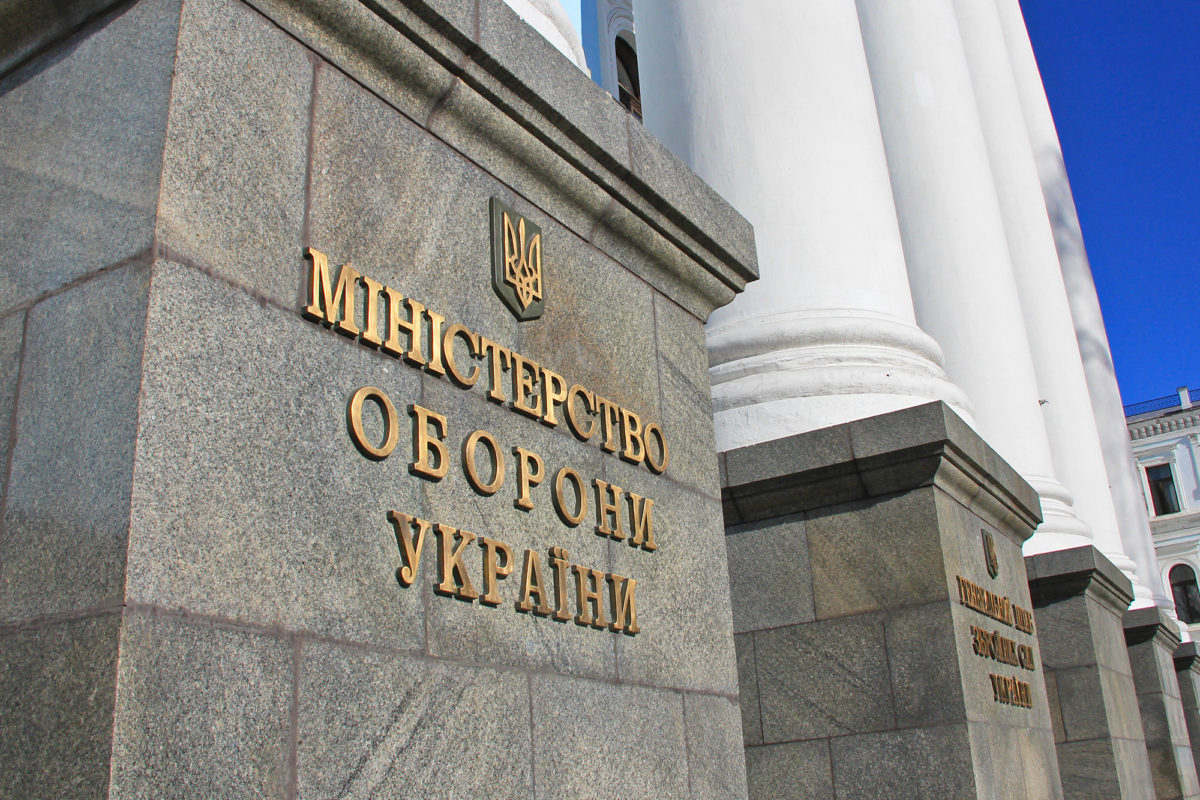
In Ukraine, the Law “On Mediation” established the necessary legal foundation, but the practice of banking and financial mediation is still taking shape. International institutional experience offers a clear roadmap. First and foremost, this concerns contract drafting: Ukrainian banks and commercial enterprises should systematically incorporate mediation clauses and DOCDEX references into international trade contracts, credit and security documentation, and letter of credit agreements.
Furthermore, the financial sector requires the development of a dedicated pool of mediators with deep expertise in derivatives, syndicated lending, and bank accounting, as general training is insufficient in this arena. The publication of anonymized case statistics is another vital element, fostering market trust in alternative dispute resolution without compromising banking secrecy. Finally, the active deployment of hybrid procedures — combining expert determinations on calculations with subsequent mediation sessions — will allow institutions to resolve non-performing loan disputes swiftly while keeping operating businesses intact.
The story of DOCDEX and CMAP is the story of how the financial world learned to save time and capital. The ICC’s response is swift expertise backed by global authority, while CMAP’s response is an institution that embedded mediation into everyday business practice. For Ukraine, the path forward lies from contract clauses to open practice, and that journey ought to begin today.