
The Supreme Court of Justice refused to dismiss judge of the Primorsky District Court of Odessa Andriy Boychuk: the qualification evaluation will continue

post-img

3 min to read

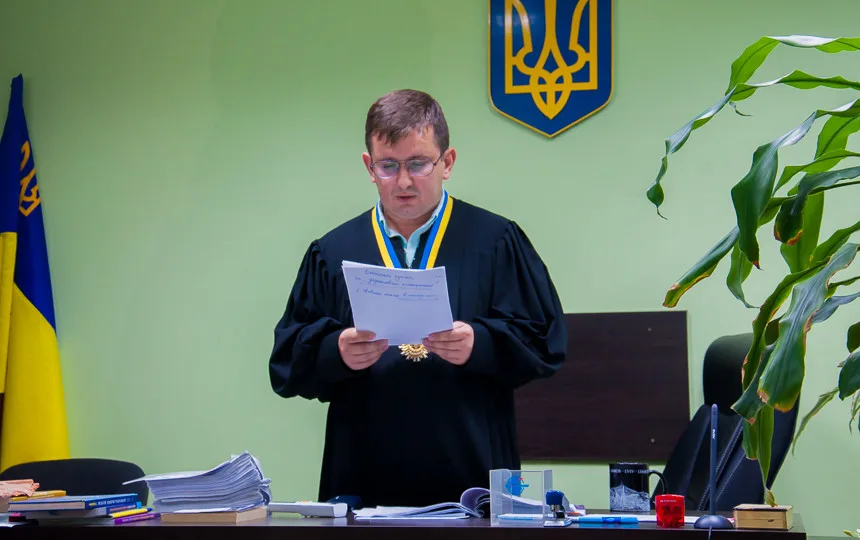
The High Council of Justice (HCJ) has refused to grant the application of the High Qualification Commission of Judges of Ukraine (HQCJ) to dismiss Andriy Boychuk, a judge of the Primorsky District Court of the city of Odessa. At the same time, the Commission will continue his qualification assessment, since the issue of the judge’s suitability for the position remains open.

The HCJ made this decision on the basis of paragraph 4 of part 1 of article 16-1 of section XV “Transitional provisions” of the Constitution of Ukraine.

What claims did the HCJ put forward

Andriy Boychuk was appointed a judge of the Kirovsky District Court of the city of Kirovograd in 2014 for a term of five years, and in 2015 he was transferred to the Primorsky District Court of Odessa.

During the qualification assessment, the HCJ concluded that the judge did not meet the requirements for the position. One of the grounds was disciplinary proceedings, as a result of which in 2019 the Third Disciplinary Chamber of the Supreme Judicial Council imposed a severe reprimand on the judge. The Chamber established gross procedural violations, which, in its opinion, contradicted the principles of fair trial, adversarial proceedings, and access to justice.

In addition, the Commission drew attention to a number of circumstances that raised additional questions.

In particular, the subject of the inspection was the purchase of an apartment in Ivano-Frankivsk by the judge’s father in 2015 for UAH 149,877. The HQCJ noted that the cost of housing could be significantly lower than the market price, and also expressed doubts about the family’s financial ability to make such a purchase.

The Commission also analyzed the judge’s receipt of cash benefits from the Odessa Regional Territorial Center for Staffing and Social Support in 2019–2020, along with his salary at his main place of work.

Separately, the HQCJ drew attention to the description provided to the judge during his transfer to Odessa. In the opinion of the Commission, the document could not objectively assess the professional qualities of the judge, since at the time of its preparation he had not yet considered any case in the relevant court.

During the interview, as the HQCJ notes, the judge did not admit the violations committed and denied them, despite the current disciplinary decisions of the Supreme Judicial Council. This, in the opinion of the Commission, cast doubt on his ability to continue to administer justice impartially and in accordance with the requirements of the law.

Why the Supreme Judicial Council did not support the dismissal

The High Council of Justice concluded that the HQCJ did not provide sufficient evidence of the systemic nature of the violations of procedural legislation by the judge.

In this regard, the Supreme Judicial Council refused to grant the motion to dismiss Andriy Boychuk and decided to return the materials to the HQCJ for continued qualification assessment.

The Commission must resume the procedure from the stage of examining the judicial dossier and conducting the interview. Therefore, the final decision on Andriy Boychuk’s suitability for the position will be made after the re-examination is completed.

Without an author