
Unannounced mobilization and strikes on Europe: Fesenko revealed what the Kremlin could be preparing after the elections
/ 22 September 2026 12:55
5 min to read
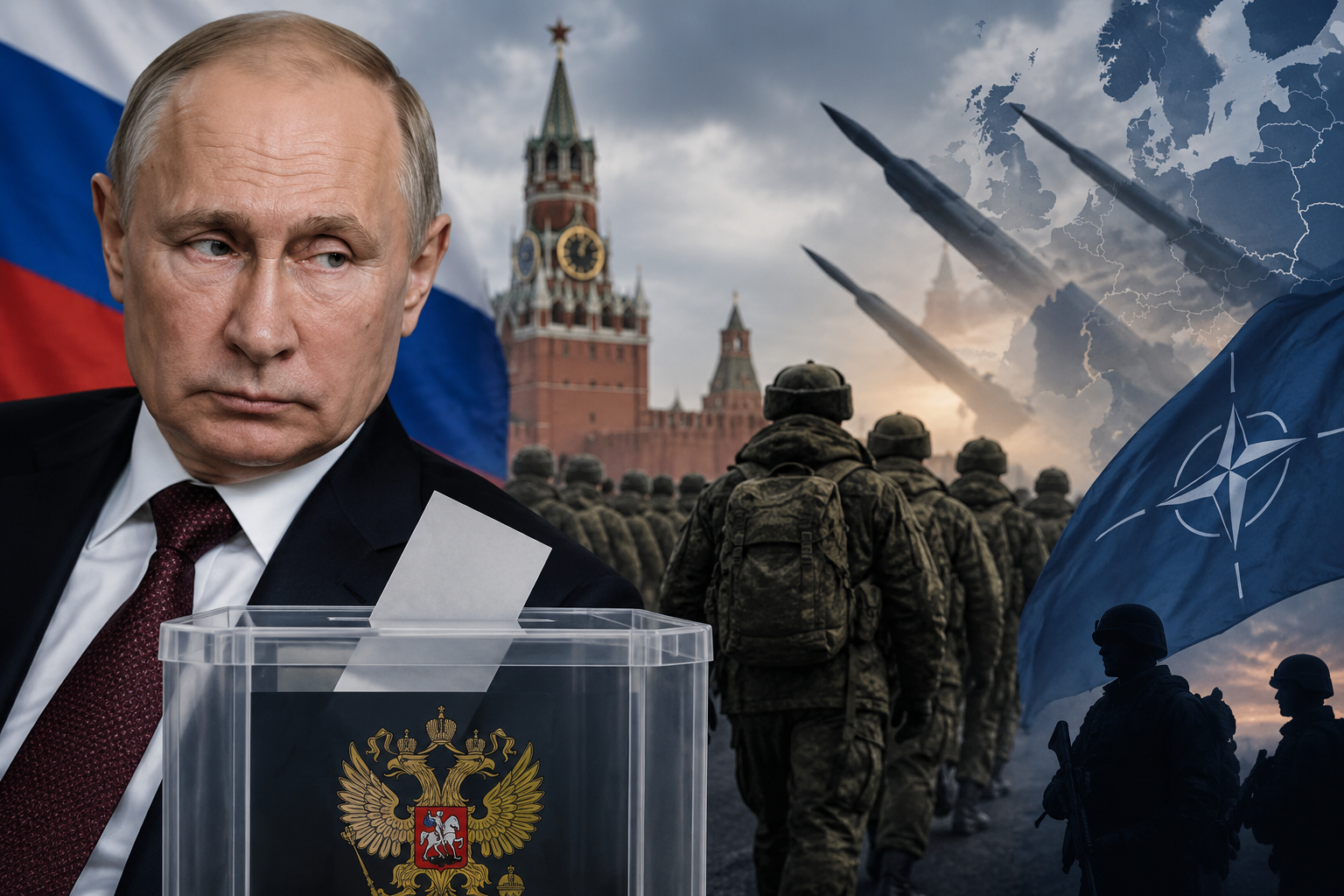
After the elections to the State Duma of the Russian Federation, the Kremlin may intensify mobilization measures, but do so without a new high-profile decree and an official announcement of a new wave of mobilization. At the same time, the expert names provocations and hybrid actions against European countries among the potential scenarios for further escalation.
Political scientist Vladimir Fesenko exclusively told about this in an interview with Femida.ua.
“Mobilization in Russia did not stop”
According to Fesenko, it is a mistake to believe that the elections to the State Duma were the last formal obstacle to the announcement of a new mobilization. He drew attention to the fact that Putin’s decree on mobilization, issued back in September 2022, has not been canceled.
In recent years, the Kremlin, according to the political scientist, has relied primarily on the contract system and significant cash payments, trying to attract people to the war, in particular from poor regions of Russia.
However, according to Fesenko, this resource may not be enough.
“There are not enough people. And that is why there have been talks about mobilization,” he noted.
There may not be a new decree
Fesenko predicts that the Kremlin may choose a different tactic: not to announce a new large-scale mobilization campaign publicly, but to gradually increase its scale.
“There will be no new decree on mobilization, there will be no announcement of mobilization in Russia. Simply, without unnecessary noise, without official and public statements, the scale and severity of mobilization measures will be increased,” the political scientist said.
In his opinion, such measures may be carried out more actively in Russian regions, away from the largest cities.
Why the elections were important to the Kremlin
Fesenko believes that before the vote, the Kremlin was interested in maintaining a controlled information picture and tried to avoid decisions that could provoke public discontent or panic.
That is why, according to the expert, the public announcement of new mobilization measures during the election campaign was undesirable.
At the same time, Fesenko suggests that the Kremlin during this period was not interested in taking drastic steps towards ending the war, as this could have caused a negative reaction among supporters of continuing hostilities.
“Both the escalation of the war, mobilization, and possible negotiations — all of this was postponed until after the elections to the State Duma of Russia,” he noted.
Fesenko called the elections in the Russian Federation an “imitation.”
Commenting on the vote itself, the political scientist said that he did not consider it a competitive democratic election.
In his opinion, the main results were predictable, and the Russian political system remains built around the Kremlin and Vladimir Putin.
“These are not elections in the true sense from the point of view of real democracy. There is no real competition here,” Fesenko said.
According to preliminary results from the Russian Central Election Commission, the pro-government United Russia party won 355 of the 450 seats in the State Duma, retaining its constitutional majority. Reuters reports that the party won 57.83% of the vote with more than 95% of ballots counted.
At the same time, the elections were held under strict restrictions on the opposition. In particular, the Yabloko party, which opposed the war, was not allowed to participate in the federal vote.
“The key question after the elections is what next”
According to Fesenko, what decisions the Kremlin will make after the election campaign is much more important than the vote itself.
“The key question after these elections is what next. Either negotiations or war,” the political scientist emphasized.
Separately, the interview discussed the possibility of an escalation of Russia’s confrontation with NATO countries.
Can Russia Attack Europe
Fesenko believes that the risk of provocations against European states exists, but he assesses a direct large-scale war by Russia against Europe as a less likely scenario.
According to him, a significant part of the combat-ready Russian forces is already involved in the war against Ukraine, and a direct clash with European states would mean a significant expansion of the war for Moscow.
Instead, Fesenko draws attention to another scenario – pinpoint missile or drone attacks, provocations or hybrid operations.
“A more likely scenario for Russian attacks against Europe is missile, drone pinpoint strikes to intimidate Europeans and force them to negotiate on their own terms,” he said.
The Baltic States are among the potential areas of hybrid provocations
Fesenko calls hybrid attacks against the Baltic States another possible scenario.
The political scientist draws a parallel with the tactics that Russia used in 2014 during the occupation of Crimea and the start of the war in Donbas: the use of forces without insignia, creating the appearance of an internal conflict, separatist scenarios and border provocations.
According to him, provocations in border areas or attempts to play up the theme of “protecting the Russian-speaking population” could potentially be used. This is Fesenko’s forecast, not a confirmed plan by the Kremlin.
At the same time, the political scientist believes that European countries are aware of such risks and are preparing for possible escalation scenarios.
Thus, after the State Duma elections, the main question becomes not the new composition of the Russian parliament, but whether the Kremlin will use the results for further
Without an author