
US General Ben Hodges: The liberation of Crimea will be the key to the security of the entire Black Sea region
/ 4 June 2026 18:46
2 min to read
The liberation of Crimea is critically important not only for Ukraine, but also for the security of the entire Black Sea region. It is control over the peninsula that allows Russia to block sea routes, put pressure on neighboring states, and interfere in Europe’s energy and trade projects.
Retired US General Ben Hodges said this during an event at the Center for European Policy in Brussels.
“As long as Russia controls Crimea, it controls the Black Sea”
The American general emphasized that the occupied Crimea remains a strategic military bridgehead for the Kremlin.
According to Hodges, Russia uses the peninsula to:
block shipping;
put pressure on Ukrainian ports;
interfere with Romania’s energy projects;
control the Sea of Azov.
“As long as Russia controls Crimea, it can block almost everything that happens in the Black Sea,” the general said.
He also emphasized that due to Russian control, Ukraine cannot fully restore the operation of the ports of Mariupol and Berdyansk.
Hodges mentioned the Crimean Bridge and Budanov
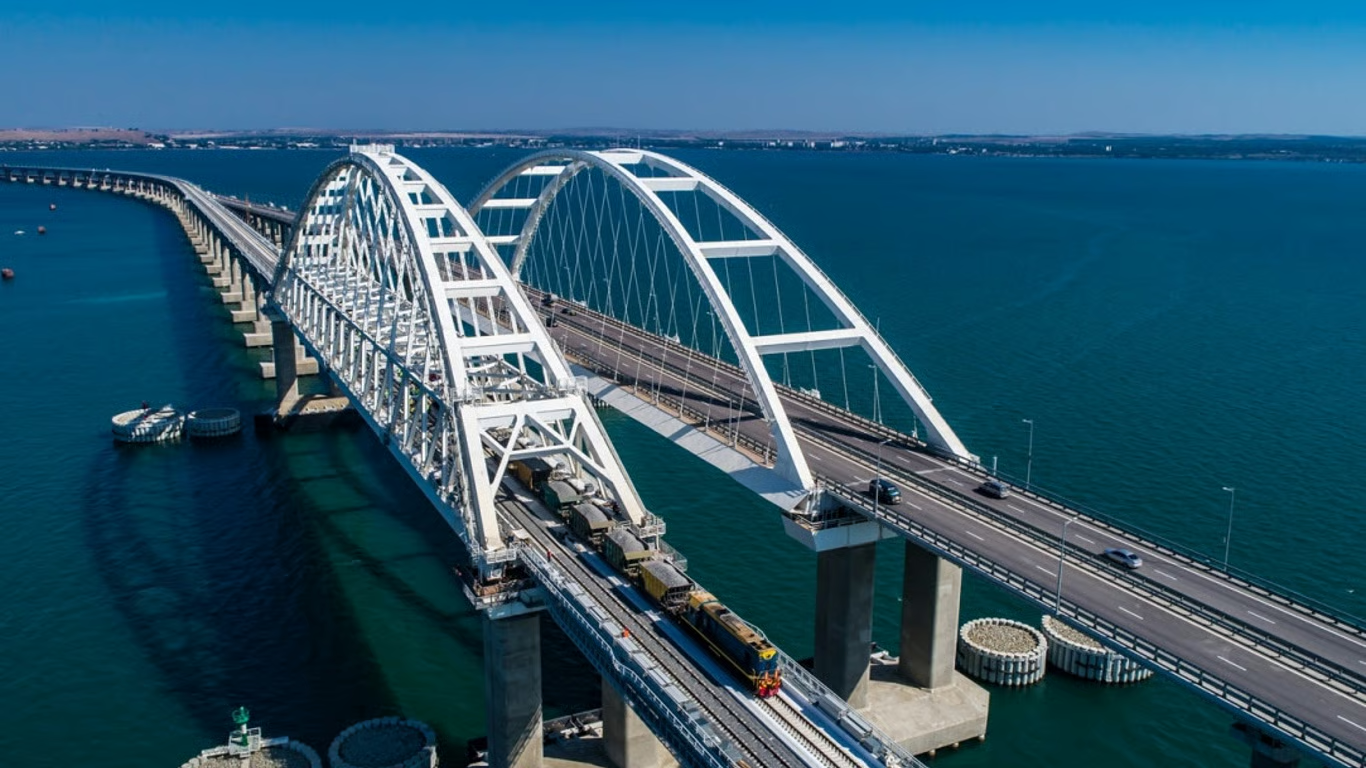
Ben Hodges separately commented on the situation with the Crimean Bridge, which Russia uses as an important military-logistical route.
“Russia is blocking that big damn bridge, which I am sure General Budanov will destroy sooner or later,” the American general said.
Russia is trying to dominate the entire region
According to Hodges, Moscow sees the Black Sea as a key center of influence for operations in the Middle East, the Caucasus and even Africa.
He recalled that for years the Russian Federation has been trying to block the development of the strategic Georgian port of Anaklia, which could become an important trade route between Europe and Central Asia, bypassing Russia.
“Russia categorically hates the idea of an independent Black Sea economic space,” Hodges said.
Ukraine’s victory will change the balance in the Black Sea
According to the general, the security of the Black Sea directly depends on the outcome of Russia’s war against Ukraine.
He is convinced that only Ukraine’s victory and Russia’s return to internationally recognized borders will allow:
to stabilize the region;
to restore safe shipping;
to ensure the development of new economic corridors;
to strengthen Europe’s energy security.
The discussion also emphasized that Ukraine, NATO, and the littoral states — Romania, Bulgaria, and Turkey — will play a key role in the future security architecture of the Black Sea.
Without an author