
After the closure of the Strait of Hormuz, India increases its own gas production

post-img

2 min to read

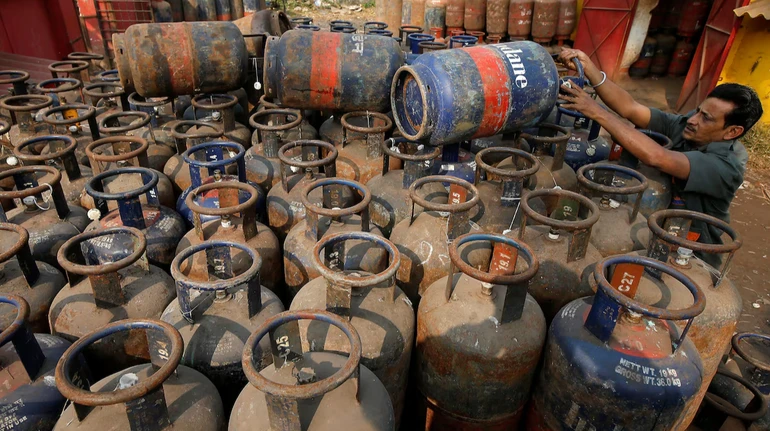
India has instructed state and private energy companies to maximize production of liquefied petroleum gas (LPG), which is widely used by households for cooking. The reason was the risks to fuel imports amid the war between the United States and Iran and disruption of traditional supply routes.

This was reported by Reuters with reference to a government statement dated August 13.

India wants to sharply increase its own production

Oil refineries and companies engaged in oil exploration and production have been instructed to take all technically and economically feasible measures to increase LPG production.

Among the possible solutions is the alternative use of raw materials, in particular, directing part of the oil to the production of liquefied gas.

For India, the issue is of particular importance, since the country meets about two-thirds of its needs for this fuel through imports.

After the closure of the Strait of Hormuz and disruption of traditional routes, buyers began to look for alternative sources of supply, in particular in the United States and Algeria.

Production has already increased by one and a half times

Before the war, Indian refineries were producing about 36,000 tons of LPG per day. Now this figure has increased to about 54,000 tons.

However, the government wants to create opportunities for production up to 63,810 tons per day.

Individual enterprises have set their own production ceilings. The largest target was given to the domestic market-oriented unit of Reliance Industries Ltd. – 18,000 tons per day.

State-owned Oil and Natural Gas Corp. and Oil India Ltd., as well as the operator of the gas transmission system Gail India Ltd., have been tasked with providing about a tenth of the national target.

Gas infrastructure will also be expanded

Increasing production alone will not be enough. Refineries have also been tasked with expanding their capacities for storing, selecting and transporting liquefied gas.

Companies must meet the targets set by the government within a certain period. At the same time, the government plans to review production targets twice a year — in January and July.

Thus, India is trying to reduce the dependence of the domestic market on disruptions in international supplies and form an additional safety margin in case the situation in the Middle East further worsens.

Without an author