
Beyond Court Statistics: How to Measure the Experience of a Person Who Came Seeking Justice
10 min to read
There is one figure I have not been able to forget since my colleagues and I completed our calculations. Thirty-seven thousand one hundred and thirty hryvnias. That is the average amount of enforcement per enforcement document in Ukraine. Not an abstract statistic, not an indicator in a report — it is the weight that the enforcement system tries to shift every day. And often fails to shift.
The new study that I prepared together with Ihor Zhukevych, Marta Kravchyk, Roman Havryk, and Yurii-Antonii Zborivskyi has been published in the European Journal of Social Science Education and Research. Formally, it concerns access to civil justice. In substance, it concerns why a person who formally has a right is increasingly failing to exercise it.
The norm on paper and the norm in life
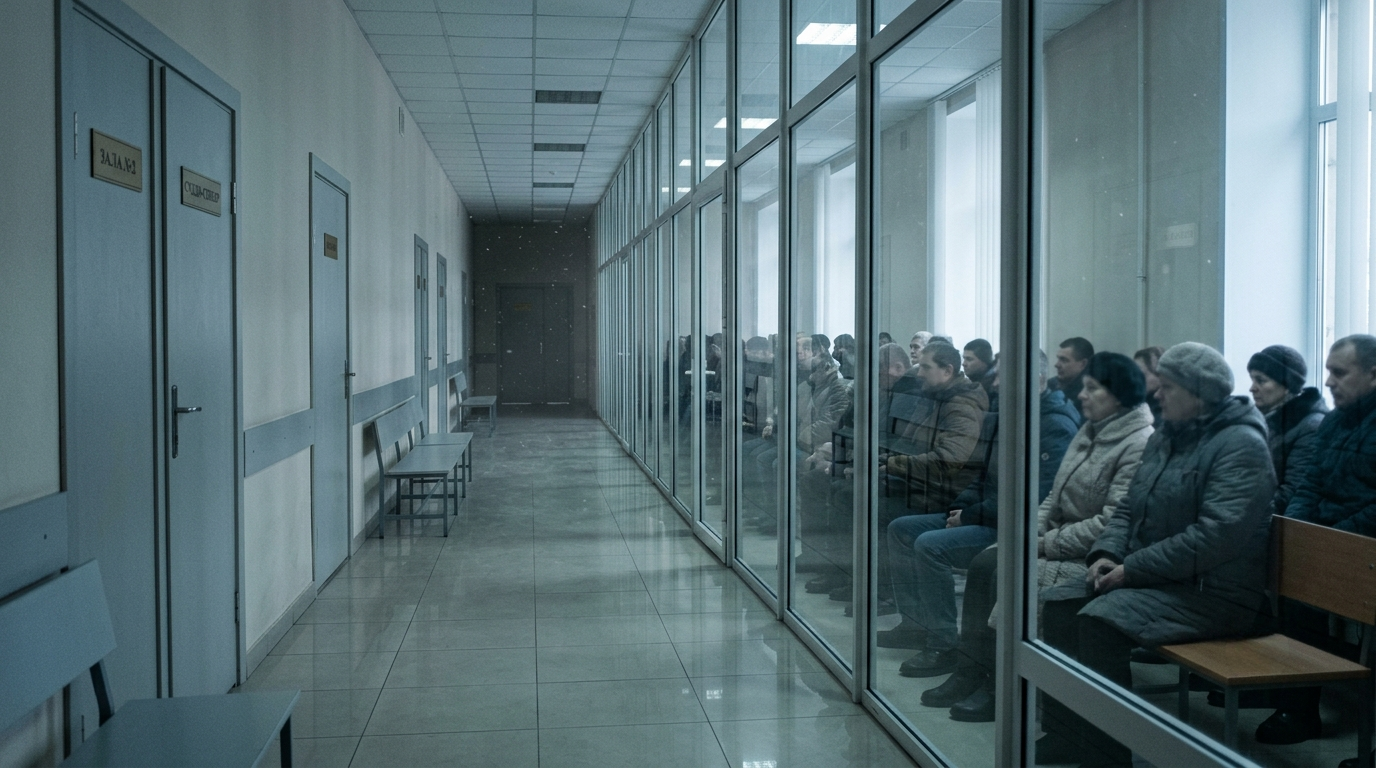
We have grown accustomed to evaluating judicial proceedings by the lawfulness of decisions. This is convenient: there is a norm, there is a decision, there is correspondence. But the person who has come to court evaluates something entirely different. How much it cost. How long it took. Whether they understood a single word of what was happening. Whether they ultimately received what they came for.
And here begins the gap that we called in our article the “justice gap” — the gap between what is written in the code and what a person actually holds in their hands after three years of proceedings.
Here is what it looks like in figures. In 2023, the largest category of civil disputes in Ukraine was the recovery of debts for utilities: three hundred and twenty-one thousand cases. Next came divorce, one hundred and twenty-one thousand. Credit disputes, more than eighty thousand. Appellate courts had approximately ninety-six thousand civil cases in proceedings, received seventy-one thousand seven hundred complaints — 31.6% more than the previous year. They examined approximately seventy-two thousand.
At first glance, this seems excellent. The European Commission for the Efficiency of Justice assesses the capacity of the judicial system through the Clearance Rate — the ratio of cases examined to cases received. Seventy-one thousand seven hundred complaints were received, seventy-two thousand were examined. The rate is 100.4%. The appellate level not only handled the annual flow but made a small dent in the older cases. This is presented in the report as an achievement.
The trouble is that the Clearance Rate sees the flow, not the stock. It records what entered and what exited in a given year, and knows nothing of cases that have been sitting there since the year before last. In the proceedings of appellate courts there were not seventy-one thousand but ninety-six — including the carried-over remainder. Twenty-four thousand of them received no examination by the end of the year. This is the backlog, and it accounts for a quarter of the entire caseload.
Every fourth person awaiting an appeal was still waiting at the end of the year. This is why 100.4% and 25% do not contradict each other — they describe the same system from two sides. Relying on the first indicator alone, the state reports year after year on the efficiency of courts that stand knee-deep in their own unresolved cases.
At the cassation level the picture is even more vivid. Twenty-eight thousand cases and materials, seven hundred and sixty-four cases per judge per year. Multiply that by the complexity of cassation review, by the need to form a unified law enforcement practice — and you get an idea of how much time a judge can physically devote to a single case.
Who pays for complexity
The most interesting part begins when you look at precisely whom this complexity filters out of the system.
An internally displaced person has lost their documents. They have no confirmation of the right to property on a house that no longer exists. They live fifteen hundred kilometers from the court at their place of registration. An elderly person cannot submit an application through the electronic cabinet, because the electronic cabinet does not contemplate that the applicant might be eighty-two. A person with a disability arrives at the court building, encounters stairs, and their participation in the proceedings ends there. A village resident calculates the cost of the journey to the district center and realizes it will consume half the amount of the claim.
Someone will say: these are everyday trifles, not a legal problem. No. This is the legal problem — it simply cannot be described in the language of a code.
Because when a citizen knows they will spend more on the claim than they will recover, they abandon the right. Formally the right exists. Socially it is empty.
What we proposed instead of another package of amendments
One thing long irritated me in discussions about judicial reform. Everyone talks about norms. No one talks about measurement. The state does not see actual processing times, does not see the accessibility of services, does not see the level of trust — and therefore governs blindly, adopting laws by guesswork.
This is why we proposed an index. The Integrated Social Justice Accessibility Index — ISJAI. Six blocks, each scored from zero to one hundred: the cost of applying, the speed of proceedings, digital access, legal awareness, trust in courts, and the inclusiveness of services. Cost and speed carry a weight of 0.20 each, the rest 0.15 each. For frontline regions, the weight of remote access and the speed of procedures should increase, because in those areas these two parameters determine everything.
The purpose of the index is simple. If a region has excellent digitalization but low public trust — this is immediately apparent. If costs have fallen but timeframes remain insane — this too is apparent. You can only manage what you can see.
The second proposal is a network of local justice access centers. Not new courts. Service hubs within communities: in administrative service centers, libraries, universities, and veterans’ hubs. A person comes in, receives initial consultation, assistance with documents, access to a video conference, mediation, and a route to the relevant instance. One small office can meet the needs of several settlements. A lawyer, a digital administrator, a mediator, a social consultant.
For internally displaced persons, these hubs should have template applications for lost property, inheritance, debts, social payments. An elderly person needs a different service — calm offline support without being overwhelmed by deadlines. A veteran needs coordination with other services. A standard format for everyone does not work. It never has.
The third direction is educational. The judicial system will not withstand the flow of minor conflicts for as long as the population does not know the basic rules of engagement. In Singapore, government portals explain typical civil procedures in plain language. In Canada, plain language programs are in operation. In Britain, self-representation hubs exist. This does not replace a lawyer. It removes the informational shock of first contact with the system.
And it is cheaper for the state than financing endless proceedings in overburdened courts. A judicial system that speaks clearly spends fewer resources on correcting its own complexity.
Why this is not charity
I am sometimes asked whether this entire social perspective is not too expensive a luxury for a country at war.
The answer lies in the Canadian and British experience. Socially oriented justice is not necessarily more expensive. It is more often more economical, because it reduces the number of repeat applications, technical errors, and delays. In the Netherlands, minor property disputes between tenants and homeowners were partially transferred to simplified procedures with mediation support, and repeat conflicts decreased. In Finland, digital platforms for resolving consumer disputes reduced the escalation time for everyday complaints. In Poland, simplified order procedures relieved courts of mass debt cases. In Estonia, full electronic document management removed bureaucracy from the process. In Australia, video hearings eliminated transport costs for rural communities.
None of these countries did this out of humanitarian considerations. They were counting money.
Ukraine, however, faces a task that none of them faced. Post-war adaptation means the mass examination of disputes concerning property, compensation, family relations, debts, and employment contracts. If the system is slow, it will multiply social frustration. If it becomes a service, it will support the return of citizens and the restoration of trust.
A roadmap, not a declaration
We deliberately avoided grand statements and laid out stages through to 2030. In 2026: simplify minor civil disputes up to a certain amount and introduce standardized claim templates. In 2027: launch a unified digital justice portal and remote offices in communities. In 2028: introduce subsidies for legal aid for low-income persons and legal literacy education programs. In 2029: conduct a social audit of courts and a regional accessibility rating. In 2030: make annual monitoring of the justice gap a permanent state function.
A social audit is not a count of the number of cases examined. It is the measurement of the comprehensibility of services, the accessibility of premises, the share of remote applications, and the experience of a person after the conclusion of their case. Because if thousands of people do not go to court because of the cost or complexity, the system sees only the tip of the problem. Invisible demand must be made visible — then policy will cease to be a game of darts played blindfolded.
The central conclusion of our study sounds uncomfortable for those accustomed to thinking of reform as another package of amendments to a procedural code. The effectiveness of civil justice depends not so much on the perfection of the norm as on the capacity of institutions to function under real workloads. Formal access to a court does not equate to the genuine protection of a person’s interests.
When vulnerable groups encounter financial, territorial, or digital barriers, legal inequality grows into social inequality. Conflicts drag on. The distance between citizen and state increases.
Access to civil justice is therefore a matter of social policy. Not a procedural trifle.
The transitional period can be lived through as a problem. Or it can be lived through as a window for modernization. Many states have changed their justice systems gradually, over decades. Ukraine has the opportunity to build a service model from the outset: digital access combined with human support, a judicial procedure not disconnected from social reality.
It is precisely this architecture that looks durable over the long term. Everything else is cosmetics on the facade of a building whose foundations are cracking.
Full text of the study: Horetskyi, O., Zhukevych, I., Kravchyk, M., Havryk, R., & Zborivskyi, Y.-A. (2026). Obstacles to Justice: A Socio-Legal Analysis of Inequality in Civil Courts and Their Impact on Social Integration in Ukraine. European Journal of Social Science Education and Research, 13(2), 87-107. DOI: 10.26417/rqcgtx54