Dmytro Natalukha asks law enforcement to examine the conduct of Indar’s former management
/ 7 November 2026 12:18
12 min to read
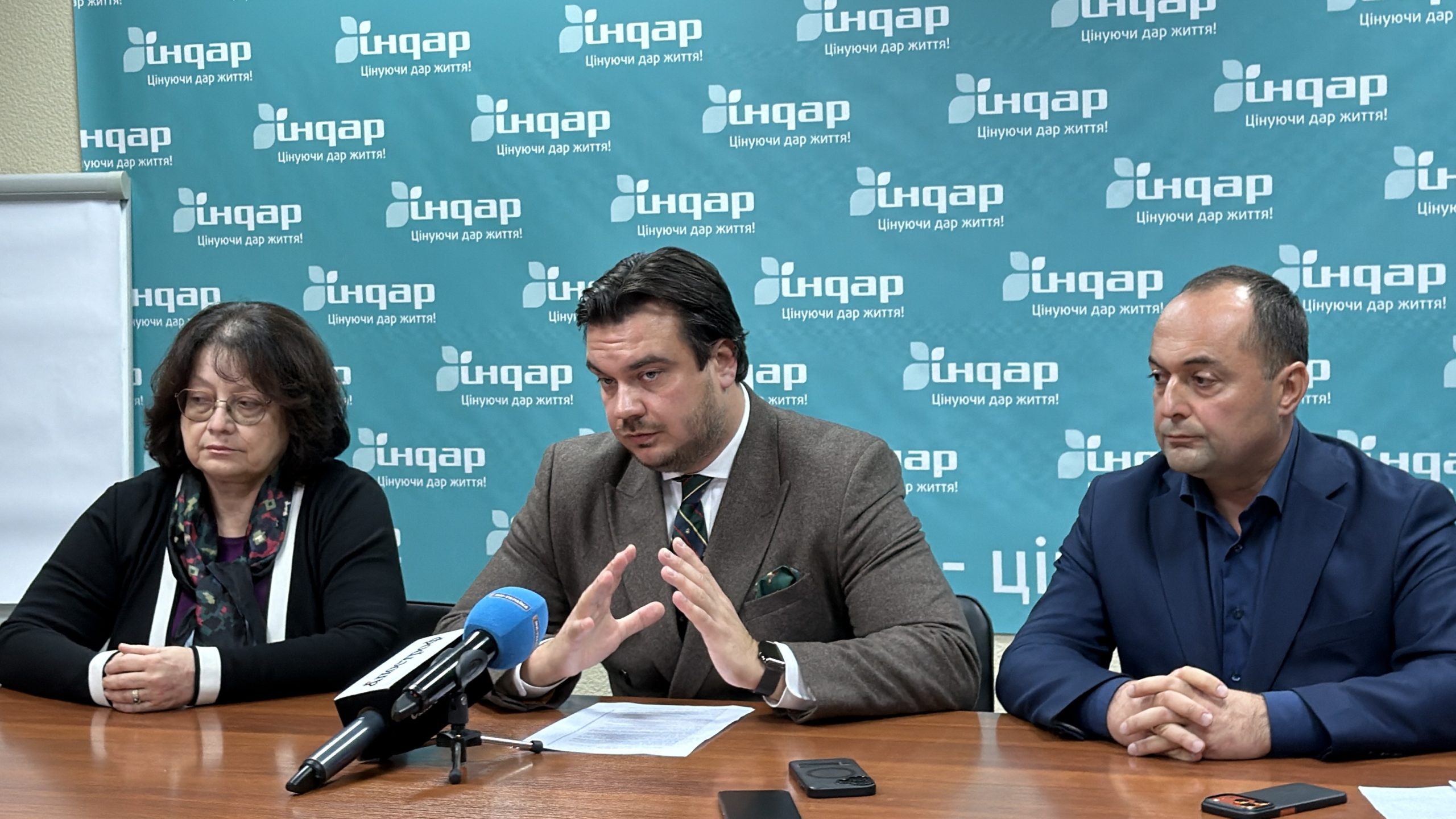
Dmytro Natalukha, head of the State Property Fund of Ukraine, has asked law enforcement agencies in a video address to investigate the conduct of Liubov Vyshnevska, former director of PJSC Indar. Only a week has passed since the state regained control of Indar, Ukraine’s only full-cycle insulin manufacturer. In that week, the plant’s new team found 30 people on the payroll whom nobody on staff knows. It also found that the plant had transferred UAH 70 million to a private company, and then another UAH 20 million to two more, all of it booked as interest-free repayable financial assistance. According to Indar employees, one of those companies is a pharmacy chain allegedly controlled by Ms Vyshnevska herself.
The problem: a majority shareholder that did not run its own plant
The state owns 70.7% of Indar’s shares. On paper, that is a controlling stake with full power over the company. Ukraine’s Law on Joint Stock Companies gives the supervisory board the right to appoint the chief executive and to remove them at any time. In other words, the state as majority shareholder should have been able to replace the director whenever it saw fit.
In practice, things went differently. According to Mr Natalukha, the plant’s management deliberately used legal means to block the supervisory board, and for years the state could not even replace the director. He described the situation with the corporate term “takeover by the management”, meaning that management seized control of the company against the will of its shareholders.
The contract with Liubov Vyshnevska, signed in 2012, provided for a 3-year term. Instead, 3 years became 14. “How this happened, history and lawyers will judge,” Mr Natalukha said. In his words, throughout this time the director treated “this strategic state enterprise as her own”. He summed up her management style in her own logic: “These contractors I pay, those contractors I don’t. The staffing table I approve, the staffing table I don’t approve, the financial plan I submit, the financial plan I don’t submit.” Reporting, he said, was not filed at all. Mr Natalukha compared Ms Vyshnevska to the character in “Pirates of the Caribbean” who grew into the ship itself: over 14 years, he said, she had grown into the plant in the same way and saw herself and it as one.
Lawyers can already offer that judgement. Under Ukrainian labour law, an expired contract did not by itself remove the director from office. Article 39-1 of the Labour Code sets a simple rule. If labour relations actually continue after a fixed-term employment contract expires and neither party demands termination, the contract is deemed extended indefinitely. So removing Ms Vyshnevska required a decision by the body authorised to dismiss her. That body was the supervisory board, and it was precisely the board that had been paralysed.
The cost of that paralysis shows in the market figures. Indar once supplied about 70% of Ukraine’s insulin market. Today its share is roughly 5%.
Background and precedents: almost 30 years of corporate and court disputes
The plant was set up in 1997 on the grounds of a former Kyiv meat-processing plant in the Darnytsia district. The state received more than 70% of the shares, and the rest was later bought by Polish investors. In 2008 the state stake passed to a British company through a promissory-note scheme, and in the summer of 2011 the plant was seized by force by officers of Berkut, the riot police unit of the Yanukovych era. In the autumn of that year a court returned the enterprise to state ownership.
Liubov Vyshnevska took over Indar in March 2012, during the presidency of Viktor Yanukovych. The first precedent of the state trying to remove her dates to 2014. The then health minister, Oleh Musii, accused the director of ignoring state decisions and suspended her. Ms Vyshnevska returned to her post through the courts. That episode matters for understanding the current case, because even then the judicial mechanism worked in favour of management rather than the owner.
In 2016 the Georgian businessman Davyd Bezhuashvili, owner of Georgian Industrial Group, one of Georgia’s largest industrial groups, bought 30% of Indar through the Cypriot offshore company Luraq Investments Ltd. Sources in the pharmaceutical market say Mr Bezhuashvili and Ms Vyshnevska are close.
In 2018 the plant was put on the list of assets for large-scale privatisation and transferred to the State Property Fund’s management. The minority shareholder then obtained a pre-emptive right to buy the state stake without an auction. In 2019 the Fund decided to privatise the plant, yet in almost 7 years the sale never started. In 2025 the Fund cancelled the minority shareholder’s preferences and ordered a new privatisation, but the minority shareholder challenged that decision in court. According to Mr Natalukha, the state was in effect obliged to sell its stake to a single buyer, the private minority shareholder. In June 2026 the Fund broke that scheme in court.
After that, events moved quickly. On 27 October the supervisory board, its powers restored, dismissed the plant’s management and appointed Ihor Matiunin as the new director. On the night of 28 October representatives of the Fund arrived at the plant together with the police. According to Mr Natalukha, 27 hard drives had disappeared from the servers. They were later found in a box in the boot of a company car parked outside the range of the surveillance cameras. The dismissed director kept giving instructions to staff and tried to carry out a set of court documents concerning sanctioned and seized property. A National Police investigative team recorded the circumstances.
What the Fund found in 7 days
The first episode Mr Natalukha named concerns staff whom nobody has ever seen. “We also found 30 dead souls at the plant, people nobody has seen and nobody knows who they are,” he said. “Dead souls” is the Ukrainian expression for ghost employees who exist only on paper, taken from Gogol’s novel of the same name.
The second episode concerns UAH 70 million that the plant transferred to a single private company in 2023 and 2024. As it turned out, that company had been the subject of investigations and criminal proceedings in 2017-2022. Even so, after all those investigations, Indar transferred UAH 70 million to it. Today, according to the head of the Fund, the company is heading rapidly towards bankruptcy.
Mr Natalukha clarified that this is the same story he mentioned last time, on 31 October. He said then that a commercial counterparty owed Indar more than UAH 72 million, almost UAH 69 million of which was unreturned interest-free financial assistance. Documents, he said, showed that the company was preparing for bankruptcy, and an audit had found family ties between its management and a former Indar official.
He described the third episode as a continuation of the same practice. In 2025 and 2026, under an identical scheme of interest-free repayable financial assistance, another UAH 20 million went to two other private companies. According to Indar employees, one of them is a pharmacy chain allegedly under Ms Vyshnevska’s direct control.
In Mr Natalukha’s view, all these facts suggest that “there are probably grounds for criminal investigations”. He called on law enforcement agencies “not to let Ms Vyshnevska flee abroad” and “to take all possible measures to ensure that she remains on the territory of Ukraine”. The Fund, he said, is ready to hand investigators all the materials, facts, figures and documents on which it bases its conclusions. The next step lies with law enforcement, which must give these episodes a criminal-law assessment.
Legal assessment: why there are grounds for an investigation
Repayable financial assistance is in itself a lawful instrument. Subparagraph 14.1.257 of Ukraine’s Tax Code defines it as funds received under an agreement that provides for no interest or other payment for their use and that must be repaid. What raises suspicion in the Indar case is the circumstances in which this assistance was granted. An enterprise with a 70.7% state stake takes on credit risk, earns nothing for it, and lends money to a company that has already been the subject of criminal proceedings. That company then ends up on the brink of bankruptcy, and the money is not returned. For the state as owner, such a transaction makes no economic sense, and that is exactly what makes it a matter for a criminal investigation.
The corporate dimension reinforces these suspicions. The Law on Joint Stock Companies places the approval of significant transactions and related-party transactions within the competence of the supervisory board. Indar’s supervisory board was blocked for years. Investigators therefore have to establish who approved the UAH 70 million and UAH 20 million agreements, and by what procedure. The audit has already found family ties between the borrower’s management and a plant official. If Ms Vyshnevska’s control over the pharmacy chain is also confirmed, these agreements will fall under the rules on related-party transactions concluded while bypassing the body that was supposed to approve them.
Under criminal law, the financial-assistance episodes bear the hallmarks of Article 191 of the Criminal Code, that is, misappropriation of property through abuse of official position. Sums in the tens of millions of hryvnias exceed many times over the threshold for an “especially large amount”, which in 2026 stands at UAH 998,400. Despite the state stake, a private joint stock company is a legal entity of private law under Ukrainian law. Abuse of powers by its chief executive is therefore qualified under Article 364-1 of the Criminal Code rather than Article 364, which applies to officials of public-law entities.
The “dead souls” episode is legally different in nature. If 30 people were fictitiously kept on the payroll and drew wages, this amounts to embezzlement through fictitious payroll charges. Such conduct is impossible without forged timesheets and personnel records, which calls for separate qualification under Article 358 or Article 366 of the Criminal Code, depending on the status of whoever drew up those documents.
Conclusion
The Indar case shows that a controlling stake without a functioning supervisory board means little in legal terms. For 14 years the state was the majority owner only in the shareholder register. The director’s authority rested not on her contract, which had expired back in 2015, but on the paralysis of the one body that could have ended it. The State Property Fund broke that paralysis, and within its very first week it found 30 ghost employees on the payroll and tens of millions of hryvnias transferred to companies with a criminal record and questionable connections. The Fund is ready to hand the documents confirming these episodes to investigators. The final legal assessment will be made by a court, but the grounds for an investigation that Mr Natalukha speaks of are legally evident.
Practical implications
The Fund head’s demand to prevent Ms Vyshnevska from leaving the country has a clear procedural path, and law enforcement should follow it quickly. Following the Fund’s statement, the information must be entered in the Unified Register of Pre-trial Investigations, as Article 214 of the Criminal Procedure Code requires. Once a notice of suspicion is served, Article 194(5)(8) of the Code allows the suspect to be required to surrender her passport for travel abroad. In other words, the law provides exactly the tool the head of the Fund is asking for, and the only question is how quickly investigators will use it.
The same procedural step opens the way to recovering state funds. Once a notice of suspicion is served, Indar as the injured party will be able to file a civil claim within the criminal proceedings under Article 128 of the Criminal Procedure Code, and investigators will be able to ask a court to seize property to secure that claim under Article 170.
In parallel, the plant’s new management has every reason to act as a creditor. If the borrower is declared bankrupt, Indar will file its creditor claims in the bankruptcy case within 30 days of the official announcement that proceedings have opened, as required by the Code of Ukraine on Bankruptcy Procedures. Financial-assistance agreements concluded without mandatory supervisory board approval can be challenged by the plant in a commercial court.
Jurisdiction is a separate issue. Article 216(5) of the Criminal Procedure Code makes the competence of the National Anti-Corruption Bureau of Ukraine (NABU) depend on the status of the enterprise, the position of the person concerned and the amount of damage. How investigators assess the status of Indar and its former head will decide whether the case goes to the anti-corruption bodies or stays with the National Police.
Finally, the investigation will directly affect privatisation. Indar’s starting price was set at $24 million, and the Fund has already said it will update the valuation after reviewing the documents. Clearing up the former management’s legacy, recovering the funds that were siphoned off and giving the enterprise a transparent history are the conditions for the state to sell the plant at open auction for a fair price, instead of handing it to a single buyer, as some tried to arrange for years.