
Internally displaced persons vs Local Communities: Mediation as a Tool for Integration or Segregation?
/ 8 January 2026 14:40
11 min to read
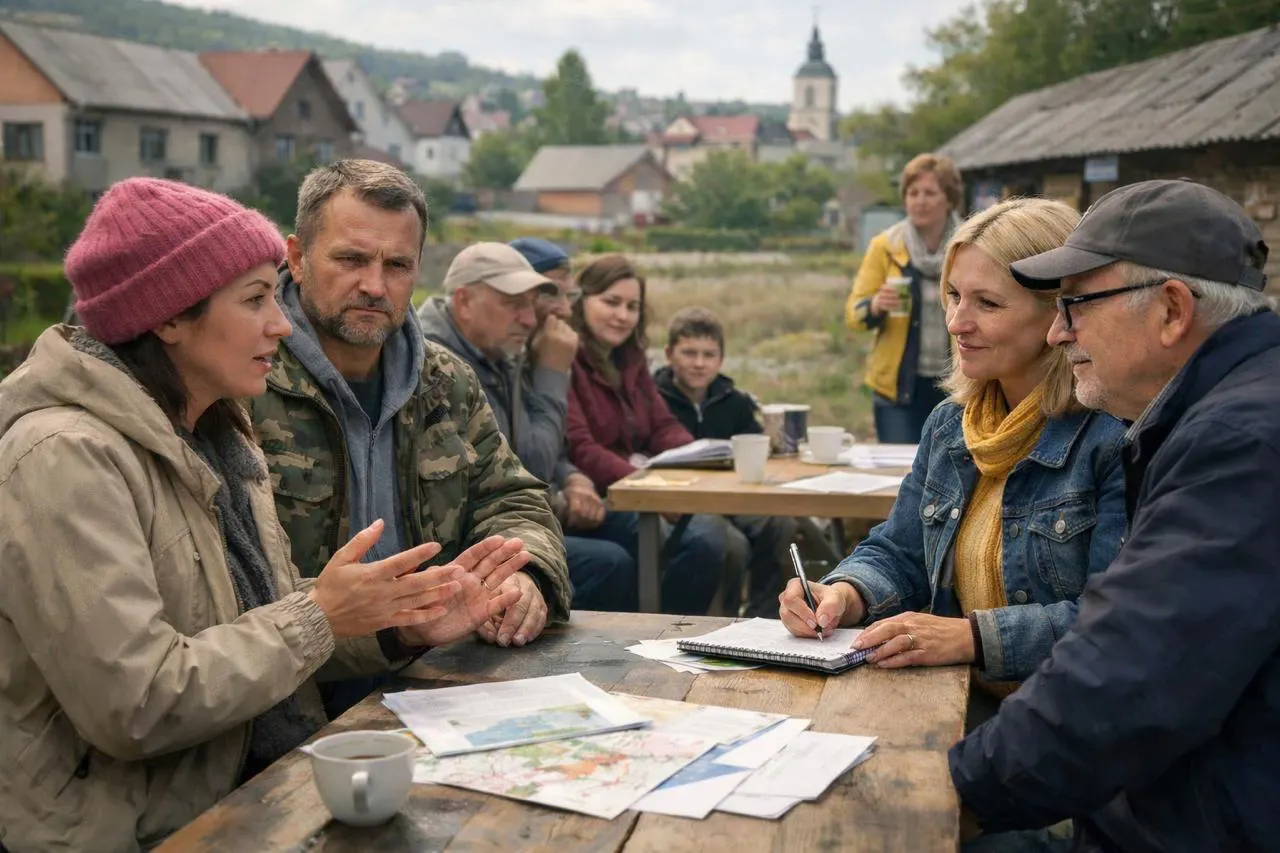
Internally displaced persons in Ukraine are not an abstract statistical category, but millions of people trying to rebuild their lives in a new place. Official rhetoric speaks of solidarity, mutual assistance, and national unity. But behind this rhetoric lie real, complex, sometimes painful conflicts between displaced persons and host communities—conflicts that do not disappear from silence about them.
These conflicts arise in housing issues, the educational environment, and the economic sphere. They are born not from hostility, but from objective constraints: housing shortages, overcrowded schools, competition for jobs. At the same time, they always have an emotional component—fear, misunderstanding, stereotypes on both sides.
The question is whether mediation can become a tool that helps transform these conflicts from destructive to constructive, from those that deepen division to those that promote integration.
Housing Conflicts: When Negotiation is Difficult but Possible
Typology of IDP Housing Disputes
Housing conflicts between IDPs and local communities arise in several main scenarios. The first involves conflicts with private landlords regarding rental terms, duration, payment amounts, and responsibility for utilities. Studies show that displaced persons often face discriminatory practices: they are denied rentals due to IDP status, required to pay inflated deposits, and offered short-term contracts “due to uncertainty.”
The second type involves conflicts with neighbors. These may concern the use of common spaces, parking, noise levels, and keeping pets. The specificity of these conflicts is that local residents sometimes perceive IDPs as “temporary” residents who “don’t care about the building,” while the displaced persons themselves feel like misunderstood outsiders.
The third type involves conflicts around municipal or humanitarian housing. Some people living in communities that have accepted IDPs may believe that displaced persons receive undeserved benefits, “living for free.” These conflicts often have an undertone of unfair resource distribution.
Specifics of Mediating IDP Housing Disputes
Mediation of IDP housing conflicts must work with several layers of problems simultaneously. The first layer is legal: contractual terms, rights and obligations of parties, compliance of housing with standards. The second is economic: IDPs’ ability to pay, actual market value of housing, possibility of flexible payment schemes. The third is psychological: trauma of losing home, feeling of instability among internally displaced persons; fear of unpredictability, distrust among owners.
The key challenge for the mediator is working with the imbalance of positions. The landlord usually has a stronger position: they can find another tenant, they have alternatives. IDPs are often in a position of limited choice, especially in cities with high housing demand.
This imbalance does not mean mediation is impossible, but it requires special sensitivity from the mediator. The mediator must ensure that the process does not turn into pressure from the stronger party on the weaker one. This is achieved through several mechanisms: sufficient preparation time, active use of caucuses (individual meetings), the mediator’s role as a “reality agent.”
When Mediation Works: Success Cases
Mediation of IDP housing conflicts is most effective in cases where both parties are interested in long-term stable relationships. Abstract example: a family of displaced persons rents an apartment, the landlord is satisfied with the tenants’ care, but for valid reasons must raise the rent. IDPs cannot afford the increase, but searching for new housing is a traumatic experience for them. In mediation, they agree on a gradual rent increase over a year, and also that the IDPs will take on minor apartment repairs, reducing the landlord’s expenses.
Another example: conflict between IDPs and neighbors over parking. Local residents are accustomed to parking in certain spots that are formally common. Displaced persons, not knowing the unwritten rules, park in the same places, causing outrage. Instead of escalation to quarrels, the mediator helps organize a meeting of building residents where a parking allocation system is discussed that takes into account everyone’s needs, including new residents.
When Mediation is Ineffective: Boundaries of Application
There are situations when mediation of IDP housing conflicts is not the optimal tool. The first is when clear legal rights are violated. If a landlord refuses to fulfill contractual obligations, this is not a matter of negotiation but of law enforcement.
The second situation is when one party acts clearly in bad faith. If a landlord exploits IDPs’ vulnerability to demand excessive payment or illegal conditions, mediation risks becoming a tool for legitimizing exploitation.
The third situation is when the power imbalance is so significant that IDPs cannot freely make decisions. If a displaced person agrees to conditions solely due to lack of any alternatives (threat of being on the street), such an “agreement” is not true consensus.
Displaced Children in Schools: Mediation or Other Tools?
School Conflicts: Specifics and Causes
School becomes a place of intensive interaction between displaced children and local students. Conflicts arise for several reasons. First, differences in mentality: variations in dialects and habits can become a source of misunderstandings or even ridicule. Second, competition for resources: places in popular clubs, teachers’ attention, leadership positions in class. Third, stereotypes and prejudices that children may adopt from adults.
Typical conflict scenarios: local children exclude newcomers from games and groups; conflicts arise from different understandings of behavioral norms; parents of local children complain that “the level of education has decreased because of displaced persons.”
Mediation as a Tool: When It’s Appropriate
Mediation in school conflicts can be effective in certain types of situations. It works best for interpersonal conflicts that arose from misunderstandings rather than systematic bullying.
Key principles of school mediation differ from adult mediation: mandatory language adaptation, shorter sessions, greater role of visualization, emphasis on restoring relationships rather than just resolving a specific incident.
Bullying vs Conflict: The Critical Difference
It is fundamentally important to distinguish between situational conflict and bullying (systematic harassment). Bullying is characterized by three features: repeatability, power imbalance, intentionality. If a displaced child systematically becomes the object of ridicule, exclusion, humiliation—this is bullying, not conflict.
Mediation is contraindicated in cases of bullying. This is a critically important conclusion from international practice. Reasons: bullying is not a “conflict between two equal parties” but aggression by the stronger against the weaker. In mediation, the bullying victim may feel pressure to “reconcile” with the aggressor, which deepens the trauma.
Bullying requires other interventions: clear condemnation of the aggressor’s behavior by school administration, disciplinary consequences, school psychologist working with victim and aggressor separately, changing school culture through anti-bullying programs.
The Role of Mediation in Creating an Inclusive Environment
At the same time, mediation can play an important role in conflict prevention and creating an inclusive school environment. This happens not through resolving individual conflicts but through changing the culture of communication. “Peer mediation” programs, where older students learn to help younger ones resolve minor misunderstandings, form an atmosphere where conflict is seen not as grounds for punishment but as an opportunity for dialogue.
Economic Conflicts: IDP Business vs Local Entrepreneurs
The Nature of Economic Competition
Economic conflicts between IDP businesses and local entrepreneurs arise in situations of limited resources. Displaced persons, trying to rebuild their lives, open stores, cafes, workshops, and provide services. Local entrepreneurs may perceive this as a threat to their business, especially in small communities where the market is already limited.
Typical conflicts: local entrepreneurs complain that displaced persons “undercut prices”; that they receive benefits; that “they’re not from here,” don’t understand the local market, don’t respect established rules. On the other hand, displaced entrepreneurs complain about discrimination: it’s harder for them to obtain permits, rent premises, they’re not accepted into local business communities.
Mediation of Business Conflicts: Possibilities and Boundaries
Mediation of economic conflicts between IDPs and local entrepreneurs has specifics distinct from other types of disputes. First, parties are often forced to coexist in one economic ecosystem for a long time, making preservation of working relationships critically important. Second, conflicts often have not only an economic but also a social dimension: reputation, belonging to the community, consumer trust.
Abstract example: in a small town, a local entrepreneur has a bakery that has operated for decades. A family of displaced persons opens a bakery nearby, offering slightly lower prices and a different assortment. The local owner is outraged: “I’ve worked here for 20 years, and they came and are taking my customers!” The displaced persons respond: “We have the right to earn a living, we offer a quality product.”
In mediation, parties move from positions to interests. The mediator helps find options that consider both interests: perhaps the bakeries can specialize in different products; perhaps they can cooperate in supplying wholesale clients; perhaps they’ll combine efforts to promote local products.
The Community’s Role in Resolving Economic Conflicts
Economic conflicts between IDPs and locals often require not only bilateral mediation but engagement of the broader community. An effective tool can be facilitating community dialogues where representatives of the business community, local government, and IDP commissioners discuss systemic issues.
International experience shows: the most successful practices for integrating internally displaced persons into the economic life of communities include creating business associations uniting both local and displaced entrepreneurs; mentorship programs; joint projects.
Mediation Boundaries: When Regulation is Needed
There are situations when economic conflicts cannot be resolved exclusively through mediation and require structural changes or regulatory interventions. If conflict arises from non-transparent distribution of state resources or benefits, the problem is not in relationships between entrepreneurs but in the system. If local authorities discriminate against IDPs in issuing permits or licenses, this is a matter of legal protection, not negotiation.
Conclusions: Mediation as a Tool for Conscious Integration
Analysis of housing, school, and economic conflicts between IDPs and local communities allows formulation of several fundamental conclusions about the role and boundaries of mediation.
First, mediation can be an effective tool when conflict arose from misunderstanding, difference in expectations, insufficient communication—and when both parties are interested in preserving relationships.
Second, mediation has limitations that must be honestly acknowledged. It is not suitable for situations where there is clear power imbalance without possibility of compensation; where basic rights are violated; where there is bullying or systematic discrimination.
Third, mediation’s success depends on context. Mediation works better in communities where there is already a basic level of trust, where local authorities support IDP integration, where support institutions for both groups exist.
Recommendations for Mediators
Recommendation 1: Assess power imbalance. Before beginning mediation, the mediator must honestly assess whether the weaker party (often IDPs) can freely make decisions, whether they have real alternatives.
Recommendation 2: Work with trauma. Most IDPs have traumatic experience of losing home, loved ones, familiar life. The mediator must be sensitive to this, allow sufficient time for expressing emotions, not rush to find a solution.
Recommendation 3: Go beyond bilateral mediation. Many conflicts have a systemic character and require engagement of the community, local authorities, support organizations.
Recommendation 4: Distinguish conflict from structural problems. The mediator must be aware: not all problems can be solved through individual agreements.
Recommendation 5: Build long-term perspective. The goal of mediation is not only to resolve a specific dispute but to promote IDP integration into the community.
Answer to the Title Question: Integration or Segregation?
Is mediation a tool for integrating internally displaced persons into communities, or does it risk cementing segregation by legitimizing inequality under the guise of “reached agreements”?
Answer: mediation can be both, depending on how it is applied.
Mediation becomes a tool for integration when: it is applied consciously, with understanding of context and power imbalance; the mediator has sensitivity to the specifics of displaced persons and their vulnerability; mediation is accompanied by systemic community efforts to support integration; its goal is not simply to stop conflict but to build a foundation for coexistence; the mediator is ready to acknowledge the boundaries of their tool.
Mediation risks becoming a tool for segregation when: it is applied mechanically, without understanding context; the mediator ignores power imbalance and interprets formal consent as true consensus; mediation is used to mask structural problems.
Mediation of conflicts between IDPs and local communities is not a technical procedure but a complex, ethically rich practice requiring from the mediator not only mastery of techniques but also deep understanding of social context, sensitivity to power and vulnerability, readiness to acknowledge the boundaries of their tool.