

Police want to give new powers regarding unsubstantiated assets: draft law registered in the Rada
/ 22 May 2026 14:07
3 min to read
The Verkhovna Rada has registered draft law No. 15260 “On Amendments to the Code of Ukraine on Administrative Offenses and Other Legislative Acts to Improve Measures for Identifying Unfounded Assets and Collecting Evidence of Their Unfoundedness”. The document provides for a significant expansion of the powers of the National Police of Ukraine in the field of identifying assets with signs of illegal origin.
The authors of the initiative explain the need for changes by saying that the current system does not allow the police to fully work with cases of unfounded assets within the framework of civil proceedings, despite the fact that it is the police that investigates a significant number of corruption offenses and cases of illicit enrichment.
What powers do they want to grant to the police
The draft law proposes to amend the Code of Administrative Offenses, the Civil Procedure Code and the Law “On the National Police”.
In particular, the police may receive the right to:
— identify unfounded assets;
— collect evidence of their illegal origin;
— to search and seize property that may be seized as state revenue;
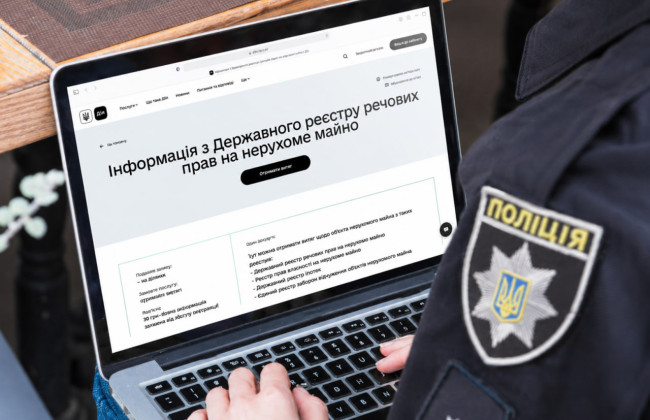
— to receive information from state registers, automated systems and databases free of charge.
The document also establishes the terms of response to police requests. It is assumed that authorities, local governments and legal entities will have to provide the necessary information within three days. If this is not possible, they must notify the reasons no later than ten days from the date of receipt of the request.
In addition, the police will be able to involve specialists and experts to assess the value of assets with signs of unfoundedness.
Strengthening responsibility
The draft law also provides for strengthening administrative responsibility for obstructing the work of the police in such cases.
This concerns responsibility for:
— failure to provide information;
— provision of unreliable data;
— violation of the deadlines for responding to requests;
— notification of third parties about the collection of information on unfounded assets.
To this end, it is proposed to expand the scope of Article 185-13 of the Code of Administrative Offenses.
What may change
In fact, the document significantly strengthens the role of the National Police in the field of anti-corruption control. If previously the main powers to identify unfounded assets were concentrated around the NABU, SAPO and other specialized bodies, now the police will also receive separate procedural tools to work in this area.
The authors of the bill believe that this will allow to speed up the collection of evidence and increase the number of cases of collecting unfounded assets to the state revenue thanks to the extensive system of police units throughout the country.
At the same time, the initiative may cause discussions about the limits of the powers of the police and control over the use of access to state registers and information with limited access.
If adopted, the bill may significantly change the mechanisms of anti-corruption control and the procedures for identifying assets with signs of unfoundedness.
Without an author