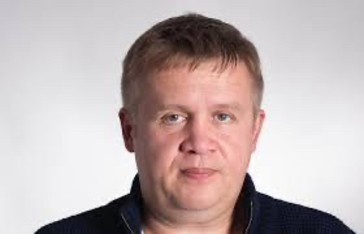
State Property Fund head Dmytro Natalukha tells press conference how the state regained control of Indar
12 min to read
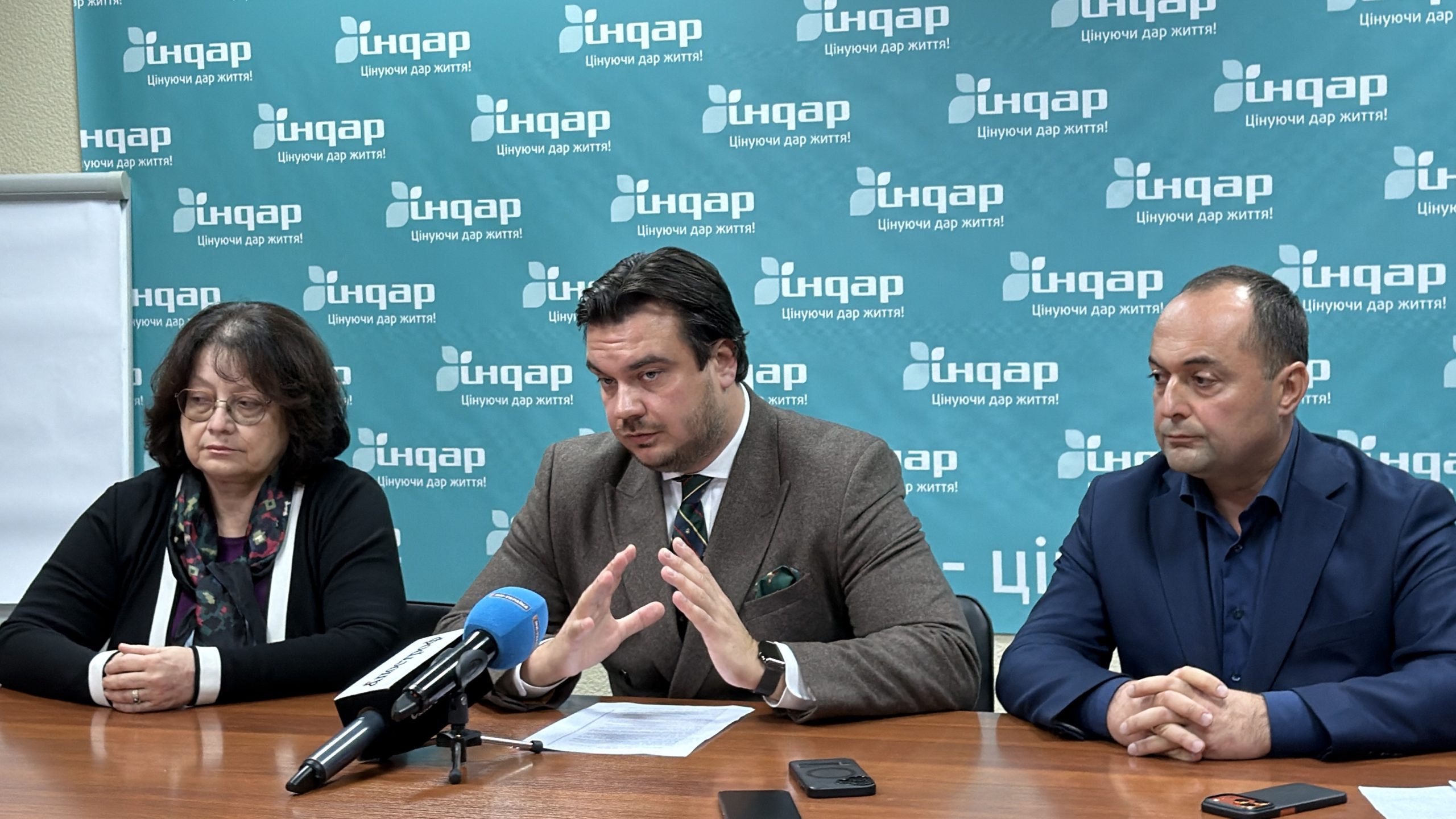
Dmytro Natalukha, head of the State Property Fund of Ukraine, called a press conference on 30 October at PrJSC Indar in Kyiv, the country’s only full-cycle insulin manufacturer. Two days after the state regained management of the plant, he and the new team told journalists how the change of leadership unfolded, what was found on the premises in the first days, and what happens next.
Alongside Mr Natalukha, questions were taken by the plant’s new head Ihor Matiunin, supervisory board chair Olesia Maliavka, and Iryna Skaletska, Mr Matiunin’s lawyer and head of the law firm Verum.
The state owns more than 70% of Indar’s shares, yet for years it was unable to run the company. The State Property Fund is the government agency that manages state-owned assets and conducts privatisation. According to its head, the main task now is to stabilise production, carry out an audit and revalue the asset before any further decisions on the state’s stake.
The night the management changed
The events that put the plant in the spotlight began in late October. On 26 October Indar’s newly constituted supervisory board met for the first time, and on 27 October it appointed a new head. Mr Matiunin now serves as acting chairman of the management board.
On the evening of 28 October Mr Natalukha arrived at the plant together with the new head, members of the supervisory board and police officers. According to the Fund, by that time 27 hard drives had gone missing from the company’s servers. They were later found in a cardboard box in the boot of a company car. The vehicle was parked in the plant’s inner courtyard, in a spot not covered by CCTV.
According to the Fund’s head, the drives held accounting and financial records, data on contracts and other information that could shed light on what had been happening at the company in recent years. Staff said the order to remove the drives and move them to the car had come from the previous management.
A separate episode concerns papers that, according to Mr Natalukha, the former director Liubov Vyshnevska tried to take out of the building. She explained that they were her father’s medical records. But when police officers asked to see the documents, they turned out to be court materials relating to sanctioned and seized property. The documents were returned to the office they had been taken from and are now being examined by the legal department.
Ms Skaletska said the events of 28 October had been documented by a police investigative team. The premises were inspected and sealed, and the keys were handed to the new head. In her words, the former management did not hand over its powers in a civilised manner and left the workplace only at the demand of the Fund’s head. Statements to law enforcement were filed both by Mr Matiunin personally and by the company itself.
No legal assessment of the former management’s actions has yet been made. Mr Natalukha stressed that all the circumstances are still being established by law enforcement. As of 30 October, Ms Vyshnevska has not publicly responded to the allegations.
The first episode
Summing up the first days, the Fund’s head named one episode that is now under review. A private company, a contractor of the plant, owes it more than 72m hryvnias, roughly $1.7m. Almost 69m of that is interest-free financial assistance that the plant extended and that was never repaid.
According to Mr Natalukha, the documents found include materials on preparing that company for bankruptcy. In addition, an earlier audit by the Fund had already recorded family ties between the management of this company and one of the officials of Indar’s former management.
The Fund’s head described the mechanism as follows: the plant provided private companies with repayable financial assistance, their debt accumulated, then these companies went bankrupt and the money was never returned. He did not disclose the contractor’s name and stressed that this was preliminary information.
“This is just one episode, which is now being worked through and whose facts are being established,” Mr Natalukha said.
Why the state could not run its own plant for years
As the Fund’s head acknowledged, at some point the state effectively lost control of the company despite holding the majority stake. The Fund could not influence shareholder meetings, form a supervisory board or oversee the management. Mr Natalukha put this down to a series of legal and court decisions.
According to the Fund’s preliminary version, the former director, together with other individuals and with the assistance of other shareholders, did everything to isolate the state from management. Ms Vyshnevska had headed Indar since 2012, and the management had not changed since then.
Ms Maliavka explained that the previous management had for years blocked supervisory board meetings and shareholder meetings through various legal devices. When the director’s contract expired, its term, according to the board chair, was extended through court rulings. She declined to name the court, remarking only that “everyone in Ukraine knows it”. Asked what had changed this year if the courts were the same, Ms Maliavka replied that in 2026 the Fund’s leadership had changed. “On some issues you also need political will,” she said. In her words, the Fund had earlier had access to some of the documents, but for some reason no decisions were taken.
Mr Natalukha, for his part, remarked that court rulings in the Indar cases had very rarely been in the state’s interests. This, he said, does not mean that a court should defend the state’s interests as such, but the substance of the rulings was contentious, something the Fund had seen for itself up to and including the court of cassation.
The new supervisory board, according to Ms Maliavka, was elected at a general meeting where the Fund holds more than 70% of the votes. The board consists of three independent members, one representative of the State Property Fund and one representative of the minority shareholder, a legal entity that owns almost 30% of the shares.
The board was elected in early summer, but its first meeting, planned for June, was blocked by lawsuits. A court of first instance barred the board from appointing management. That ban, according to Ms Skaletska, was overturned on appeal, after which the registrar entered the new head into the state register of legal entities.
A monopolist with 5% of the market
Journalists asked how a company described as a monopolist could hold only 5% of the market. Mr Natalukha explained that Indar is the only company with state participation that produces insulin in a full cycle, from the active substance to finished medicines. The 5% figure, by contrast, is its share of a market that includes imports.
According to the Fund’s head, that share once reached about 70%. He described himself as no expert in pharmaceuticals but offered a logical explanation for the decline. A market is shaped either by product quality or by the actions of other players who keep a producer out. There are no rulings by the Antimonopoly Committee on unfair practices by competitors against Indar. So, in Mr Natalukha’s words, the answer probably lies in quality. He sees the solution in modernising production or optimising processes.
The plant’s new head answered the question more cautiously. In two days on the job, Mr Matiunin said, he had talked to the staff and saw no quality problems at present, though there would certainly be room for improvement.
What happens to production and patients
The Fund’s head named the full stabilisation of production cycles as the main task for the coming days. In his words, it is vital to prevent sabotage, a shutdown of the plant or a deterioration of working conditions.
“Our task is precisely that patients should not feel the change of management at the company at all,” Mr Natalukha said.
Mr Matiunin gave assurances that the plant is working. “It is operating, operating, and it will keep operating” he said. The new head named his priorities as maintaining production volumes, upholding quality and keeping the workforce. The plant employs about 350 people. “No staff changes are planned,” he stressed.
In his words, the staff’s main fear after the change of management was whether the company would keep working. There are currently no wage arrears. At the same time, Mr Matiunin admitted that wages at the plant are not the highest on the market, so working conditions and pay will have to be reviewed. The equipment, he said, is in working order. He promised to release more detailed figures on production volumes, contracts and exports later, once all deliveries have been reconciled.
Audit, revaluation and sale
A comprehensive financial and management audit is now beginning at the plant. Its purpose, according to Mr Natalukha, is to identify risks and anomalies and understand the company’s real condition.
The Fund had earlier valued the state’s stake at $24m. That valuation, the Fund’s head said, will be updated to reflect the condition the asset is in. Further strategic decisions on the state’s stake will be taken together with the government, parliament and the President’s Office. On the private 30%, Mr Natalukha was brief: “If these 30% are lawful, they will remain the private owner’s property.”
The Fund’s head also said that in the summer, at the Ukraine Recovery Conference in Gdańsk, he had spoken to representatives of several international pharmaceutical companies. In his words, all of them knew about Indar and steered clear of it because of the situation with the management and the legal blockages. “They all know you shouldn’t come within a cannon shot of this place,” he recounted. Since 28 October, according to Mr Natalukha, interest in the plant from Ukrainian and international pharmaceutical companies has grown markedly. There are no concrete talks yet, because the Fund cannot yet assess the company’s condition.
The supervisory board is to approve its work plan for 2026 shortly. Ms Maliavka explained that the company’s charter has not been revised since 2018 and does not comply with current legislation, while appointments and remuneration at the company were for years decided “by hand” by the director. The board hopes to bring the internal documents into line with the law by the end of 2026.
The legal battle, meanwhile, is not over. As Mr Natalukha said, the former management is already preparing a new lawsuit in the commercial court. “We are ready for every step to be challenged,” Ms Maliavka said. Ms Skaletska put it figuratively: the court ruling obtained has dotted all the i’s, but those dots, in her words, could yet become an ellipsis in this story.
Is this a victory
Asked whether he considers the return of Indar a major victory in his post, Mr Natalukha replied that it is undoubtedly a high-profile event, and not only in his opinion. The Fund, he said, has tried before to regain control of this company, but this attempt was the first to succeed.
At the same time, the Fund’s head would not want Indar to be seen as an exception. In his words, the Fund faces an unpleasant pattern: acting within the law, it begins replacing a manager over whom there are questions of bad faith or of obstructing the Fund, and then the resistance starts. And this happens in more than one region and more than one industry. Afterwards, Mr Natalukha noted, society debates whether the state is an inefficient owner. “The problem, probably, is not the state,” he said. Very often the workforce comes out and says “this director or none”, although full responsibility for the company lies with the Fund.
“For us it is very important and telling that the state is capable of defending its interests, capable of exercising control over a strategic enterprise,” the Fund’s head said. And he added that he hopes to prove the state can restore efficient production and turn Indar into a genuinely competitive market player.
Ms Skaletska, Mr Matiunin’s lawyer, answered the question as a lawyer would: the current state of affairs at the company has confirmed once again that Ukraine is a state governed by law, and that control over any state enterprise can be regained by lawful means.
The main thing has already happened. A plant that for ten years belonged to the state only on paper has become its plant again, and the people who depend on its products every day did not, as promised, feel the change. One would like to believe that Indar is not the last such case for Mr Natalukha, and to wish him success in the next ones.