
The Path of Compromise: How the European Commission Helped Danish Companies Avoid Monopoly Through Mediation Logic
/ 6 April 2026 15:59
15 min to read
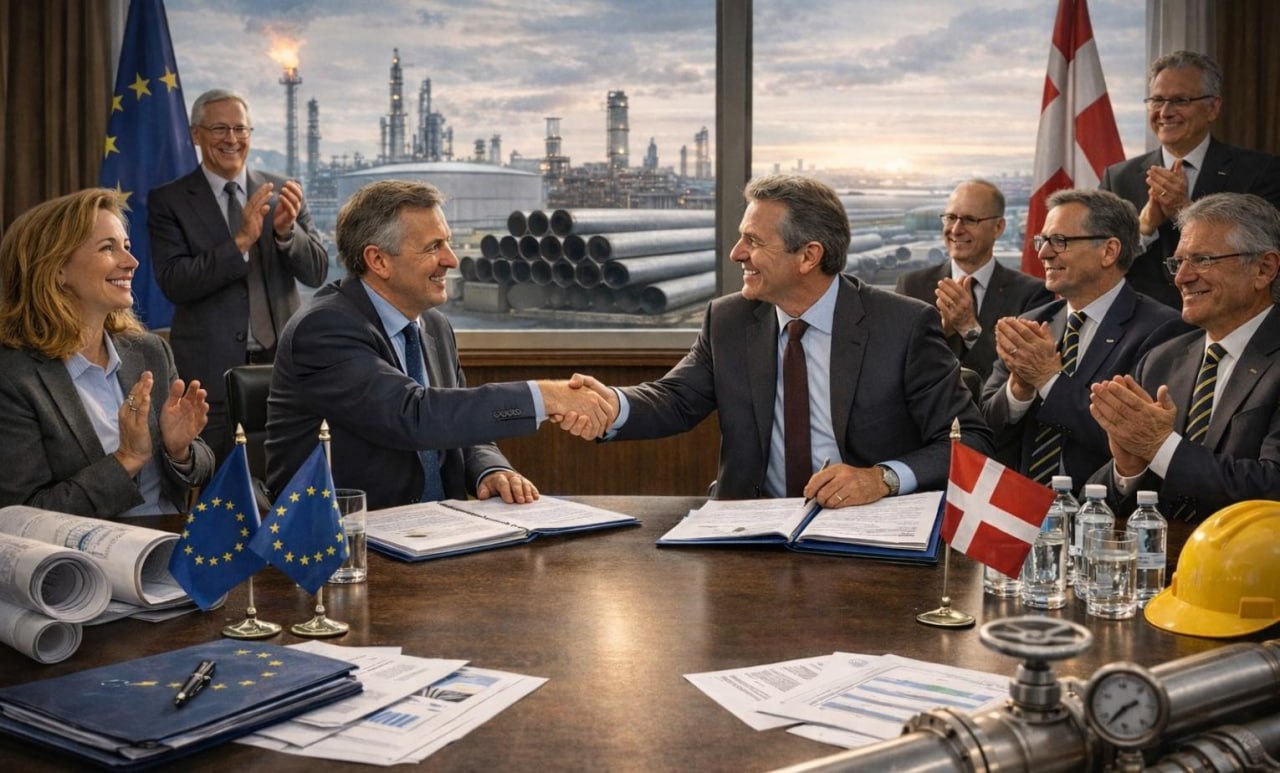
In March 2006, the European Commission adopted a decision that, at first glance, looked like a routine regulatory approval of a merger. The Danish state-owned gas company DONG was cleared to acquire four major energy companies at once — Elsam, Energi E2, Københavns Energi, and Frederiksberg Elnet. Behind that decision, however, lay months of intensive negotiations in which the Commission acted not merely as a regulator but as an active participant in a mediation process. The result was one of the most detailed package agreements in the history of European competition regulation: DONG agreed to sell the country’s largest gas storage facility and to auction off 10% of national gas consumption annually for six years.
This case is rarely discussed in the context of mediation — far more often it is analyzed as an example of antitrust regulation or EU energy policy. But viewed through the lens of mediation practice, it is extraordinarily instructive: it involves asymmetry between the parties, technically complex subject matter, and the search for a solution that allows a transaction to proceed without destroying the competitive environment. And, perhaps most importantly, it offers a clear illustration of how a properly structured negotiating process between a company and a regulator can produce an outcome that benefits all market participants.
The Danish Energy Market on the Eve of the Merger: Why the Deal Raised Alarms
To appreciate the scale of the mediation task facing the European Commission, one must understand the structure of the Danish energy market in the early 2000s.
DONG (Dansk Olie og Naturgas) was a state-owned company that dominated the Danish gas sector. Its share of the wholesale gas market stood at between 80 and 90 percent. The company controlled offshore production, transmission infrastructure, and underground gas storage. In the storage segment, DONG effectively had no competition: both of Denmark’s major gas storage facilities — at Lille Torup in Jutland and at Stenlille — belonged to it.
Elsam and Energi E2 were the dominant electricity producers in western and eastern Denmark respectively. Both companies had their own generation capacity and were potential competitors to DONG in the gas market: they consumed large volumes of gas for power generation and could, in theory, have become gas suppliers to other customers. It was precisely this potential competition — never fully realized — that became one of the Commission’s key arguments in its analysis of the deal.
KE and FE (Københavns Energi and Frederiksberg Elnet) were municipal utilities supplying electricity to the Copenhagen metropolitan area. They had strong brands, well-developed customer bases, and — crucially — the potential to enter the gas market through so-called “dual offers”: the joint sale of gas and electricity to the same customer.
Absorbing all four companies simultaneously would mean that DONG was not merely reinforcing its dominance in the gas market — it was eliminating virtually every potential competitor in a single move. The Commission reached an unequivocal conclusion: without appropriate commitments, the merger would significantly impede effective competition across several markets simultaneously — the wholesale gas market, the gas storage market, the market for gas supply to large industrial customers and decentralized combined heat and power plants, and the market for supply to small businesses and households.
The European Commission as Mediator: The Specifics of Regulatory Negotiation
The Commission’s merger approval procedure is not officially called mediation. But in substance that is what it is — with its own characteristics that distinguish it substantially from classic commercial mediation.
In cases of this kind, the Commission simultaneously occupies several roles. First, it is a regulator with binding authority: it can block a deal or approve it subject to conditions. Second, it is an analyst: it conducts extensive market research, interviews competitors, customers, and suppliers, and builds a detailed picture of the competitive effects of the transaction. Third, it is a negotiator: it discusses with the company the list of commitments that will address the identified competition problems. It is in this third role that the Commission acts as a mediator — but a mediator of a particular kind, representing not one of the parties to a dispute but the interests of the market and of consumers as a whole.
In the DONG/Elsam/E2 case, the negotiating process had an additional layer of complexity: it involved not only DONG and the Commission but also the Danish Competition Authority, which served as an independent source of expertise on the local market. The Danish regulator had deep knowledge of the specifics of the national energy market that the Commission could not have obtained from official documents alone. This collaboration — rare in EU practice — was itself an innovation: the Danish Competition Authority later noted that it was unaware of any comparable example of such close cooperation between the Commission and a national regulator in a competition case.
The negotiations over the commitments package lasted several months. DONG had to confront the real risks: if the commitments proved insufficient, or if the Commission blocked the deal, the company would lose the consolidation opportunity it had set out to achieve. The Commission, for its part, had to assess whether the proposed measures were genuinely sufficient to restore competition, or merely the appearance of concessions.
The mechanics of negotiations between business and regulators, the challenge of finding solutions under conditions of asymmetric authority, and what “neutrality” means in publicly regulated processes are explored in my book Mediation: Ukrainian Experience and European Choice, available on Apple Books.
The Architecture of the Agreement: What DONG Agreed to Do
The commitments package proposed by DONG and accepted by the Commission has two key elements, each the product of a distinct negotiating track.
The first element was the sale of the Lille Torup gas storage facility. This is the larger of Denmark’s two underground gas storage sites: its capacity is approximately 400 million cubic metres, representing more than 57% of total Danish storage capacity. Selling this asset to an independent buyer meant the creation of a real competitor to DONG in the gas storage market — a market where the company had held an absolute monopoly.
DONG also committed not to acquire direct or indirect influence over the facility for ten years without prior Commission approval. This detail matters: it foreclosed the possibility of formally selling the storage site while effectively retaining control through complex corporate structures.
The second element was a gas release programme. DONG agreed to auction off 400 million cubic metres of gas annually for six years — from 2006 to 2011. The total volume came to 2,400 million cubic metres, approximately 10% of Denmark’s annual gas consumption at the time.
The concept of a gas release programme is not new in competition regulation. But in this case it was implemented in a non-trivial way. The auction ran in two phases. In the first phase, DONG offered gas on the Danish trading platform (GTF) and accepted “swap” bids: the buyer received gas in Denmark in exchange for delivering an equivalent volume to DONG at one of four northwest European hubs in the United Kingdom, the Netherlands, Belgium, or Germany. Gas that found no buyer in the first phase moved to the second — a conventional auction in which it was sold to the highest bidder.
The third element, less obvious but no less important, was the so-called customer release: the right of DONG’s customers to exit their contracts. If a DONG customer wished to take up an offer from a competitor that had acquired gas through the auction programme, DONG was obliged to release that customer from its contractual obligations for the relevant volume. Without this provision, the gas auctions could have been technically successful but practically ineffective: competitors would have obtained gas but been unable to reach customers locked into long-term contracts with DONG.
The Negotiating Logic: From Positions to Interests
From a mediation standpoint, the DONG/Elsam/E2 case is a textbook illustration of the shift from positional bargaining to interest-based negotiation — and it was precisely that shift that made the agreement possible.
DONG’s stated position was that the merger was necessary to create a competitive Danish energy player at the European level. The Commission’s stated position was that the merger as proposed was unacceptable due to excessive concentration. Had both sides remained at the level of positions, the outcome would have been binary: approval or block.
Moving to the level of interests opened space for creative solutions. DONG’s real interest was not in preserving all its assets intact, but in obtaining control over Elsam and E2 as electricity generators — that was the strategic priority of the consolidation. The Lille Torup storage facility, though a valuable asset, was not central to that strategy. The willingness to relinquish it in exchange for deal approval was the product of precisely this analysis.
The Commission’s real interest was not in blocking the deal for the sake of principle, but in ensuring functioning competition in Danish gas markets after the transaction closed. The storage sale and the gas auctions did not merely compensate for the anticompetitive effects of the merger — they potentially improved the situation relative to the status quo, by lowering barriers to entry for new players.
The result of this convergence of interests was an agreement that neither side could have reached unilaterally: DONG obtained merger clearance, the market obtained a mechanism for protecting competition, and the Commission obtained a precedent demonstrating the effectiveness of a negotiated approach to regulatory problems.
The Technical Complexity of the Negotiations
One of the most instructive aspects of this case is the extraordinary technical complexity of the subject matter. The negotiations were not about abstract principles of competition but about specific volumes of gas in cubic metres, auction parameters, customer release conditions, and the time horizons of the commitments.
This is where the Danish Competition Authority’s role as technical adviser to the Commission proved critical. The Authority had experience from earlier cases in the Danish energy market, including the HNG/Midt-Nord and DONG transaction of 2005 and Elsam’s acquisition of Nesa in 2004. That accumulated expertise made it possible to calibrate the technical parameters of the commitments so that they were both realistic and functionally effective.
The annual auction volume of 400 million cubic metres, for instance, was not arrived at arbitrarily. It was calculated to compensate for the volumes that E2 had independently purchased on the market (approximately 5% of total Danish consumption), and to match the volumes that Elsam and E2 could have put on the market after their long-term contracts with DONG expired in 2009. It also represented 17% of the market for supply to large industrial customers and as much as 45% of the market for supply to small businesses and households — volumes sufficient to allow new entrants to achieve critical mass.
Market testing of the commitments was another innovation in this case. Rather than relying exclusively on the arguments of the parties, the Commission consulted market participants — competitors, customers, and potential gas buyers — on whether the proposed measures were adequate. The majority confirmed that both the duration and the volumes of the gas programme were commensurate with the problems it was designed to address. This feedback from actual market participants, rather than from the parties to the deal alone, is an important element of verifying a mediation outcome.
The Electricity Dimension: When a Merger Improves Competition
It is telling that in the electricity markets, the Commission reached the opposite conclusion: the merger would not harm competition — it might actually improve it.
The reason lies in the structure of the Scandinavian energy market. Before the merger, Elsam dominated western Denmark and E2 dominated eastern Denmark. There was no direct electricity cable between the two parts of the country (one was not expected until 2010), so there was no effective competition between them. In parallel with the DONG/Elsam/E2 transaction, the Swedish company Vattenfall acquired part of the generation capacity of both companies — and thereby gained a presence in both western and eastern Denmark simultaneously. This meant the emergence of a genuine new competitor in both markets.
From a mediation perspective, this dimension is instructive because it illustrates the importance of systemic analysis: one and the same transaction can have different effects in different markets. A mediator or regulator who focuses only on the obvious problems risks overlooking potential benefits. In the DONG case, the differentiated approach — strict conditions for the gas markets, no conditions for the electricity markets — is an example of exactly this kind of systemic thinking.
Monitoring Compliance: How the Agreement Was Enforced
Signing a package of commitments and ensuring they are carried out are two different tasks. That is why an important part of the mediation outcome in this case was the monitoring architecture.
The Danish Competition Authority took on responsibility for overseeing the gas auction programme. Each year for six years, the Authority was to receive reports on the auctions conducted, their results, and their conformity with the agreed parameters. For the sale of the Lille Torup storage facility, the decision provided for the appointment of an independent trustee whose task was to supervise the sale process and ensure its compliance with the terms of the Commission’s decision.
This monitoring architecture is itself a mediation element of the agreement. It transforms a one-off arrangement into an ongoing process with mechanisms for verification and correction. If market conditions changed substantially enough to make compliance with the commitments disproportionate, DONG could apply to the Commission for a reduction in the programme — but only with respect to the final two auctions, and only on proof of material change in market conditions.
This flexibility — the ability to adapt the agreement to changing circumstances without a full renegotiation — is a hallmark of mature mediation design. An agreement that cannot adapt to reality will sooner or later become either redundant or unenforceable.
Lessons for Mediation Practice
The DONG/Elsam/E2 case offers several lessons with relevance well beyond competition regulation.
The first concerns the role of the third party in technically complex negotiations. The Commission could not independently assess the realism of the proposed commitments without deep knowledge of the specifics of the Danish gas market. Bringing in the Danish Competition Authority as a technical adviser was, in effect, bringing a sector expert into the mediation process. In complex commercial disputes where the subject matter requires specialized knowledge, a mediator without technical support risks endorsing a solution that looks fair but is unworkable in practice.
The second lesson concerns verification through market testing. Rather than relying solely on the parties’ arguments, the Commission consulted market participants — competitors, customers, and potential gas buyers. This approach makes it possible to check whether the proposed solutions actually address real problems, rather than merely satisfying formal criteria. For mediation practice, this is a reminder of the importance of looking beyond the negotiating room: reality is always more complex than what the parties are prepared to acknowledge at the table.
The third lesson concerns systemic thinking. One and the same transaction can have positive effects in some markets and negative effects in others. A mediator or regulator who focuses on the obvious problems while ignoring the systemic context risks producing a decision that solves one problem and creates another. In the DONG case, the differentiated approach — strict conditions for the gas markets, no conditions for the electricity markets — is an example of that systemic vision.
The fourth lesson concerns the design of compliance monitoring. An agreement without an enforcement mechanism is a statement of intent. The independent trustee for the storage sale and the Authority’s systematic oversight of the auction programme transformed the Commission’s decision from a paper document into a living process. This architecture of accountability is an indispensable part of any mediation outcome that aspires to long-term durability.
Relevance for Ukraine
One might ask: how relevant is a case from the Danish gas market in 2006 to Ukraine today?
What matters is the approach. In the DONG case, the Commission demonstrated that a regulator can be an effective mediator between business interests and market interests — provided it is equipped with rigorous analysis, prepared for constructive negotiation, and able to ensure a transparent mechanism for carrying out what has been agreed. For Ukraine, where regulatory bodies frequently encounter the same problems of information asymmetry and deficit of trust between regulator and business, this approach offers an exceptionally valuable model.
A merger that threatens monopolization does not necessarily have to be blocked. With the right conditions, it can become a starting point for restructuring a market for the better. But that requires a regulator capable of acting not as a prosecutor but as a mediator.
Conclusion
The DONG/Elsam/E2 case concluded with a decision that satisfied all the key participants. DONG obtained control over Elsam and E2 — the strategic goal that had motivated the acquisition in the first place. The Danish gas market obtained competition protection mechanisms that potentially improved the situation relative to the status quo. The Commission confirmed that a negotiated approach to regulatory problems can deliver results unreachable through simple blocking or unconditional approval. And Danish consumers obtained a more competitive market in which new entrants had a genuine chance to enter.
That outcome did not emerge on its own. It is the product of months of technically complex negotiations, the willingness of both sides to think in terms of interests rather than positions, and a clear compliance mechanism that transformed a paper agreement into a real instrument of market policy.
Gas in the Danish storage facilities continued flowing to consumers — but now through new channels that had come into existence through the auction programme. And that became possible not through a court judgment, not through an administrative order, but through mediation.