
The Supreme Court clarified the limits of trade unions’ powers regarding the demand for the dismissal of an enterprise manager
/ 2 July 2026 16:00
3 min to read
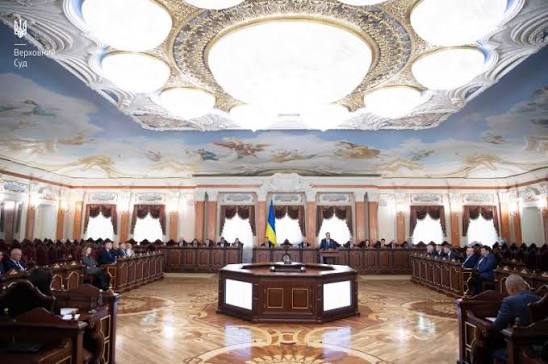
The Supreme Court as part of the Grand Chamber in case No. 359/8573/20 formed an important legal position regarding the application of Article 45 of the Labor Code of Ukraine, which regulates the right of trade unions to demand the dismissal of the head of the enterprise.
The Labor and Employment Inspectorate of the Dnipro City Council informed about the key conclusions of the court.
The right of a trade union to demand dismissal
The court emphasized that each primary trade union organization has the right to independently initiate the issue of dismissal of the head of the enterprise, even if such an organization:
— is not part of the joint representative body;
— did not take part in concluding a collective agreement.
The Supreme Court emphasized that all trade unions have equal rights in accordance with the Constitution of Ukraine.
At the same time, the trade union, by making a corresponding demand, represents not only the interests of its members, but also protects the collective labor rights of all employees of the enterprise, regardless of their membership in the trade union.
When a trade union can demand dismissal
The court separately drew attention to the fact that the mechanism provided for in Article 45 of the Labor Code is exclusive and applies only in case of significant violations by the manager.
This is a violation:
— labor legislation;
— legislation on collective agreements;
— the Law of Ukraine “On trade unions, their rights and guarantees of activity”.
At the same time, the demand of the trade union must be clearly motivated, contain specific facts of violations and be supported by appropriate evidence.
Formal violations are not grounds
The Grand Chamber emphasized that formal, technical or minor violations cannot automatically serve as grounds for dismissing a manager.
The court also warned trade unions against using this mechanism as a tool of pressure on the employer or a method of so-called “social blackmail”.
The court emphasized that it is the trade union that must prove the existence of legal grounds for the dismissal, just as the employer is obliged to prove the legality of the dismissal of the employee.
The court has the final say
The Supreme Court also noted that the decision of the trade union on the demand for dismissal is not final. The head of the enterprise or the owner has the right to challenge such a claim in court.
During the trial, the execution of the request for dismissal is suspended.
Thus, the Grand Chamber confirmed: Article 45 of the Labor Code does not give trade unions the unconditional right to dismiss managers, and each such dispute is subject to a thorough judicial review, taking into account the balance of interests of employees, the employer and the manager himself.
Without an author