
The Verkhovna Rada declared the need for a new system for protecting children in wartime
/ 1 June 2026 11:00
2 min to read
Due to Russia’s full-scale war, millions of Ukrainian children have found themselves in extremely difficult conditions – they have become internally displaced persons, have left for abroad, are living under occupation, or have been illegally deported to the Russian Federation.
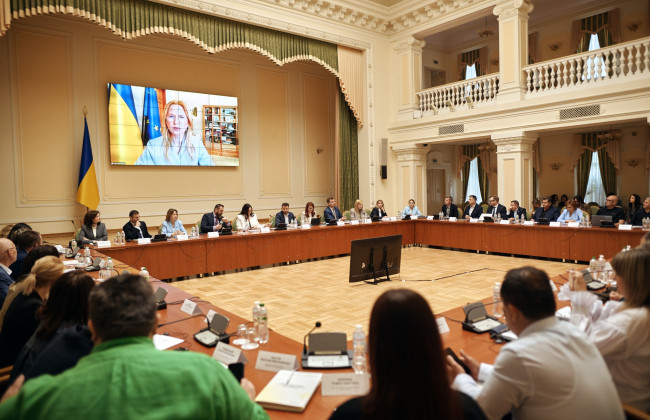
This was stated in the Verkhovna Rada of Ukraine, emphasizing the need to create a comprehensive state system for protecting childhood in wartime.
According to the parliament, about 1.5 million Ukrainian children remain in the temporarily occupied territories. Another almost 20 thousand children, according to official information, were deported or abducted by Russia.
The Verkhovna Rada notes that Ukraine has actually become a pioneer in many areas of child protection during the war. In particular, the state has scaled up distance learning for millions of schoolchildren, begun building underground schools as a new security standard, is creating mechanisms for psychological rehabilitation, and is working on the return and reintegration of children after deportation and life under occupation.
At the same time, the parliament emphasizes that this experience is not a reason for pride, but rather a huge responsibility.
“We need the European Child Guarantee Framework right now — so that all this experience does not disperse between departments, but becomes a state system,” the Verkhovna Rada emphasized.
The parliamentarians paid special attention to the problem of low wages for teachers. The VRU noted that the social status of teachers directly affects the quality of education and the future of children.
“Child poverty and teacher poverty are parts of the same system,” the parliament said.
The Verkhovna Rada also raised the issue of deinstitutionalization and abandoning the boarding school system. They consider this direction to be correct, but emphasize that the state should realistically assess its capabilities in developing foster families and family forms of upbringing.
In addition, the parliamentarians advocate the creation of a single central body that will coordinate state policy in the field of protecting children’s rights.
The Verkhovna Rada also called on the government to specify the National Plan for Child Protection until 2030 and provide a clear list of necessary draft laws for its implementation.
“The program is there. The plan has been approved. But without a legislative framework, it risks remaining a theoretical document. The Parliament is ready to work,” the VRU said.
Without an author