
International Mediation for Ukraine: Lessons in Capitulation
/ 30 January 2026 10:57
21 min to read
Mediation theory is built on a fundamental premise: parties to a conflict are roughly equal in power, have legitimate interests, and voluntarily seek a mutually acceptable solution. But what happens when these conditions are not met? When instead of two disputing parties, there is an aggressor and a victim of aggression? When “mediation” becomes a tool for legitimizing the seizure of foreign territories under the guise of compromise? Ukraine’s experience with so-called “international mediations” over the past decade provides painful but critically important lessons about when mediation ceases to be an instrument of justice and becomes a mechanism of capitulation.
This article is not a critique of mediation as a method—mediation remains an effective tool for dispute resolution when its fundamental principles are upheld. This is an analysis of how the concept of mediation can be distorted and used to achieve goals that contradict the very essence of peaceful conflict resolution.
Minsk-1, Minsk-2, and Other “Mediations”: When the Stronger Forces the Weaker to “Agree”
Theoretical Limits of Mediation: When the Process Is Impossible
Professional mediation standards worldwide define clear boundaries for the applicability of this method. Mediation is not a universal solution for all conflicts. There are situations when mediation is not just ineffective—it can be harmful, as it legitimizes injustice under the guise of compromise.
The main specific feature that makes a conflict non-mediable lies in a significant power imbalance between the parties. When one party has superior power—economic, military, informational, psychological—and can achieve its goals without negotiations, mediation becomes a farce. The stronger party has no incentive to make a genuine compromise, and “mediation” becomes a tool for forcing the weaker party to accept terms under the guise of voluntary agreement.
A mediator in genuine mediation must take special measures to level the power imbalance: give the weaker party more time for consultations, conduct more individual meetings, more actively verify whether the weaker party truly understands and voluntarily agrees to the terms. But if the imbalance is too great—when one party holds the other at gunpoint in the literal sense—the mediator must terminate the process and recommend going to court, where there are procedural guarantees.
Situations of violence create a dangerous asymmetry in which the victim cannot freely make decisions in the presence of the abuser. In the context of domestic violence, all professional mediator codes worldwide explicitly prohibit mediation. Why? Because the victim of violence is under the psychological control of the aggressor, experiences fear, cannot freely express their position, and is easily subjected to pressure. Any “agreement” reached under such conditions is not a genuine agreement—it is capitulation under pressure.
Minsk-1: First Attempts to Legitimize Aggression
The Minsk Protocol of September 5, 2014, became the first attempt to present the result of Russian armed aggression against Ukraine as a “compromise” achieved through negotiations. The context was clear: after the annexation of Crimea in February-March 2014, Russia launched armed aggression in eastern Ukraine, creating puppet quasi-state entities in the occupied territories of Donetsk and Luhansk regions.
The negotiations in Minsk took place under conditions when Ukrainian armed forces were suffering defeats from regular Russian troops, although Russia categorically denied its direct involvement in the conflict. “Mediators” were represented by OSCE representatives, but in fact, the agreement was the result of direct pressure from Russia, which had military superiority on the battlefield.
Was this mediation in the true sense of the word? To answer this question, it is worth analyzing the basic principles of mediation and checking whether they were observed.
The principle of voluntariness assumes that parties participate in mediation of their own free will, without coercion. In the case of Minsk-1, Ukraine found itself at the negotiating table not because it chose mediation as a way to resolve the dispute, but because it lacked the military capability to stop Russian aggression. This is not a voluntary choice—it is a forced decision under the threat of escalating violence.
The principle of equality of parties requires that parties have approximately equal opportunities to influence the outcome. In Minsk-1, one “party” had a regular army that actually occupied part of the territory of the other party. Talking about equality in such a situation is absurd. These are not negotiations between equals—this is the dictation of terms by the stronger to the weaker.
The principle of mediator neutrality assumes that the mediator has no vested interest in the outcome of the conflict. The OSCE tried to perform the role of a neutral intermediary, but in fact, the agreement was the result of pressure from Ukraine’s Western partners, who sought to “freeze” the conflict, and Russia, which sought to consolidate its territorial seizures. There was no genuine neutrality.
Minsk-2: Institutionalization of Capitulation
The Minsk agreements of February 12, 2015 (”Minsk-2”) became even more problematic from the standpoint of mediation theory. After the defeat of Ukrainian armed forces at Debaltseve, again by regular Russian troops, Ukraine was forced to sign an agreement that effectively legitimized Russian territorial seizures and created a mechanism for further destabilization of Ukraine.
The key elements of Minsk-2 demonstrate how “mediation” can be used to achieve the aggressor’s goals. The agreement provided for elections in the occupied territories under Ukrainian law, but under the control of armed formations created and controlled by Russia. This is like proposing that a victim of domestic violence “negotiate” with the abuser about the rules of their cohabitation, while leaving the abuser armed and in control of the situation.
The agreement required amendments to Ukraine’s Constitution that would grant “special status” to the occupied territories. In effect, this meant building a mechanism of Russian influence into Ukraine’s legal system. Imagine mediation in a family dispute where one party demands that the other change its charter to give the first party veto power over all future decisions. This is not a compromise—it is capitulation.
The principle of amnesty for militants was enshrined—that is, for those who participated in armed aggression against Ukraine. This is like demanding that a crime victim forgive and forget the criminal as a condition for “peaceful settlement.” There is no justice in this.
Why This Was Not Genuine Mediation
Analysis of the Minsk agreements through the lens of mediation theory reveals fundamental violations of all basic principles.
First, the absence of genuine voluntariness. Ukraine did not “choose” mediation as a way to resolve the conflict. It was faced with a choice: either sign these agreements or face escalation of military pressure. When one party says “either you sign or I will use force,” these are not negotiations—this is extortion under threat of violence.
Second, structural inequality of parties. Russia as a nuclear power with a regular army that had already proven its readiness to use force, and Ukraine, which at that time did not have adequate military capability to resist this aggression, are not equal parties in negotiations. This is like mediation between an adult man and a child—formally you can say they “agreed,” but genuine equality is impossible.
Third, absence of a just outcome. Genuine mediation should lead to a solution that satisfies the legitimate interests of both parties. But in a situation of armed aggression, the aggressor has no legitimate interests. Seizing foreign territories, killing citizens of another state, violating international law—these are not “interests” that can be a legitimate subject of compromise. There is no “fair balance” between a state’s right to territorial integrity and an aggressor’s desire to seize part of that territory.
Fourth, coercion under the guise of consensus. The Minsk agreements were presented to the world as the result of “negotiations” and “compromise.” But when one party forces another to sign an agreement under threat of force, this is not consensus—this is capitulation draped in the language of diplomacy.
Lessons for Mediation Theory
The experience of the Minsk agreements provides critically important lessons for understanding the limits of mediation applicability.
Lesson one: mediation is impossible under conditions of active violence. As long as one party uses force against another, talking about voluntary negotiations is absurd. The victim of aggression cannot freely make decisions while the aggressor holds them at gunpoint. First, the violence must cease, the aggressor must withdraw troops, and only then can negotiations be discussed.
Lesson two: mediation requires approximate equality of forces. If the imbalance is too great, the mediator cannot compensate for it. In international conflicts where one party has superior military force and willingness to use it, “mediation” becomes a tool for legitimizing the dictate of the stronger.
Lesson three: not all “interests” are legitimate subjects of compromise. Genuine mediation works with the legitimate interests of the parties and seeks ways to satisfy these interests. But the desire to seize foreign territory, enslave another people, violate international law—these are not “interests” that can be the subject of mediation. These are crimes that must be stopped and punished.
Lesson four: the language of mediation can be used to mask aggression. When the international community calls the result of armed aggression a “compromise,” “settlement,” “peace agreement”—it legitimizes violence. Using mediation language (”dialogue,” “understanding,” “balance of interests”) to describe a situation of coercion creates a dangerous illusion of justice where there is none.
The Grain Deal as a Case of Mediation: Who Really Won?
Context and Structure of the Agreement
The Black Sea Grain Initiative (the so-called “grain deal”), signed on July 22, 2022, in Istanbul with the mediation of the UN and Turkey, at first glance looks like a successful example of international mediation. The agreement aimed to restore Ukrainian grain exports by sea from the ports of Odesa, Chornomorsk, and Pivdennyi, blocked by Russian warships after the start of the full-scale war on February 24, 2022.
Formally, the agreement consisted of two parallel documents: one between Ukraine and the UN/Turkey, the other between Russia and the UN/Turkey. Russia refused to sign a document directly with Ukraine, which in itself is telling—the aggressor does not want to recognize the legitimacy of the victim as an equal participant in negotiations.
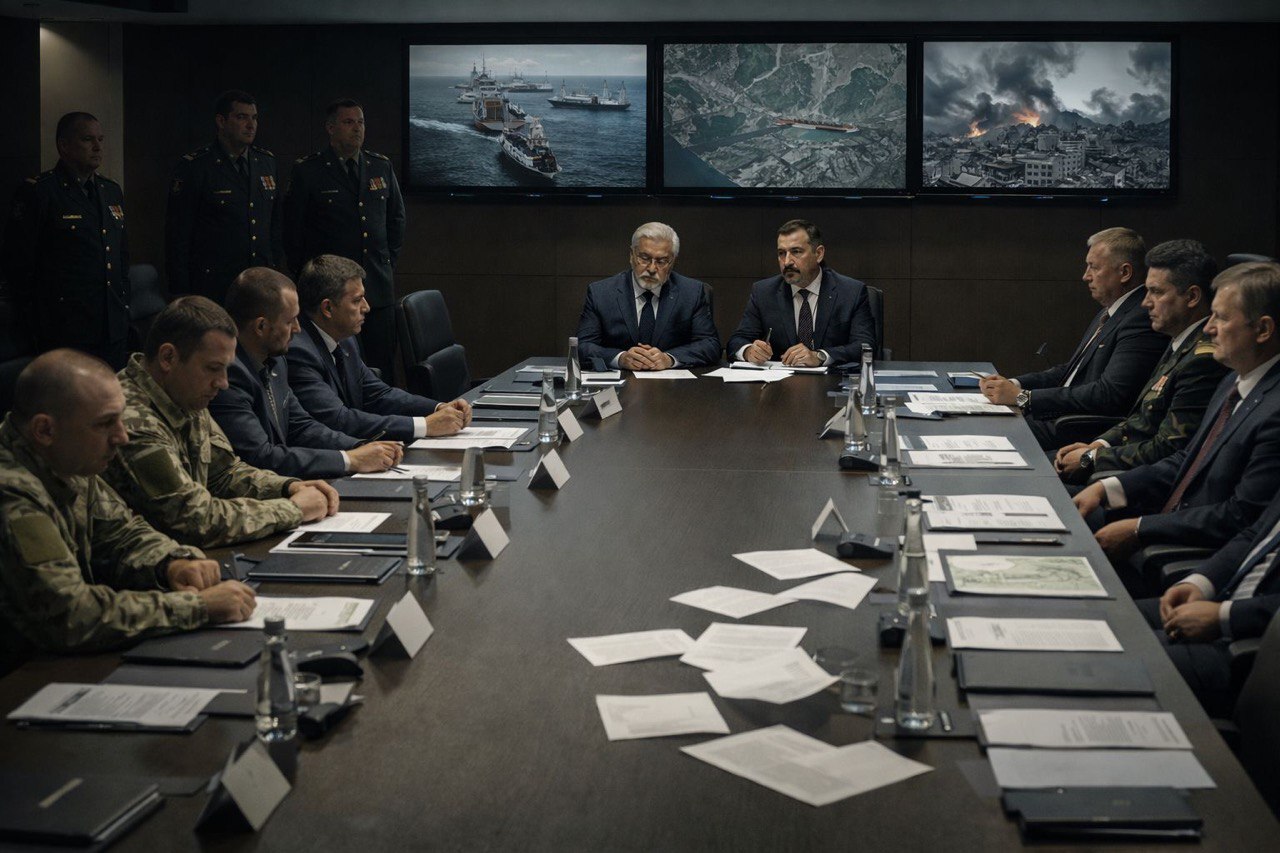
The working mechanism provided for the creation of a Joint Coordination Center in Istanbul with representatives of Ukraine, Russia, Turkey, and the UN to coordinate the safe passage of vessels. Each vessel had to undergo inspection to confirm that it was carrying only grain and was not being used for arms smuggling.
Was This Genuine Mediation?
Analysis of the grain deal through the lens of mediation theory reveals a complex picture. On the one hand, the agreement had some features of mediation: neutral intermediaries (UN and Turkey), a structured negotiation process, an agreement that formally satisfied the interests of both parties (Ukraine gained the ability to export grain, Russia—partial lifting of sanctions on exports of its fertilizers and agricultural products).
But deeper analysis shows fundamental problems. First, the asymmetry of forces remained absolute. Russia controlled the Black Sea with its military fleet and could violate the agreement at any moment without any consequences for itself. Ukraine did not have such an option. The agreement worked only as long as Russia was interested in it.
Second, the very need for the agreement was the result of Russian aggression. Ukraine had no problems exporting grain before February 24, 2022. The problem arose because Russia blocked Ukrainian ports as part of armed aggression. “Mediation” to solve a problem created by the aggressor himself—this is like a kidnapper demanding ransom for a hostage and then “negotiating” release terms with police mediation, which for some reason calls it a “compromise.”
Third, Russia used the agreement as a tool of manipulation and blackmail. Every few months, Russian threats to exit the agreement sounded if some additional conditions were not met. This is not the behavior of a party acting in good faith on reached agreements—this is the behavior of a blackmailer using the “agreement” as a pressure tool.
Who Won from the Grain Deal?
Superficial analysis might create the impression that the agreement was mutually beneficial: Ukraine exported grain, Russia received partial sanctions relief, the world market received stability of food supplies, poor countries in Africa and Asia—access to cheaper grain. A win-win situation, right?
But deeper analysis shows otherwise. Ukraine was indeed able to export millions of tons of grain, but at the same time was forced to agree to terms that allowed Russia to inspect Ukrainian vessels and effectively control the process. Each vessel passage required approval from the Joint Coordination Center, where Russia had veto power. Ukraine paid insurance premiums that increased tenfold due to war risks. The speed of vessel passage was significantly lower than before the war due to complex inspection procedures.
Russia got what it wanted: legitimization of its control over the Black Sea, partial lifting of sanctions on exports of its agricultural products, international recognition as an “equal party” in negotiations, the ability to blackmail Ukraine and the world with threats to exit the agreement. And most importantly—Russia gained the opportunity to present itself not as an aggressor who created the problem, but as a “constructive partner” helping to solve a “difficult situation.”
International mediators could claim they achieved success because the agreement worked for several months and helped export Ukrainian grain. But what is the price of this “success”? Legitimization of the aggressor, creation of the illusion that one can negotiate with Russia, postponement of the real solution to the problem (cessation of aggression and restoration of Ukraine’s control over its coastline).
End of the Agreement and Its Lessons
On July 17, 2023, Russia withdrew from the grain deal, citing that its terms regarding the export of Russian fertilizers were allegedly not being fulfilled. This was a predictable result: the aggressor used “mediation” to achieve tactical goals (legitimization, partial lifting of sanctions, blackmail), and then discarded the agreement when it ceased to be beneficial.
This story illustrates the fundamental problem of “mediation” with an aggressor. An agreement has force only as long as the stronger party is interested in observing it. In genuine mediation, an agreement is fulfilled because both parties voluntarily agreed to it and have incentives to observe it. But when one party has superior force and does not recognize the rule of law, no agreement is sustainable.
The lesson of the grain deal: “mediation” that does not eliminate the roots of the problem (aggression and occupation) can provide only temporary relief, for which one must pay with legitimization of the aggressor. The real solution to the problem of Ukrainian grain exports is possible only through cessation of Russian aggression and restoration of full Ukrainian control over its territory, including the Black Sea coastline.
Why Ukraine Is Offered Mediation Instead of Justice (The Hague, Tribunal)
Paradox of International Reaction
After the start of full-scale Russian aggression on February 24, 2022, the international community faced obvious facts of war crimes, crimes against humanity, genocide. Mass killings of civilians in Bucha, Irpin, Mariupol. Systematic shelling of civilian infrastructure. Deportation of tens of thousands of Ukrainian children. Torture of prisoners of war. The list continues.
It would seem that the logical reaction of the international community should be unambiguous: condemnation of the aggressor, international tribunal, punishment of the guilty, reparations, restoration of justice. This is exactly how the world reacted to Nazi Germany’s aggression—with the Nuremberg Tribunal. This is exactly how it reacted to genocide in Rwanda and the former Yugoslavia—by creating international tribunals.
But instead of a clear course toward justice, a significant part of Western diplomacy focused on proposals for “negotiations,” “dialogue,” “mediation.” Ukraine is regularly offered to “sit at the negotiating table” with the aggressor, “seek compromise,” “make concessions for the sake of peace.” Why?
Convenience of Mediation for the West
The answer lies in the plane of geopolitical interests and risks that Western states do not want to bear.
First, mediation allows avoiding clear moral assessments. When you call a situation a “conflict” with “two sides” that have “their interests,” you avoid the need to call things by their names: this is not a conflict—this is aggression; these are not two sides with interests—this is an aggressor and a victim of aggression; this is not a difficult situation requiring compromise—this is a crime requiring punishment.
Second, mediation allows avoiding the need to genuinely confront the aggressor. Real justice would require decisive actions: massive military supplies to Ukraine to ensure its ability to repel aggression, harsh economic sanctions against Russia without exceptions and loopholes, international isolation of Russia, seizure of Russian assets abroad to compensate Ukraine for damages. But all this requires willingness to bear costs, risks, discomfort.
Mediation, on the other hand, allows creating the illusion of “we are doing something” without real commitments. You can appoint a mediator, organize rounds of negotiations, issue statements about “positive dynamics,” “constructive atmosphere,” “convergence of positions”—and at the same time do nothing that would really change the balance of power in favor of the victim of aggression.
Third, mediation provides an opportunity to pressure the victim. When Western partners tell Ukraine “you need to be ready for compromise,” “you can’t fight to the end,” “you need to take into account the interests of all sides”—they are actually pressuring the victim of aggression to agree to the aggressor’s terms. This is convenient because it allows achieving “peace” (actually—reconciliation with aggression) without the need to genuinely confront the aggressor.
Why Not The Hague?
The International Criminal Court (ICC) in The Hague issued an arrest warrant for Vladimir Putin for the crime of deporting Ukrainian children. This is an important symbolic step, but why does it remain rather symbolic than a real instrument of justice?
First, the ICC has no law enforcement agencies of its own. The court can issue a warrant, but execution of this warrant depends on member states. And none of the countries maintaining relations with Russia is rushing to arrest the Russian president if he visits their territory. Justice without enforcement mechanisms is a declaration of intent, nothing more.
Second, the ICC is limited in its jurisdiction. It can only consider cases of crimes committed on the territory of member states or by citizens of these states. Russia is not a party to the Rome Statute, which creates legal difficulties, although Ukraine has accepted the court’s jurisdiction.
Third, the ICC works slowly. Investigations and trials take years. For comparison: the Nuremberg Tribunal began work less than a year after the end of World War II. The Tokyo Tribunal worked in parallel. The world then understood: justice must be swift, otherwise it loses meaning.
Why Not a Special Tribunal?
History knows examples of creating special international tribunals to consider specific crimes: the Nuremberg Tribunal to punish Nazi criminals, the Tokyo Tribunal to punish Japanese war criminals, the tribunal for war crimes during the bloody breakup of Yugoslavia. Why has the world not created a special tribunal to punish Russian war crimes?
The official answer: it is legally complicated, consensus is needed, Russia has veto power in the UN Security Council. But these are technical obstacles that can be overcome.
The real reason is the absence of political will. Creating a special tribunal would mean clear recognition: Russia is an aggressor, Russian leadership are war criminals, their actions are crimes requiring punishment. This would require Western countries to break all relations with Russia, maximally isolate it, do everything possible for Ukraine’s victory, because otherwise what justice?
But Western countries are not ready for this. They want to preserve the option of “returning to normal relations” with Russia after the war ends. They want to preserve economic ties, energy dependence, diplomatic channels. Creating a tribunal would close these options.
Double Standards of Justice
Comparison of international reactions to various conflicts reveals troubling double standards.
When Saddam Hussein invaded Kuwait in 1990, the international community reacted decisively: military operation under UN auspices, complete liberation of Kuwait, harsh sanctions against Iraq. There was no talk of “mediation” between Iraq and Kuwait, about “taking into account the interests of both sides,” about “compromise.” The aggressor was forced to leave the occupied territory.
When Serbia conducted ethnic cleansing in Bosnia and Kosovo in the 1990s, the world first tried “mediation,” which led to prolongation of the conflict and thousands of additional victims. But ultimately force was applied (NATO operation against Serbia), an international tribunal was created, the guilty were punished.
Why is Ukraine offered “mediation” instead of justice? The answer does not lie in international law, which is the same for everyone. The answer is that Russia is a nuclear power with enormous natural resources on which the West is economically dependent. And this creates the temptation to sacrifice principles for the sake of convenience, to replace justice with imitation of “negotiations.”
Consequences of Refusing Justice
When the international community offers “mediation” instead of justice in a situation of obvious aggression, it creates dangerous precedents.
First, it legitimizes aggression. When an aggressor is invited to the negotiating table as an “equal party,” when its interests are discussed as legitimate, when it is offered “compromises”—this sends a signal: aggression works, you can seize foreign territories and then “negotiate” the terms on which you partially keep them.
Second, it destroys trust in international law. If norms of international law (prohibition of aggression, territorial integrity of states, protection of civilian population) can be violated with impunity if the violator is strong enough—why does this law exist at all? It becomes a declaration of intent that is observed only by the weak, because the strong can ignore it.
Third, it encourages future aggressors. When a potential aggressor sees that Russia seized foreign territories, killed tens of thousands of people, and is still invited to negotiations, offered “compromises,” no real tribunal is created—he concludes: you can try. In the worst case, you will be asked to “negotiate,” in the best case—you will keep part of what you seized.
Conclusions: Limits of Mediation and the Necessity of Justice
Mediation is an effective tool for dispute resolution when its fundamental premises are met: approximate equality of parties, voluntariness of participation, legitimacy of interests, readiness for compromise. Under such conditions, mediation can be a better choice than a judicial process: faster, cheaper, less conflictual, with the possibility of preserving relationships.
But mediation has clear limits of applicability. It is impossible and harmful when: one party uses violence against another; there is a huge power imbalance that cannot be compensated by procedural mechanisms; the “interests” of one party are actually crimes (seizure of territories, killings, genocide); the victim is under pressure from the aggressor and cannot freely make decisions.
In such situations, what is needed is not “mediation” but justice: clear recognition of the crime, punishment of the guilty, restoration of the previous state, compensation to the victim. Attempts to replace justice with “mediation” lead not to peace but to legitimization of aggression, creation of dangerous precedents, destruction of trust in international law.
Ukraine’s experience with the Minsk agreements showed: “mediation” that does not eliminate aggression but tries to “settle” it does not work. The aggressor uses negotiations to consolidate what was seized, prepare for the next stage of aggression, blackmail the victim and the international community.
The experience of the grain deal showed: even “successful mediation” with an aggressor gives only temporary results, for which one must pay with legitimization of the aggressor. The aggressor violates the agreement as soon as it ceases to suit them.
The international community offers Ukraine “mediation” instead of justice not because mediation is a better tool in this situation, but because justice would require decisive actions, costs, risks that the West is not ready to bear. It is easier to pressure the victim to “make compromises” than to genuinely confront the aggressor.
But history shows: refusal of justice for the sake of convenience of “negotiations” does not lead to genuine peace. It leads to legitimization of aggression, encouragement of future aggressors, destruction of international order. Genuine peace is possible only through justice: recognition of the crime, punishment of the guilty, restoration of justice, guarantees of non-repetition.