
Tyshchenko’s fund could have been used to launder funds from call centers — investigation
/ 14 July 2026 12:04
4 min to read
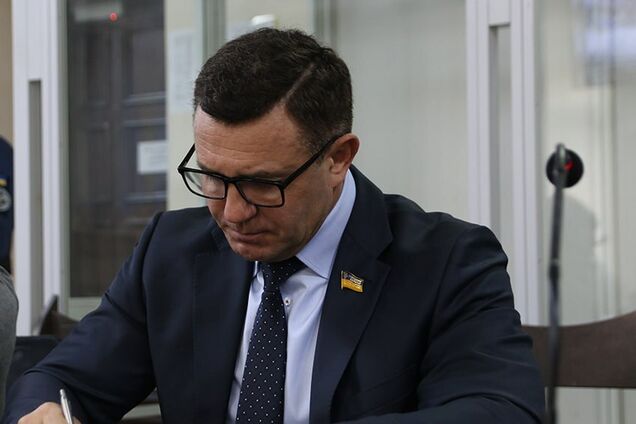
Ukrainian MP Mykola Tyshchenko and his ex-wife Alla Baranovskaya may have used the “Road of Peace” charity fund to obtain and legalize funds related to the activities of call centers.
This was reported by Bihus.Info with reference to the investigation materials made public during the court hearing on July 3, at which the MP was chosen as a preventive measure.
What the investigation established
According to journalists, about four years ago Tyshchenko and Baranovskaya organized charity dinners in a number of European cities. During the events, they allegedly collected funds to help the Ukrainian military and cities that suffered as a result of Russian missile strikes.
At the same time, journalists drew attention to the fact that the dinners were held in expensive locations with the participation of famous guests, while the amounts of declared donations were relatively small.
The activities of the “Road of Peace” fund were studied by NABU detectives and SAPO prosecutors as part of the investigation into Tyshchenko. According to the investigation, the fund could have overstated the actual cost of cars purchased for the needs of the Ukrainian military, and used part of the funds for purposes other than the stated purpose.
The investigation published Baranovskaya’s correspondence
During the court hearing, the prosecution demonstrated fragments of Alla Baranovskaya’s correspondence. One of the messages discussed the preparation of documents for the purchase of cars for charitable purposes.
In particular, it was about the need to present four cars in such a way that they visually corresponded to the declared cost of 100 thousand dollars.
“I need to somehow take a picture so that it looks like 100 thousand, no one will believe that these 4 […] cost 25 thousand each,” the published correspondence says.
Funds from call centers could have been received under the guise of charity
According to the investigation, Mykola Tyshchenko, under the guise of fighting illegal call centers, could have demanded money from persons he considered involved in their activities.
Law enforcement officers believe that the MP could have promised not to prosecute certain call centers and to promote the activities of others, using his status and powers as a parliamentarian.
According to the investigation, part of the funds received could have been registered as charitable assistance through the “Road of Peace” fund. At the same time, some contributions, according to law enforcement officers, did not actually arrive at the accounts of the charitable organization.
The investigation claims that 12.6 million hryvnias were legalized
Law enforcement officers also believe that Tyshchenko could have legalized 12.6 million hryvnias of illegal origin through a fictitious gift agreement with Alla Baranovskaya.
According to the investigation, the former wife of the MP did not have legal income sufficient to make such a gift. At the same time, the actual transfer of money, according to law enforcement officers, did not take place.
During the search at Baranovskaya, detectives also found two foreign passports of Mykola Tyshchenko, a duplicate of the MP’s ID card and a voting card.
The Supreme Anti-Corruption Court set a bail of 10 million hryvnias for Tyshchenko
In early July, the Supreme Anti-Corruption Court set a preventive measure for Mykola Tyshchenko in the form of a bail of 10 million hryvnias.
The MP himself publicly expressed his disagreement with the court’s decision and called the specified amount of bail unfounded.
At the same time, the investigation is ongoing, and the circumstances presented are the investigation’s version. According to the Constitution of Ukraine, a person is presumed innocent of committing a criminal offense until his or her guilt is proven in accordance with the law and established by a court verdict of guilty.
Without an author